

Requisites
Something in Common ~ Houston Person and Ron Carter | By Eddie Carter
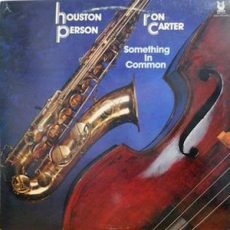
After a challenging day and an exhausting week, I was looking for something gentle to help me unwind and restore my energy. This morning’s discussion, submitted for your approval, came after I listened to a few duet releases in my library and features two of my favorite musicians, Houston Person and Ron Carter. Something in Common (Muse Records MR 5376) is a digital recording pairing the tenor saxophonist and bassist in a thoroughly enjoyable program of cool jazz, one of my go-to albums for soothing my senses. The copy I own is the 1990 U.S. stereo release.
The opener, Blue Seven by Sonny Rollins, gets things off to a good start with Houston’s big-toned, warm, relaxed melody and Ron walking beside him with a perfect bass rhythm. Houston catches sunlight in the opening solo, using a subtle tone that builds into a textbook performance. Ron walks comfortably at an easy pace into the theme’s reprise and climax. I Thought About You by Jimmy Van Heusen and Johnny Mercer begins with the duo handling the melody as if sharing a personal secret with the listener. Ron is the featured soloist here, expressing his feelings with tenderness and sentimentality through the duo’s restatement of the theme and compassionate finale.
Mack The Knife by Kurt Weill, Marc Blitzstein, and Bertolt Brecht is a jazz classic from the twenties, and the duo puts a lively, fresh take on the opening chorus. Houston captures the spirit of this timeless tune with a wonderfully inventive first performance. Ron thoughtfully makes every note shine in a charming solo, leading smoothly into Houston’s beautifully crafted postscript that guides us into the closing chorus. Clifford Brown’s Joy Spring begins with the duo’s relaxed, easygoing theme, inviting Ron to stroll confidently through the opening statement. Houston responds with a warm, laid-back interpretation before the melody makes its lovely return.
Good Morning Heartache by Ervin Drake, Dan Fisher, and Irene Higginbotham is one of the album’s definitive highlights. Houston treats the melancholy theme as a story, shaping each verse of the song’s only solo, with Ron supporting him effortlessly until the tender reprise and ending. The beat moves upward for Anthropology by Charlie Parker, and the melody unfolds with relaxed assurance from two masters with nothing left to prove. Houston’s opening solo flows seamlessly through every phrase. Ron puts an indelible stamp on the closing statement, and the theme’s restatement concludes perfectly.
Once In A While by Michael Edwards and Bud Green closes the album on a warm, gentle note, opening with Houston and Ron’s beautiful, dreamy melody. Ron takes a walk through the song’s only interpretation as it builds toward the duo’s tender reprise and climax. Houston Person and Ron Carter produced Something in Common with Rudy Van Gelder handling the recording console. The album has a beautiful soundstage and is a joy to listen to from start to finish. If you’re in the mood for a terrific album that’s especially enjoyable any time of day or night, I invite you to check out Something in Common by Houston Person and Ron Carter on your next record-shopping trip. It’s a terrific album by two jazz masters, and a title I’m sure you won’t be able to listen to just once!
~ I Thought About You, Mack The Knife, Once In a While – Source: JazzStandards.com
~ Anthropology, Good Morning Heartache, Joy Spring – Source: Wikipedia.org
© 2026 by Edward Thomas Carter

More Posts: bass,choice,classic,collectible,collector,history,instrumental,jazz,music,piano,saxophone

Daily Dose Of Jazz…
Cliff Jackson was born Clifton Luther Jackson on July 19, 1902 in Culpepper, Virginia. Learning to play stride piano he played in Atlantic City until moving to New York City in 1923. He played with Lionel Howard’s Musical Aces in 1924, recorded with Bob Fuller and Elmer Snowden, led his own ensemble, the Krazy Kats, for recordings in 1930, and following this group’s dissolution he played extensively as a solo pianist in several New York nightclubs.
During this time Jackson accompanied singers such as Viola McCoy, Lena Wilson, Sara Martin and Clara Smith. He recorded with Sidney Bechet in the early Forties and would record as a soloist or leader by mid-decade and again in the Sixties. His greatest success came as house pianist at Cafe Society from 1943-5; but he also toured with Eddie Condon, and played with Garvin Bushell, J.C. Higginbotham and Joe Thomas.
Cliff married singer Maxine Sullivan, had his powerful stride piano style showcased on such solo recordings as “Limehouse Blues”, and his left-hand techniques highlighted and explained in detail in books Ricardo Scivales’ method Jazz Piano: Left Hand. Stride pianist Cliff Jackson passed away of heart failure on May 24, 1970 in New York City.
More Posts: piano
Daily Dose Of Jazz…
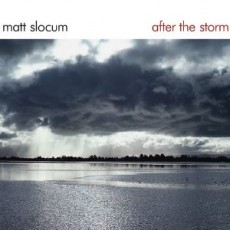
Matt Slocum was born on July 18, 1981 in New Richmond, Wisconsin. From his sophomore year in high school on he studied drums with Phil Hey, while playing in a Ska band. At the University of Southern California Thornton School of Music, Matt studied with Peter Erskine, Alan Pasqua, John Clayton and Joe LaBarbera. After graduating USC, Slocum spent three years in Pasadena but in 2007 he moved near New York City.
Since his move Slocum has toured with vocalist Sarah Gazarek for three years and has played with Shelly Berg, Seamus Blake, Alan Broadbent, Bill Cunliffe, Danny Grissett, Larry Koonse, Lage Lund, Wynton Marsalis, Linda Oh, Dayna Stephens, Gerald Wiggins, Anthony Wilson and the Dallas Symphony Orchestra, among numerous others.
Slocum’s list of influences on composing is impressive citing Billy Strayhorn, Duke Ellington, Wayne Shorter, Tom Harrell, Dave Holland, Debussy and Ravel; and drummers Roy Haynes, Elvin Jones, Max Roach, Kendrick Scott and Marcus Gilmore.
Drummer Matt Slocum is the recipient of a Meet the Composers Foundation grant, and has lead recording sessions for his debut album, Portraits and After The Rain. He continues to perform, record and tour.
More Posts: drums
Daily Dose Of Jazz…
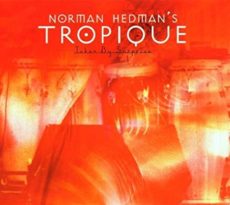
Norman Hedman was born July 17, 1945 in the West Indies and discovered his first hand drum, a conga, in a Brooklyn garbage can. Instinctively repairing the conga at age 12, he has been playing music ever since.
Hedman founded Tropique in 1995 and the percussion instruments of timbales, cowbells and congas formed his Latin jazz and island flavor sound. This first call percussionist brought together an array of talent from around the globe to create music that spanned teenage to silver generations appreciating and enjoying his music. His new and inventive concepts, clean, tight lines and original compositions were his hallmark of success.
Over the course of his career Norman composed five number one R&B hits with one receiving 5 Grammy awards, in addition to two platinum and two gold albums, composed three songs for movie soundtracks for Ali, Shaft and Dr. Doolittle 2. His One Step Closer, Taken By Surprise and Healing Hands albums by his group Norman Hedman’s Tropique were nominated for Best Latin Jazz Album.
He has worked with Arturo Sandoval, Nancy Wilson, Bobby Watson, Grady Tate, Pat Martino, Chico and Vaughn Freeman, Arthur Blythe, George Cables, John Hicks, Gary Bartz, Ahmad Alladeen, Giovannie Hidalgo, Hilton Ruiz, Horacee Arnold, Airto Moreira, Monguito Santamaria, Delmar Brown, Lew Soloff and Marcus Miller.
Percussionist, producer and composer Norman Hedman passed away from acute myeloid leukemia and pneumonia on September 29, 2008 in New York City.
More Posts: percussion
Daily Dose Of Jazz…
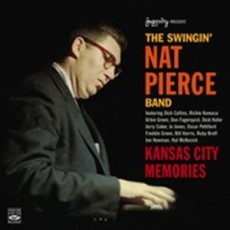
Nat Pierce was born on July 16, 1925 in Somerville, Massachusetts. Learning to play piano as a child he went on to attend the New England Conservatory. After graduation he worked as an amateur musician around Boston, then led his own band featuring Charlie Mariano from 1949-51. He would go on to play with Woody Herman through 1966 as chief arranger and asst. road manager.
Taking up residence in New York City, Nat freelanced with musicians such as Pee Wee Russell, Lester Young, Emmett Berry and ruby Braff, to name a few. From 1957-1959 Pierce led his second band off and on which featured Buck Clayton, Gus Johnson and Paul Quinichette. He recorded with a number of other well-known musicians as well, including Quincy Jones, Coleman Hawkins and Pee Wee Russell.
Pierce arranged the music for The Sound of Jazz, a 1954 CBS television special hosted by John Crosby. Most of the pieces he composed and arranged were predominantly created for the use in big bands. Pianist Nat Pierce passed away on June 10, 1992.
More Posts: piano