

Jazz Poems
ELEGY FOR THELONIOUSDamn the snow
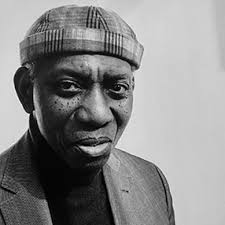
Its senseless beauty pours a hard light through the hemlock. Thelonious is dead. Winter drifts in the hourglass; notes pour from the brain cup. Damn the alley cat wailing a muted dirge off Lenox Ave. Thelonious is dead. Tonight’s a lazy rhapsody of shadows swaying to blue vertigo & metaphysical funk. Black trees in the wind. Crepuscule with Nelly Plays inside the bowed head. “Dig the Man Ray of piano!” O Satisfaction, hot fingers blur on thosewhite rib keys. Comingon the Hudson. Monk’s Dream. The ghost of bebop from 52nd Street, footprints in the snow. Damn February. Let’s go to Minton’s & play “modern malice” till daybreak. Lord, there’s Theloniou wearing that old funky hat pulled down over his eyes.Yusef Komunyakaa | 1947
from Jazz Poems ~ Selected and Edited by Kevin Young

More Posts: book,classic,collectible,history,jazz,library,poet
Daily Dose Of Jazz…
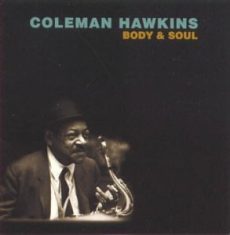
Arthur Herbert was born May 28, 1907 in Brooklyn, New York to Trinidadian parents. As a young man he worked in a silver and gold refinery while playing local gigs in New York nightclubs and hotels in his spare time. In 1935 he joined Eddie Williams’s band, and soon after started his own, the Rhythm Masters.
In the 1930s and 1940s he worked as a sideman with musicians such as Pete Brown, Coleman Hawkins, Hot Lips Page and Sidney Bechet. The 1950s saw Herbert in semi-retirement as a musician and started up his own pest extermination business. He played in various swing jazz revival ensembles, and toured with Lem Johnson in Poland in the 1960s.
Herbert taught his nephew, drummer Herb Lovelle, to read sheet music, something black musicians were then not held to know. He got his nephew his first gig with Hot Lips Page. He also taught drummer Shelly Manne, according to Herb Lovelle.
Drummer Arthur Herbert date of death is unknown but would have celebrate his 117th birthday today.
More Posts: drums,history,instrumental,jazz,music
Daily Dose Of Jazz…
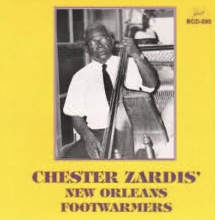
Chester Zardis was born on May 27, 1900, in New Orleans, Louisiana and played bass from a young age, studying without his disapproving mother’s knowledge under Billy Marrero of the Superior Orchestra. In his teens he was sent to the Jones Waif Home where he began playing with another of the Home’s residents, Louis Armstrong.
He joined Buddy Petit’s orchestra at age 16, and worked as a bassist in nightclubs and a tubist in brass bands in 1920s New Orleans. There he played with Kid Rena, A.J. Piron, Punch Miller, Kid Howard, Jack Carey, Fate Marable, and Duke Dejan’s Dixie Rhythm Band.
He was given the nickname “Little Bear” by riverboat bandleader Fats Pichon, a bandleader with whom Zardis played in the 1930s. During that decade he also played with Count Basie in New York City, and recorded with George Lewis and Bunk Johnson. During World War II he served in the Army, then worked briefly as a sheriff. Upon his return to New Orleans, he played with Andy Anderson, but quit music between 1954 and 1964.
When he returned to active performance, Chester played often at Preservation Hall with Lewis and Percy Humphrey among many others. He continued to be a fixture of the New Orleans jazz scene up until his death in 1990, including several international tours.
Double bassist Chester Zardis, who was regularly featured in documentaries including Liberty Street Blues, Chester Zardis: Spirit of New Orleans, and Three Men of Jazz, died on August 14, 1990 in New Orleans.
More Posts: bass,history,instrumental,music
Requisites
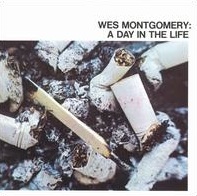
A DAY IN THE LIFE | WES MONTGOMERY
One of my favorite jazz albums that I first heard during my freshman year in college was the 1967 album A Day In The Life by Wes Montgomery. It was recorded on June 6 & 26, 1967 at the Van Gelder Studio in Englewood Cliffs, New Jersey and released on the A&M/CTI label later that year in September.
The 34:21 minute album is filled with covers of rock and pop songs selected by the guitarist who opens Side One with the title track, A Day In The Life by John Lennon and Paul McCartney, originally released on their Sgt. Pepper’s Lonely Hearts Club Band. It’s a great opener that builds from a quiet start into a cavalcade of strings by its end. Watch What Happens is from the 1964 musical romantic drama film The Umbrellas of Cherbourg written and directed by Jacques Demy, with music by Michel Legrand.
The Calvin Lewis and Andrew Wright #1 tune When a Man Loves a Woman is the third addition to the side and first recorded by Percy Sledge in 1966. California Nights is a song written by Marvin Hamlisch and Howard Liebling and recorded by Lesley Gore in 1967. The final song is Angel and is the only composition contributed by Montgomery.
Side Two is opened by another Lennon/McCartney song, Eleanor Rigby. One premise is that the inspiration for the title is the actress Eleanor Bron who starred in the Beatles movie Help!. Rigby came from the name of a store in Bristol, Rigby & Evens Ltd. Next up is Willow Weep For Me, that once again accounts the inspiration for the song is that Ann Ronnell, while at Radcliffe College, had been struck by the loveliness of the willow trees on campus, and this observation became the subject of an intricate song.
Windy, another No. 1 tune recorded by The Association, and was composed by Ruthann Friedman. Trust In Me was composed by Milton Ager, Jean Shwartz and Ned Wever and was made popular in 1937 by Mildred Bailey. Closing out the session is The Joker, a song by Leslie Bricusse and Anthony Newley, and is taken from the 1964 musical The Roar of the Greasepaint – The Smell of the Crowd. It’s a lament of a person, seen by the outside world as a jester and a comedian especially when they fail.
The recording session was produced by Creed Taylor, was arranged and conducted by Don Sebesky, the engineer was Rudy Van Gelder and the principal photography was performed by Pete Turner.
The guitarist did little more than play the melody using his distinctive octaves. A Day in the Life is a collaboration of guitar and strings. For these ears it was a pleasurable listening experience.

More Posts: choice,classic,collectible,collector,guitar,history,instrumental,jazz,music

Daily Dose Of Jazz…
Neil Richard Ardley was born in Wallington, Surrey, England on May 26, 1937. He attended Wallington County Grammar School and at the age of thirteen started learning the piano and later the saxophone. He studied chemistry at Bristol University, also playing both piano and saxophone in jazz groups, graduating in 1959 with a BSc.
Moving to London, England the next year he studied arranging and composing with Ray Premru and Bill Russo. He joined the John Williams Big Band as pianist, arranger and composer, and from 1964 to 1970 was the director of the New Jazz Orchestra. The band employed some of the best young musicians in London, including Ian Carr, Jon Hiseman, Barbara Thompson, Dave Gelly, Mike Gibbs, Don Rendell, and Trevor Tomkins.
The late 1960s saw Ardley begin composing, combining classical and jazz methods. The New Jazz Orchestra 1969 album Le Déjeuner sur l’Herbe is considered a classic of British jazz. It includes arrangements of Nardis by Miles Davis and Naima by John Coltrane, and compositions by young writers associated with the orchestra – including Ardley, Michael Garrick, Mike Gibbs, Howard Riley and Mike Taylor.
His rich orchestrations were augmented in the 1970s by the addition of synthesisers. He began work on an all-electronic album in 1980 which fell through when his recording contract was suddenly terminated, but continued to play and compose, especially with Zyklus, the electronic jazz group he formed with composer John L. Walters, Warren Greveson and Ian Carr.
Neil went on to sing in local choirs in the later 1990s led him to start composing choral music, and to gig and record again with a slimmed down Zyklus consisting of himself, Warren Greaveson, and Nick Robinson
Composer and pianist Neil Ardley, who was an author of popular books on music, died in Bakewell, Derbyshire, England on February 23, 2004.
More Posts: author,composer,history,instrumental,jazz,music,piano