

Requisites
Steppin’ Out ~ Harold Vick | By Eddie Carter
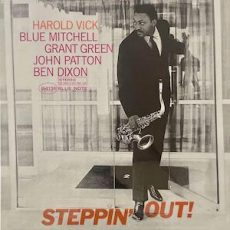
One of the joys of jazz collecting is seeing favorite LPs surface again in the wild and as audiophile albums. This morning’s discussion is a welcome reissue by Harold Vick. Steppin’ Out (Blue Note BLP 4138/BST 84138) was the tenor saxophonist’s debut album and the only one he made for the label as a leader. It was recorded in 1963 and released the same year. For his first effort, Harold’s joined by Blue Mitchell on trumpet, John Patton on organ, Grant Green on guitar, and Ben Dixon on drums. I first heard him on Oh Baby! Patton’s 1965 release with the same lineup. My copy is the 2022 Blue Note Tone Poet Series Stereo audiophile reissue sharing the original catalog number.
Our Miss Brooks is the first of five originals by the leader. It starts with the quintet’s finger-snapping, toe-tapping melody. Harold serves up the first slice of this soulful song; next, the group makes a short bridge into Grant’s tasteful reading. The second bridge leads to John mining a vein of bluesy riches in the finale ahead of the ensemble’s close. Trimmed In Blue steps up the pace for the quintet’s theme. Vick starts the solos with a spirited interpretation, then Mitchell comes behind him to give an exuberant reading. Green replies with a sparkling statement, followed by Patton’s zesty bounce leading to the theme’s reprise.
Laura, by David Raskin and Johnny Mercer, became a jazz standard as the title tune of the 1944 film noir. Blue sits out for the quartet’s hauntingly dreamlike melody. Harold makes a profound impression in the song’s only solo with nostalgic romanticism over the rhythm section’s subtle support into a gorgeous ending. Dotty’s Dream opens Side Two with the quintet in a swinging groove from the opening chorus. Vick gets down to business first, then Mitchell enters for a lively romp. Green responds with a vibrant reading, and Patton’s closing remarks are fueled with comments from both horns into the climax.
The quintet takes a relaxing trip to Vicksville next. The ensemble’s easy-swinging theme starts this comfortable ride into Blue’s smooth-sailing opening statement. Grant builds a perfect solo from simple ideas next. Harold strolls into an exquisite interpretation; then, John concludes with a carefree comment before the closing chorus fades out. The title tune, Steppin’ Out, moves the beat upward for the ensemble’s invigorating melody. Vick lets the listener know they’re in for a treat on the opening statement; then Green follows with an excellent solo. Mitchell comes in for a cheerful reading next, and Patton winds up the session in a festive finale preceding the theme’s return.
Alfred Lion produced the initial session of Steppin’ Out. Rudy Van Gelder was the recording engineer behind the dials. Joe Harley supervised the audiophile reissue, and Kevin Gray mastered it at Cohearent Audio. The front and rear covers are high gloss and gorgeous, with session gatefold photos worthy of hanging in your listening room. The record is pressed on 180-gram audiophile vinyl. The sound quality is quite good despite a bit of harmonic distortion from John Patton’s organ microphone placement as he’s supporting the other musicians. It’s particularly noticeable on Vicksville and Steppin’ Out.
Don’t let that dissuade you from checking out this album on your next vinyl treasure hunt. Steppin’ Out is a solid debut and a great introduction to this underrated, talented tenor saxophonist with wonderful performances by Grant Green, Blue Mitchell, John Patton, and Ben Dixon, keeping the beat efficiently! If you enjoy soulful jazz from the tenor sax with a double dose of the Blues and Hard-Bop, I offer for your consideration, Steppin’ Out by Harold Vick. It’s just right for an evening listening session with your favorite drink in hand!
~ Oh Baby! (Blue Note BLP 4192/BST 84192) – Source: Discogs.com ~ Laura – Source: JazzStandards.com © 2023 by Edward Thomas Carter

More Posts: choice,classic,collectible,collector,history,instrumental,jazz,music,saxophone
Daily Dose Of Jazz…
Joseph “Kaiser” Marshall was born on June 11, 1902 in Savannah, Georgia and was raised in Boston, Massachusetts. There he studied under George L. Stone, and played with Charlie Dixon before moving to New York City, New York in the early 1920s. After playing with violinist Shrimp Jones, he joined Fletcher Henderson’s band at the Club Alabam, remaining in Henderson’s retinue from 1922 until 1929.
He played with many noted jazz artists in the 1930s and 1940s, including Duke Ellington, Cab Calloway, Art Hodes, Wild Bill Davison, Sidney Bechet, Bunk Johnson, and Mezz Mezzrow. He also recorded with Louis Armstrong in the late 1920s, being the drummer on Armstrong’s 1929 recording of Knockin’ a Jug.
Between 1928-1930, he recorded with Benny Carter, Fats Waller and Coleman Hawkins in McKinney’s Cotton Pickers. Shortly after Kaiser recorded with the Four Bales of Hay, featuring Wingy Manone, Dickie Wells, Artie Shaw, Bud Freeman, Frank Victor, John Kirby and either Teddy Wilson or Jelly Roll Morton.
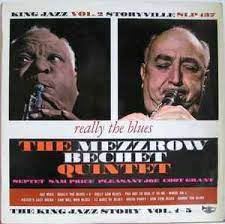
He went on to record as a member of the Mezzrow-Bechet Quintet featuring Sidney Bechet, Mezzrow, Fitz Weston, and Pops Foster. Drummer Kaiser Marshall transitioned on January 2, 1948 in New York City, New York.
More Posts: drums,history,instrumental,jazz,music

Daily Dose Of Jazz…
Guy Eugène Hilarion Pedersen was born on June 10, 1930 in Grand-Fort-Philippe, France. Coming from a family of popular musicians, their story begins in 1855 with all members of his maternal family being fiddlers from father to son. His uncles and his grandfather played all the balls of the region and his great-grandfather composed Tiger Rag, a jazz standard.
He began studying music theory around 1943 at the age of 13, taking free lessons at the Roubaix conservatory until 1952. Already passionate about jazz, he listened to Hugues Panassié ‘s radio broadcasts and bought his first American records by Charlie Parker, Thelonious Monk, and Lee Konitz. In 1950 he won the prize for best double bass player at the Brussels, Belgium competition, then Jazz Hot in Paris, France and decided to become a musician.
Beginning in Paris with singer Fats Edward, he went on to play with pianist Henri Renaud and drummer Jean-Louis Viale at Tabou, and at Ringside founded by Sugar Ray Robinson. Guy followed this working with Jacques Hélian and Claude Bolling to learn the trade of a large orchestra. From 1955 to 1966, he was a member with drummer Daniel Humair of one of Martial Solal trios, recording the historic Jazz à Gaveau in 1962.
Pedersen and Humair then joined the Swingle Singers to record the group’s second album. They traveled around the world with them, even passing through the White House in 1966. By 1973 he was touring with Baden Powell, recording over a dozen records with him. Between 1973 and 1980, he recorded seven albums and toured frequently with Jean-Christian Michel .
Leading an active career as a studio musician during this period he also appeared on television variety shows accompanying the group Les Troubadours. The late Sixties saw him composing, writing a lot of music for short films. Some of his recordings on Tele Music and Montparnasse 2000 are now cult, especially among disc jockeys.
A serious heart attack in 1977 sidelined the bassist from music and retiring permanently, he became a professional antique dealer. Double bassist, composer and antique dealer Guy Pedersen transitioned on January 4, 2005 in Rueil-Malmaison, Hauts-de-Seine, France at the age of 74 years old.
More Posts: bandleader,bass,composer,history,instrumental,jazz,music
Daily Dose Of Jazz…
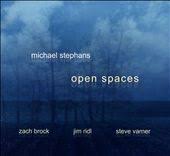
Michael Stephans was born in Miami, Florida on June 9, 1945. He has performed and recorded with artists including Dave Liebman, Bennie Maupin, Joe Lovano, Bob Brookmeyer, Don Menza, and Alan Broadbent.
Stephans’ first solo recording, Om ShalOM, was critically lauded in 2007 by UK critic Tom Barlow as an album of the year in the December 2007 – January 2008 issue of Jazzwise.
He has received multiple composition grants from the National Endowment for the Arts. In 1974, this association afforded him the opportunity to write the large ensemble composition Shapes and Visions for vibraphonist Karl Berger, which was performed at the Smithsonian Museum of Natural History in Washington, D.C.
In his role as a poet Michael has been published in The Note and Inscape, and received the Rachael Sherwood Poetry Prize by the English department at Cal State Northridge. He is the author of Experiencing Jazz: A Listener’s Companion, and Experiencing Ornette Coleman: A Listener’s Companion.
He is a professor who has taught at Pasadena City College, the University of Miami, and Bloomsburg University of Pennsylvania. Drummer Michael Stephans continues to pursue his career in jazz.
More Posts: bandleader,drums,educator,history,instrumental,jazz,music,poet,writer
The Jazz Voyager
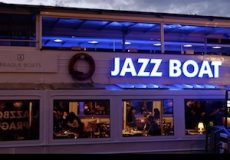
Leaving Rome but keeping with the tradition of the moving jazz venues for a second time, this Jazz Voyager is heading to Prague to take a first time cruise on the Jazz Boat. I’m told it’s a multidimensional experience where one can savor the beautiful sights and delights of the city, historical and off the beaten path as we cruise down the Vitava River
During the two and a half hour cruise I will be dining on salmon and potato gratin with apple strudel topped with ice and whipped creams for dessert while listening and enjoying three sets of music with bassist Jan Kořinek and his trio.
The Jazz Boat is located at Naplavka Na Františku Gate 18, 110 00 Staré Město, Czechia, next to St. Agnes Monestary and The Brewery boat. The cover is 38€ and dinner will run 25€. Boarding begins at 8:00pm, departure at 8:30pm, return at 11:00pm. More information needed, you may call +420 734 141 554.

More Posts: adventure,album,bass,club,festival,genius,jazz,museum,music,preserving,restaurant,travel