

The Jazz Voyager
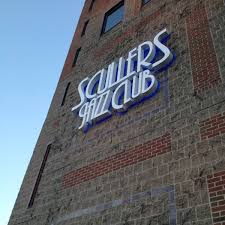
Coming off a fantastic performance by Cecilé McLorin Salvant in Miami, The Jazz Voyager is heading out of the South and up the East Coast for colder temperatures in Beantown to hang out at Scullers Jazz Club, and catch a pianist I haven’t seen in more than two decades. I was extremely impressed by his talent and his name is Loston Harris. As usual, after a relaxed dinner, I’ll be catching the second set which for me is the best.
After meeting Harry Connick, Jr. at the 1st Thelonious Monk Jazz Competition in Washington, DC, Connick led Loston to study with his mentor, Ellis Marsalis, who encouraged him to switch from drums to piano. The rest, as they say, is history. Blending jazz, gospel and blues with his own unique styling, Harris takes the Great American Songbook to new heights. He has toured and performed with numerous Grammy Award and Pulitzer winner Wynton Marsalis, and appeared in the PBS special Portraits in Blue with Grammy nominated pianist Marcus Roberts.
Since 1989 Scullers has presented the biggest names in straight ahead,Latin and Contemporary jazz along with blues, soul, r&b, and world music. It swet a new standard for jazz clubs in Boston with a world-class roster of renowned jazz artists.The club is located at 400 Soldiers Field Road, Boston, Massachusetts 02134. In the area or flying in and have the time, support jazz and hear a phenomenal musician and vocalist.
Sculler’s number is 617-747-2261. If you want to get more information visit https://notoriousjazz.com/event/loston-harris.

More Posts: adventure,album,club,festival,genius,jazz,museum,music,piano,preserving,restaurant,travel,vocal
Daily Dose Of Jazz…
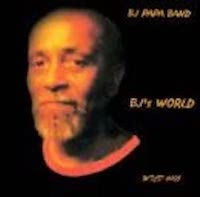
B.J. Papa was born on February 9, 1936 in Mobile, Alabama and as a child in the 1940s he was listening to all kinds of jazz and blues on the radio. Drafted into the Army in 1954 he became a medic and was stationed in San Francisco, California at Letterman Hospital in the Presidio. However, he ended up spending much of his service time playing on Army ball teams. By the time he turned 19 he found himself intrigued with the jazz bands booked into the Army noncommissioned officers clubs.
After his discharge from the service in 1956 Papa stayed in town and began saxophone lessons. He also made his first forays into the heart of the bustling Fillmore Street jazz community and would show up to listen and learn at the famous after-hours jams at Jimbo’s Bop City.
Over the course of his fifty year career Papa became a North Beach institution mentoring dozens of young cats making their transition from student to professional musician. He played with the biggest names in jazz to come through the city as well as passionate laymen sans pedigree.
Settling in at Jazz At Pearl’s, one of the few remaining jazz clubs that still possessed an air of authenticity before closing its doors, for thirteen years he shared the stage with an eclectic, enthusiastic audience nightly.
Pianist B.J. Papa, who always fed on and drew from the energy of the audience but has no recordings on line, transitioned on August 31, 2008.

More Posts: bandleader,history,instrumental,jazz,music,piano

Daily Dose Of Jazz…
William Crickett Smith was born on February 8, 1881 in Emporia, Kansas, the child of Tennessee Exodusters. His professional career began in childhood, performing in Nathaniel Clark Smith’s Picaninny Band before moving into minstrel troupes, vaudeville and cabaret.
In 1913-1914, he made several early recordings with James Reese Europe’s group, the Clef Club Society Orchestra. Between 1914 and 1919, he performed in the Ford Dabney Orchestra, the resident band at Florenz Ziegfeld’s Broadway cabaret, Midnight Frolics. Between 1917-1919, they produced several dozen phonographs.
By 1919 Smith had relocated to Paris, France playing with Louis Mitchell’s Jazz Kings until 1924. The group recorded for Pathe Records. He became the leader of Mitchell’s group in 1923. He went on to tour France, Spain and Russia with his own bands from 1925 to 1933. However, during the Depression, he spent nine years in Southeast Asia, working with Herb Flemming, Leon Abbey, and Teddy Weatherford, mostly in Bombay and Batavia. In 1936, he recorded with a group called the Symphonians.
Around 1943 cornetist and trumpeter Crickett Smith, who played jazz blues and ragtime, returned to New York City and the following year transitioned on August 30, 1944.
More Posts: bandleader,cornet,history,instrumental,jazz,music,trumpet

Three Wishes
Pannonica inquired what his three wishes would be if they could be granted and Frank Wess responded by telling her the following:
-
- “I don’t know. I don’t know. You’d think I was crazy if I told you. Well, I’d like to have a crazy pad with horses and some crazy dogs! And to play good music with a lot of people all of my life. And I’ll leave the third wish to the fairy godmother, because she’s been so nice.”
*Excerpt from Three Wishes: An Intimate Look at Jazz Greats ~ Compiled and Photographed by Pannonica de Koenigswarter
More Posts: baroness,flute,history,instrumental,jazz,music,pannonica,saxophone,three,wishes
Daily Dose Of Jazz…
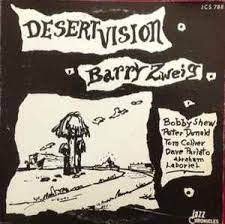
Barry Sweig was born on February 7, 1942 in Detroit, Michigan. His mother loved music and taught her son to clap on the 2 & 4 as a toddler. He received a ukulele for his fifth birthday, played violin from the age of eight until he was eighteen, but bought himself a guitar for ten dollars when he was 15. His first recording session was at age 17, at Capitol Records.
Drafted in the Army in 1964 Sweig was assigned to NORAD Band where he got the opportunity to study with guitarist Johnny Smith. After his discharge he joined Buddy Rich’s band and after recording an album with Sammy Davis Jr. that led to him joining the latter’s band. Touring with Davis ended fourteen months later and he settled in Los Angeles, California and broke into the music scene where he performed and recorded for a host of who’s who vocalists and musicians.
He played his final gig at The Lighthouse Cafe in Hermosa Beach. Guitarist Barry Sweig, who taught at UCLA, USC, and the University of Texas, El Paso, transitioned on March 15, 2020 of complications from Crohn’s disease.
More Posts: bandleader,educator,guitar,history,instrumental,jazz,music