

Daily Dose Of Jazz..
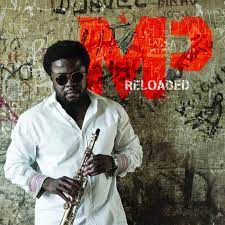
Moreira Chonguiça was born in Maputo, Mozambique on February 13, 1977. On completing his schooling he attended the University of Cape Town to further his music studies, graduating from the South African College of Music with a degree in jazz performance. He also graduated cum laude and holds an honours degree in Ethnomusicology.
In 2010 he started a jazz festival, Morejazz, in Maputo, where artists are invited to play at the festival and also hold master-classes at the Eduardo Mondlane University in the city. That same year his group, The Moreira Project, opened the Standard Bank Jazz Festival in Grahamstown in the Eastern Cape. He collaborated with Manu Dibango on the album M & M, which was released in 2017.
His philanthropy extends to renovating schools, conducting workshops, poetry projects about HIV/Aids, inmate music programs to encourage reform, and works with road safety and family planning groups. Saxophonist Moreira Chonguiça continues to record, perform and pursue various philanthropic endeavors.

More Posts: bandleader,composer,ethnomusicologist,history,instrumental,jazz,music,saxophone
Requisites
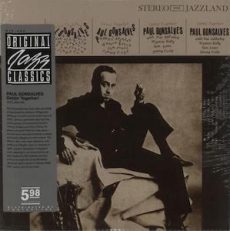
Gettin’ Together ~ Paul Gonsalves | By Eddie Carter
I confess to a fondness of the tenor saxophone among my favorite Jazz instruments. Gettin’ Together (Jazzland JLP 36/JLPS 936S) is a 1961 release from the library for this morning’s report. Paul Gonsalves was a proficient tenor saxophonist whose sound and style stood beside Chu Berry, Don Byas, and Coleman Hawkins. Paul, however, was no imitator; he was an original pioneer who began experimenting with different tonalities years before Coltrane started conducting his tonal investigation. He’s best known for the electrifying extensive solo of twenty-seven choruses on Diminuendo and Crescendo in Blue at The Newport Jazz Festival in 1956. It immortalized him as an outstanding musician and resulted in one of the biggest-selling albums, Ellington at Newport. Here, he’s working with Nat Adderley on cornet, Wynton Kelly on piano, Sam Jones on bass, and Jimmy Cobb on drums. My copy is the 1985 Original Jazz Classics Stereo reissue (Jazzland OJC-203 – J-936).
Side One opens with Yesterdays by Jerome Kern and Otto Harbach. The rhythm section introduces the song gracefully. Gonsalves states the melody, then blends beautifully with Adderley’s muted cornet as the theme unfolds. Kelly opens at a softly enunciated swing. Adderley follows with a whispery, delicate reading exhibiting tender restraint. Gonsalves saves the best for last with two choruses of persuasive gentleness. J. & B. Blues by Joe Livramento turns the temperature upward with a speedy opening chorus. Paul starts with an energetic interpretation. Nat unleashes high-octane virtuosity in the following reading, and Kelly cooks on a passionately swift statement. Cobb blazes through the closer, standing out like a beacon with confident brilliance revealing the marvelous interaction he shares between Gonsalves and Adderley, who trade melodic phrases with Jimmy before the theme’s reprisal and abrupt end.
I Surrender Dear by Harry Barris and Gordon Clifford, the first of three quartet numbers, is next. Paul opens with a luxuriously fine presence. The trio joins him, providing the well-constructed foundation underneath Paul’s elegant melody and opening chorus. Kelly responds with a short, tenderly expressive reading presented with proficient taste and poetic sensibility to the incredible warmth from Jones and Cobb’s lush supplement. The first side closes with Gonsalves’ Hard Groove. A cooker launched by a fierce introduction by Cobb before the ensemble’s at a cracking pace. Gonsalves provides the concentrated heat with a scintillating opening statement. Adderley returns to the mute and sparkles on a glowingly hot reading of relentless voracity and fiery enthusiasm. Kelly follows with passionate confidence that raises the temperature for the horns, who return for a few irresistibly explosive riffs before the quintet returns to the closing theme and song’s finale.
Low Gravy, the first of two tunes by Babs Gonzales, kicks off Side Two. This blues establishes the quintet’s ability to change gears while retaining a lyrically innovative beat. The trio begins the introduction; the horns invite the listener to join this bluesy quest at a tranquil tempo. Gonsalves leads off with a firm-toned, folksy tenor solo that’s as smooth as butter on toast. Adderley returns to the open cornet and compliments the leader with some down-home cooking, an excellent display of his rhythmic subtlety and endearing depth of emotion. Kelly continues the laid-back pace on the third interpretation, capturing the character of this music very well with a groovy lick and phrasing so clear it’s velvety soft, and rhythmically moving. Jones ends the solos with an alluring, innately graceful performance in the song’s final statement that concludes with a sensuously moving ending.
I Cover The Waterfront by Johnny Green, and Edward Heyman shows off Gonsalves in one of his favorite tunes to play. This evergreen begins with a cascading flow of notes from Kelly’s piano ahead of a peerless display of sensitivity in Paul’s melody and soothing lead solo. Kelly gives an elegantly tasteful reading that relishes the song’s characteristic beauty. The title tune, Gettin’ Together, by Babs Gonzales, returns the quintet to a lively beat and opens with a memorable melody by the ensemble. Adderley solos first on the open cornet and is most robustly resourceful on the crisp, biting opening statement. Kelly skillfully makes a pertinent comment about unrestrained excitement in the following reading. Gonsalves peppers the closing statement with lively choruses of strength and assurance that meticulously soar over the rhythm section.
The album’s closer is Walkin’, by Richard Carpenter, best known as one half of the sibling Pop Vocal duo The Carpenters. The quartet opens with an aggressive introduction to get this speedy ride started. Gonsalves launches the solos with a blisteringly hot reading, steering an excellent course for Kelly to follow. He continues to surprise with a vigorously spicy presentation. Cobb also gets a chance to stretch out on the closing statement with an impeccably resilient sense of time before the theme’s return and Cobb’s fueling the energetic emotion of the quartet to the sudden finale. Gettin’ Together by Paul Gonsalves is exceptionally presented by this talented quintet and excellently recorded by Bill Stoddard. It’s also a record I’m sure will be able to provide many hours of enjoyable listening as a handsome addition to your jazz library.
~ Ellington at Newport (Columbia CL 934/CS 8648) – Source: Discogs.com ~ Yesterdays, I Surrender Dear, I Cover The Waterfront, Walkin’ – Source:JazzStandards.com, Wikipedia.org © 2023 by Edward Thomas Carter

More Posts: choice,classic,collectible,collector,history,instrumental,jazz,music,saxophone
Daily Dose Of Jazz…
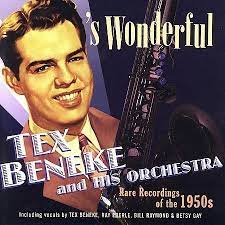
Tex Beneke was born Gordon Lee Beneke on February 12, 1914 in Fort Worth, Texas. He started playing saxophone when he was nine, going from soprano to alto and settling on the tenor saxophone. His first professional work was with bandleader Ben Young in 1935, but it was after a Gene Krupa recommendation when he joined the Glenn Miller Orchestra three years later that his career hit its stride.
Miller immediately made Beneke his primary tenor saxophone soloist and he played all but a few of the tenor solos on all of the records and personal appearances made by the Miller band until it disbanded in 1942. He appeared with Miller and his band in the films Sun Valley Serenade in 1941 and Orchestra Wives in 1942, and both film solos helped propel the singer/saxophonist to the top of the Metronome polls. He went on to perform with the 1941 Metronome All-Star Band led by Benny Goodman. In 1942, Glenn Miller’s orchestra won the first Gold Record ever awarded for Chattanooga Choo Choo.
With the orchestra disbanded due to Miller’s enlistment, Tex briefly joined Horace Heidt before joining the Navy himself, leading a Navy band in Oklahoma. He led two bands in the navy and kept in touch with Miller while they were both serving in the military. By 1945, he felt ready to lead his own orchestra. When Glenn went missing in 1944 he took over the band, shaping it as a ghost band per the desires of the Miller estate, however by 1950, he and the estate parted ways.
Post Miller, Beneke led his own groups but as swing faded from the mainstream so did opportunities. There was a small revival in the late Seventies but he was limited to small labels and competition from Miller alumni and other imitators. He would make the television circuit making appearances on The Tonight Show and Merv Griffin. 1990 saw him have a stroke which sidelined his saxophone playing but he continued to conduct and sing.
On May 30, 2000 saxophonist, vocalist and bandleader Tex Beneke, who received a star on the Hollywood Walk of Fame, transitioned from respiratory failure at a nursing home in Costa Mesa, California, aged 86. His saxophone is currently used by the Arizona Opry.
More Posts: bandleader,history,instrumental,jazz,music,saxophone,vocal
Daily Dose Of Jazz…
Robert Hanley Casey was born in Johnson County, Illinois on February 11, 1909 and learned to play banjo and guitar as a child, playing both in regional ensembles in the Midwest. He didn’t pick up the bass until he was twenty and continued as a guitarist for some time after.
The mid-1930s saw him playing in NBC radio ensembles and working with Wingy Manone. In 1939 Bob joined Muggsy Spanier’s Ragtimers band but the group soon split, after which he played with Charlie Spivak, Brad Gowans, Eddie Condon, Miff Mole, and Joe Marsala. He played extensively on radio with several of these ensembles.
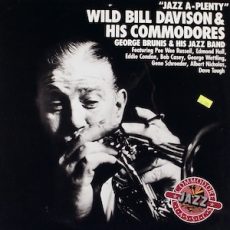
Casey was also a prolific session bassist, recording with Wild Bill Davison, Bobby Hackett, Cliff Jackson, Max Kaminsky, Eddie Edwards, Bud Freeman, Pee Wee Russell, Georg Brunis, George Wettling, Ralph Sutton, Joe Sullivan, and Boyce Brown in the 1940s and 1950s.
Relocating to Florida in 1957, he played with the Dukes of Dixieland. By the 1970s he was playing only occasionally. Double bassist Bob Casey transitioned on April 9, 1986, in Marion, Illinois.
More Posts: bass,history,instrumental,jazz,music
Daily Dose Of Jazz…
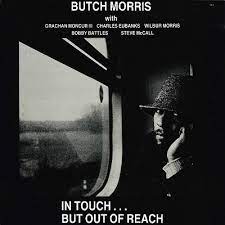
Butch Morris was born Lawrence Douglas Morris on February 10, 1947 in Long Beach, California. Before beginning his musical career, he served in the U.S. Army as a medic in Germany, Japan and Vietnam during the Vietnam War. He came to attention with saxophonist David Murray’s groups in the late 1970s and early 1980s.
>Morris led a group called Orchestra SLANG. The group features drummer Kenny Wollesen, alto saxophonist Jonathon Haffner, trumpeter Kirk Knuffke and others. He performed and presented regularly as part of the Festival of New Trumpet Music, held annually in New York City. He wrote most of the incidental music for the 1989 TV show, A Man Called Hawk, which starred Avery Brooks, with whom he co-wrote the theme music, along with Stanley Clarke. He also played with well-known artist and would-be drummer A.R. Penck in 1990.
The originator of Conduction (a term borrowed from physics), a type of structured free improvisation where Butch directs and conducts an improvising ensemble with a series of hand and baton gestures.
Cornetist, composer and conductor Butch Morris, known for pioneering his structural improvisation method Conduction, transitioned from lung cancer on January 29, 2013, at the age of 65 in New York City.
More Posts: bandleader,composer,conductor,cornet,history,instrumental,jazz,music