


Daily Dose Of Jazz…
Andrew Anderson was born on August 12, 1912 in Mandeville, Louisiana. He played in the Young Tuxedo Band and the Allen Brass Band. In the mid to late Twenties he played with Joe Oliver in Chicago, Illinois.
He led the Pelican State Band in the late 1930s and continued playing in New Orleans with various bands until the 1980s. In the Seventies and Eighties he played and recorded with the New Orleans Ragtime Orchestra.
Trumpeter Andy Anderson transitioned on December 19, 1982.
More Posts: history,instrumental,jazz,music,trumpet
The Quarantined Jazz Voyager
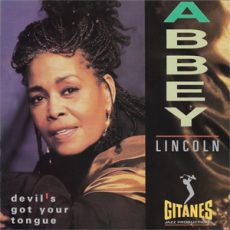
This week we continue to safeguard ourselves from those who consider the variants not a threat but this jazz voyager is opting on the side of caution as we select our next album. I’ve chosen the studio album Devil’s Got Your Tongue by Abbey Lincoln. It’s her fifteenth and her third for Verve Records. It was recorded on February 24 & 25, 1992 at BMG Studios in New York City and released on October 13, 1992.
The album peaked at No. 2 on the Billboard Jazz Albums chart on April 10, 1993. Verve allowed this icon of jazz to record nine of her compositions along with two classics for a very gratifying set.
Tracks | 68:56 All tracks are written by Abbey Lincoln, unless otherwise noted.- Rainbow (with The Noel Singers) (Abbey Lincoln, Melba Liston) ~ 4:42
- Evalina Coffrey (The Legend Of) ~ 7:04
- Story Of My Father (with The Staple Singer) ~ 5:28
- A Child Is Born (with The Noel Singers) (Thad Jones, Alex Wilder) ~ 6:20
- People In Me (with The Noel Singers) ~ 6:13
- A Circle Of Love (with The Noel Singers) ~ 5:53
- Jungle Queen ~ 6:09
- The Merry Dance ~ 7:48
- Devil’s Got Your Tongue ~ 5:49
- Spring Will Be A Little Late This Year (Frank Loesser) ~ 7:46
- The Music Is The Magic (with The Staple Singers) ~ 5:44
- Abbey Lincoln – vocals
- Rodney Kendrick – piano
- Marcus McLaurine – bass
- Grady Tate – drums (tracks 2–4, 10–11)
- Yoron Israel – drums (tracks 1, 5, 6, 8–9)
- James Louis “J.J.” Johnson – trombone (tracks 2, 4, 10)
- Stanley Turrentine – tenor saxophone (tracks 5, 8, 10–11)
- Maxine Roach – viola (tracks 2, 6)
- Babatunde Olatunji – Ngoma, Djembe, Ashiko & Shekere drums (track 7)
- Kehinde O’Uhuru – Ashiko drum (track 7)
- Sule O’Uhuru – Agogô bells, Djembe (track 7)
- Gordy Ryan – Jun-jun drum (track 7)
- The Staple Singers – backing vocals
- Pops Staples, Mavis Staples, Cleotha Staples
- The Noel Singers – backup singers
- Ivan Archer, Giselle Brown, Queinton Caesar, Ronnie David, Shelby Ellis, Daylene Hunt, Clevie Jordan, Marie Leveque, Lucila Martinez, Jason Moses, Gregory Norman, Leigh-Ann Oadmore, Aleata Prince, Natasha Reeves, Tiffany Rivera, Linda Sanchez, Joann Santiago Sherrille Shabazz, Chante Slater, Karen Thompson, Teddy Turrene, Merlene West, Tasha Woodward
- Producer – Jean-Philippe Allard
- Engineer (First Engineer) – Rick Applegate
- Engineer (Second Engineer) – Jay Newland
- Engineer (Assistant Engineer) – Doug McKean
- Engineer (Assistant Engineer) – Sandy Palmer

More Posts: adventure,album,club,festival,genius,jazz,museum,music,preserving,restaurant,travel,vocal

Daily Dose Of Jazz…
Jesse Alexandria Stacy was born on August 11, 1904 in Bird’s Point, Missouri, a small town across the Mississippi River from Cairo, Illinois. His first piano teacher was Mabel Irene Bailey, who played piano for silent movies. In 1918 Stacy moved to Cape Girardeau, Missouri. He received his only formal music training with Clyde Brandt, a professor of piano and violin at Southeast Missouri State Teachers College, now Southeast Missouri State University while holding down a job sweeping Clark’s Music Store.
By 1920, Stacy was playing piano in Peg Meyer’s jazz ensemble at Cape Girardeau High School, the Bluebird Confectionery, and the Sweet Shop. Schoolmates called them the Agony Four. By 1921, the band was known as Peg Meyer’s Melody Kings and started touring the Mississippi River on the Majestic and other riverboats.[6]
The early 1920s saw Jess moving to Chicago, Illinois where he performed with Paul Mares, leader of the New Orleans Rhythm Kings, playing Chicago-style jazz. In 1935, Benny Goodman asked him to join his band, then moved to New York City, and spent 1935–39 with the Benny Goodman Orchestra, including a Carnegie Hall concert in 1938, where he played an unplanned piano solo during Sing, Sing, Sing (With a Swing). After leaving the Goodman Orchestra, he joined the Bob Crosby Orchestra and the Bob Crosby Bob-Cats.
Moving to Los Angeles, California in 1950 his career declined to club work and after a drunken woman spilled beer in his lap he announced he was quitting the music business and retired from public performances. He worked as a salesman, warehouseman, postman, and for Max Factor cosmetics before being rediscovered. He played for Nelson Riddle on the soundtrack of The Great Gatsby in 1974, was invited to play at the Newport Jazz Festival in New York and was asked to record twice for Chiaroscuro, in 1974 and 1977, Stacy Still Swings.
After his brief revival in the 1970s, he again retired from music and lived with his third wife, Patricia Peck Stacy, for forty-five years. Pianist Jess Stacy ,who won the DownBeat magazine piano poll in 1940 and was inducted posthumously into the Big Band and Jazz Hall of Fame in 1996, transitioned from congestive heart failure in Los Angeles on January 1, 1995.
More Posts: bandleader,history,instrumental,jazz,music,piano
Daily Dose Of Jazz…
Dan “Slamfoot” Minor was born August 10, 1909 in Dallas, Texas, and played trombone for a local church orchestra in his teens before joining local band the Blue Moon Chasers. In 1927, his first major professional engagement was as a member of Walter Page’s Blue Devils.
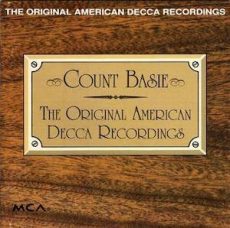
In 1929 Minor joined the Blues Syncopaters led by Ben Smith, and during this period he also worked in bands led by Earl Dykes, Gene Coy, Lloyd Hunter and Alphonse Trent. By 1931 he joined the Bennie Moten band, remaining after Moten’s death in 1935, when its leadership was taken over by Count Basie, and stayed with the Basie orchestra until 1941. During that period he performed at the From Spirituals to Swing concerts in New York City in 1938 and 1939.
However, Dan tended to be overshadowed by other trombonists such as Benny Morton and Vic Dickenson, and rarely took solos. He joined the Buddy Johnson band in 1942, and also played around that time with Cab Calloway. He worked with Mercer Ellington in 1945, and also recorded and played with Lucky Millinder and Willie Bryant.
After the 1940s, through to the 1960s, he continued to perform occasionally on a freelance basis. Trombonist Dan Minor transitioned in New York City on April 11, 1982 at the age of 72.
More Posts: history,instrumental,jazz,music,trombone
Three Wishes
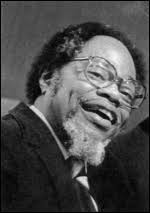
Roland Hanna had three wish answers he gave the Baroness when she inquired what his would be:
- “The first one would be to have been born with the wherewithal to have studied music to the fullest extent of my own capacity.”
- “My second wish would be that all men were created equally but different.”
- “My third wish… I wish my mother was still here.”
*Excerpt from Three Wishes: An Intimate Look at Jazz Greats ~ Compiled and Photographed by Pannonica de Koenigswarter
More Posts: baroness,history,instrumental,jazz,music,pannonica,piano,three,wishes