

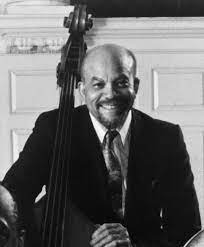
Three Wishes
When the subject of three wishes was broached, Willie Ruff told Nica he had only one that he would like to be granted and that was:
-
-
“I wouldn’t have three wishes. I would only have one and that’s to be forty. Because by then I will have everything I need.”
-
*Excerpt from Three Wishes: An Intimate Look at Jazz Greats ~ Compiled and Photographed by Pannonica de Koenigswarter
Willie Ruff: September 1, 1931 | French Horn, Double BassMore Posts: baroness,bass,french horn,history,instrumental,jazz,music,pannonica,three,wishes
Daily Dose Of Jazz…
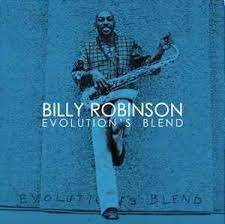
Billy Robinson was born on May 31, 1939, in Fort Worth, Texas. His jazz roots go back to his father’s nightclub where he played boogie-woogie piano as a child, and watched the adult musicians perform. At the beginning of his musical career he played with John Carter, Ornette Coleman, and Dewey Redman. Living and playing in San Francisco, California in the mid-1960s towards the end of the decade he relocated to New York City, where he collaborated with Charles Mingus in 1969.
During the late 1960s, Robinson converted to Islam and remained a practicing Muslim for the rest of his life. A move to Montreal, Canada is where he married his first wife in 1970. Short-lived, four years later he married Suzanne Cyr and moved to Ottawa, Canada in 1978 and performed sporadically at the local level.
Following his recording debut on Archie Shepp’s Attica Blues, Billy released his first album titled Evolution’s Blend as a leader in 1972. Then in 1973 he played on the Sadik Hakim track Grey Cup Caper. From 1972 to 1998 he was a part of six recording sessions.
Tenor saxophonist, composer, educator and bandleader Billy Robinson, who was dubbed The Mystic by Freddie Hubbard, transitioned from a heart attack on August 11, 2005, in Ottawa, Ontario, at the age of 66.Bestow upon an inquiring mind a dose of a Fort Worth saxophonist to motivate the perusal of the genius of jazz musicians worldwide whose gifts contribute to the canon…
Billy Robinson: 1939 ~2005 | Tenor SaxophoneMore Posts: bandleader,composer,educator,history,instrumental,jazz,music,saxophone

Daily Dose Of Jazz…
Armando Peraza was born May 30, 1924 in Lawton Batista, Havana, Cuba and was orphaned by age 7 and lived on the streets. By twelve he was supporting himself by selling vegetables, coaching boxing, playing semi-pro baseball, and becoming a loan shark. His music career began at seventeen when he heard at a baseball game that bandleader Alberto Ruiz was looking for a conga player and Ruiz’s brother was on the same baseball team as him. Despite the absence of experience in music, he practiced and won the audition.
He left Cuba for Mexico in 1948 to tend to his sick friend, conga drummer Mongo Santamaría. They arrived in New York City in 1949 and after playing in Machito’s big band, Peraza was invited by Charlie Parker to participate in a recording session that included Buddy Rich. He recorded with Slim Gaillard in New York Cuty in 1949 in a session that produced Bongo City and toured the U.S. with him band until they reached San Francisco, California. He spent time in Mexico recording with Perez Prado and did some soundtracks for the Mexican movie industry.
Returning to the U.S. he settled in San Francisco, worked with Dizzy Gillespie, toured extensively with Charles Mingus and Dexter Gordon, and played with Puerto Rican actor and musician Tony Martinez. Armando led an Afro-Cuban dance review at the Cable Car Village Club in San Francisco, attracting a clientele from Hollywood that included Errol Flynn, Marlon Brando, and Rita Hayworth.
By 1954, he was working with pianist Dave Brubeck, Peraza met Cal Tjader, and jazz critic Leonard Feather recommended Peraza to Fantasy Records to record an Afro-Cuban album with Tjader. The result was Ritmo Caliente, which combined Afro-Cuban rhythms with a jazz sensibility. Following this he met George Shearing through bassist Al McKibbon and he spent the next twelve years with the pianist, a collaboration that put Peraza at the forefront of Afro-Cuban music.
Armando emerged as a composer, writing and recording twenty-one songs for Shearing, such as Mambo in Chimes, Mambo in Miami, Ritmo Africano, Armando’s Hideaway, This is Africa, and Estampa Cubana. These recordings were during the mambo craze in the U.S. and the world. In 1959, he joined Mongo Santamaría for the Mongo album, then became a member of Cal Tjader’s band for six years, followed by a stint with drummer Shelly Manne.
He recorded one solo album, Wild Thing, was the first Afro-Cuban percussionist to add conga drums to a rock track, an in 1972, at the age of 47, Peraza joined the rock band Santana, influencing andtrmining for nearly twenty years and played to millions of people around the world, partnering with percussionists José Areas, Mingo Lewis, Raul Rekow, and Orestes Vilató. He wrote or co-wrote sixteen songs recorded by Santana.
Peraza retired from Santana in 1990 at the age of 66, played a Santiago de Chile concert with Santana in 1992, returned to Cuba after fifty year absence in 202, and recorded on the John Santos, 20th Anniversary in 2005, At 82 years of age, in 2006 he made a rare appearance with Santana for a three show performance at the Montreux Jazz Festival in Switzerland. In 2007, he received a Lifetime Achievement Award from the Voices of Latin Rock, who present the Armando Peraza Award for achievement in the San Francisco Bay Area every year.
On April 14, 2014 Latin jazz percussionist Armando Peraza who played congas, bongos, and timbales transitioned from complications of pneumonia. He was 89.

More Posts: bongo,conga,history,instrumental,jazz,music,timbales
Requisites
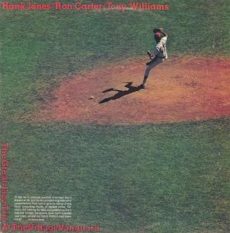
The Great Jazz Trio At The Village Vanguard | By Eddie Carter
This morning’s subject submitted for your consideration is a recent addition to the library by one of the quintessential small groups in jazz. The Great Jazz Trio At The Village Vanguard (East Wind EW-8053) is the first of three live albums by Hank Jones on piano, Ron Carter on bass, and Tony Williams on drums recorded over two nights at the venue in 1977. My copy used in this report is the 1978 US Stereo release (Inner City Records IC 6013).
Side One starts the set with a speedy rendition of Moose The Mooche by Charlie Parker. The trio takes off on a lively opening chorus, succeeded by Hank who accelerates quickly on the first solo. Tony takes over for the closing statement with a fierce attack of intense heat preceding the trio’s swift climax.
Up next is Naima, John Coltrane’s beautiful ballad named for his first wife. The trio’s rendition begins with a delicately graceful piano introduction segueing into a breathtaking collective theme. Jones opens the first solo luxuriously, gaining momentum into an enticing ending. Carter displays his abundant skills on a delightful finale complemented by Williams’ gentle brushwork leading to a warm, expressive exit.
Side Two gets underway with a pretty tune by Claus Ogerman, Favors. The ensemble begins with an easygoing midtempo opening chorus. Hank is up first and lets his ideas unfold at a leisurely pace. Ron follows with a relaxing message on the second solo, then Hank and Tony share a carefree conversation leading to the ensemble’s theme reprise and soft close.
The set closes with a blues by Ron Carter, 12 + 12. After the ensemble’s happy melody, Jones kicks off the solos with an utterly joyful performance. Carter also says plenty on an impressively buoyant statement, followed by Williams who speaks last in an exchange with Jones into the theme’s reprise and Tony’s introductions of the group. The album was produced by Kiyoshi Itoh and Yasohachi Itoh. Co-Producer David Baker also was the recording engineer. He’s done a phenomenal job because the sound quality is splendid with an exquisite soundstage placing the listener’s sweet spot in the crowd as the trio’s performing. The only issue is a small typo appearing on the back cover and the Side Two record label of both the Japanese and US releases, Claus Ogerman’s name is mispronounced.
Hank Jones was regarded by critics and fans alike as one of the most gifted musicians in jazz with an extensive discography and a career lasting sixty-six years including thirty-six as a member of The Great Jazz Trio. He passed away on May 16, 2010, at age ninety-one. Ron Carter is a living legend and the most recorded jazz bassist in history. He also plays the cello, is still performing and recording, and just celebrated his eighty-fifth birthday. Tony Williams was one of the best drummers in jazz and for five years provided the power behind The Miles Davis Quintet. He passed away at age fifty-one on February 23, 1997; but leaves a lasting legacy of music as a leader and sideman. If you enjoy live jazz and are a fan of these great musicians, I invite you to check out The Great Jazz Trio At The Village Vanguard. It’s a terrific jazz album with superb performances that is sure to please novice and seasoned jazz fans alike!
~ The Great Jazz Trio At The Village Vanguard, Volume 2 (East Wind EW-8055), ~ The Great Jazz Trio At The Village Vanguard Again (East Wind UCCJ-4001) – Source: Discogs.com ~ Naima – Source: JazzStandards.com ~ Moose The Mooche – Source: Wikipedia.org © 2022 by Edward Thomas Carter

More Posts: bass,choice,classic,collectible,collector,drums,history,instrumental,jazz,music,piano

Daily Dose Of Jazz…
David Kenneth Brooks, Jr. was born May 29, 1922 in Fayetteville, North Carolina, the older brother of Tina Brooks. His first professional gig was with the medicine show of Pepper McAllister.
He served in the Army during World War II where he played with James Moody. He moved to New York City after his discharge in 1944, where he played at Minton’s Playhouse and the Harlem Grill. He toured North Carolina in a band alongside Sonny Payne in 1947, then played with George Barkley at the Baby Grand in New York. He first recorded with Barkley around 1947 or 1948, then went on to play with Sonny Thompson from 1948 to 1957.
In 1958 he worked with Jimmy McCracklin and in 1961 with Phil Upchurch. While doing session work with pop musicians in the 1960s. From 1967 to 1973 he played at the Fantasy East in New York City with alto saxophonist Charles Williams and Don Pullen, recording three albums as a trio for Mainstream Records.
After a short run with Jimmy McGriff in 1974, Brooks became a member of Bill Doggett’s ensemble, where he remained for two decades from 1976 to 1996. He worked in the middle of the 1990s with Bross Townsend, Carrie Smith, and the Harlem Blues and Jazz Band, and toured France with Al Casey in 1999.
He recorded with Wynonie Harris, Phil Upchurch, Charles Williams, Bill Doggett, Bross Townsend, Michel Pastre, Joseph Carter, and Bobby Forrester. Tenor saxophonist David Kenneth Brooks, Jr., better known as Bubba Brooks or Bubber Brooks, transitioned on April 11, 2002.
More Posts: history,instrumental,jazz,music,saxophone