

Daily Dose Of Jazz…
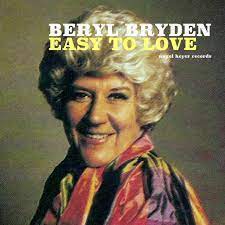
Beryl Audley Bryden was born May 11, 1920 in Norwich, Norfolk, England and was an only child Her enthusiasm for jazz music started during her teenage years, becoming a member of the National Rhythm Club when she was 17 and became secretary of the local branch in 1941. An ardent jazz fan she established a Nat Gonella fan club in her teens, before taking up the washboard and singing, influenced by Bessie Smith.
Moving to Cambridge in 1942 at 22, post WWII she returned to London with the hope of starting a career in music/ She worked with Mick Mulligan and George Melly at London jazz venues and became a supporter of visiting American jazz acts when the Musicians Union ban was lifted. Beryl befriended, amongst others, Buck Clayton, Louis Armstrong and Bud Freeman, with whom she recorded.
By 1949 she formed her own group called Beryl’s Back-Room Boys and later worked with Mike Daniels. In 1955 she joined the Chris Barber band on washboard, and played on Rock Island Line with Lonnie Donegan on vocals. This track helped trigger the ‘skiffle’ craze of the late 1950s.
Graduating to the Monty Sunshine jazz band she covered Bessie Smith’s Young Woman’s Blues, Gimme a Pigfoot (And a Bottle of Beer, and Coney Island Washboard Blues, which demonstrated her washboard technique.
She remained active at the end of the British trad jazz boom, and became particularly popular in Northern Europe, playing with the Ted Easton Jazz Band and The Piccadilly Six. She was active well into the Nineties playing with the Metropolitan Jazz Band, Digby Fairweather, Nat Gonella and her own Blue Boys.
Vocalist Beryl Bryden, whose final recording was with Nat Gonella shortly before her death, transitioned from lymphoma, aged 78, at St Mary’s Hospital, Paddington, England on July 14, 1998

More Posts: bandleader,history,instrumental,jazz,music,vocal,washboard
Three Wishes
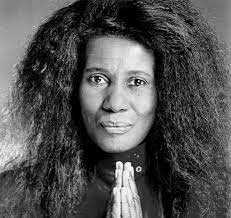
When the ladies took a moment for themselves, Nica inquired of Alice Coltrane what her three wishes would be if they were able to be given and she told her:
-
-
“I’d like to see my little daughter graduate from the University in Paris.”
-
“I would dig an artist’s colony. Like one block of buildings, or area, where artists and musicians could get together, and teach, and study. Artists could display their art. Writers ~ we’d allow them in, too, but it’d be mostly artists and musicians. We’d have a library, concerts, and sessions, and rooms for tapings. Artists could come in and record. You know, you’ve got it!”
-
*Excerpt from Three Wishes: An Intimate Look at Jazz Greats ~ Compiled and Photographed by Pannonica de Koenigswarter

More Posts: baroness,harp,history,instrumental,jazz,music,organ,pannonica,piano,three,vocal,wishes
Daily Dose Of Jazz…
Lorne Lofsky was born May 10, 1954 in Toronto, Ontario, Canada and began playing rock at school dances but later took an interest in jazz after hearing the album Miles Davis’ Kind of Blue. During the 1970s he attended York University in Toronto studying music while working around Toronto’s clubs. He worked with Canadian musicians Butch Watanabe and Jerry Toth and with Pepper Adams, Bob Brookmeyer and Chet Baker when they visited.
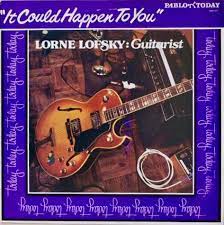
In 1980, Lofsky met fellow Canadian, pianist Oscar Peterson, who produced his first album It Could Happen to You. He toured with Peterson in the 1980s, and he toured and recorded as a member of Peterson’s quartet and quintet in the 1990s. Lofsky has also worked with Ed Bickert, Ruby Braff, Rosemary Clooney, Kirk MacDonald, Rob McConnell, Tal Farlow, Dizzy Gillespie, Johnny Hartman, and Clark Terry.
In the early-1980s, Lofsky began an important musical association with saxophonist Kirk Macdonald leading to the formation of a quartet. From 1983 to 1991 Lofsky played in a quartet with guitarist Ed Bickert. This collaboration yielded two recordings, one for Concord Records titled This Is New, along with a tour of Spain in 1991.
He has taught at York University, Humber College’s Community Music School and the University of Toronto. Guitarist Lorne Lofsky continues to perform, record, and tour.
More Posts: bandleader,guitar,history,instrumental,jazz,music
Daily Dose Of Jazz…
Steve Holt was born in Montreal, Quebec, Canada on May 9, 1954 and exhibited musical ability in early childhood, playing piano at the age of four. By the time he was a teenager, he was a regular on the Montreal club scene.
Self-taught until he entered McGill University, he received instruction from pianist Armas Maiste, whose bebop playing influenced him. Holt became a student of Kenny Barron, traveling regularly to New York City for private lessons. Graduating from McGill in 1981 with that university’s first Bachelor of Music major in Jazz Performance, he taught jazz improvisation there.
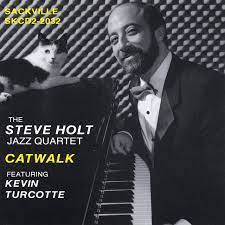
Steve’s 1983 debut album, The Lion’s Eyes was nominated for a Juno Award. He has worked with Larry Coryell, Eddie Henderson, and Archie Shepp. Moving to Toronto, Canada in 1987 he worked as an equity analyst and for a time he also continued playing clubs at night. He released three albums in the early Nineties ~ Christmas Light, Just Duet and Catwalk.
At the end of the decade Holt returned his concentration to music full-time and three years later his fifth album, The Dream, was released. He turned his attention to music production and stopped performing jazz live until 2014. A move to the countryside reignited his interest in jazz performance and in 2017 he opened a health food store in Warkworth, Ontario that operates as a jazz venue once a week.
Pianist Steve Hunt continues to play jazz while maintaining outside interests.
More Posts: bandleader,history,instrumental,jazz,music,piano
Requisites
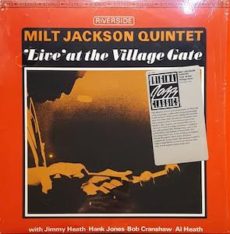
Live At The Village Gate ~ Milt Jackson Quintet | By Eddie Carter
I’ve been a huge fan of Milt Jackson ever since seeing him in concert with The 1972 Newport Jazz All-Stars at Music Hall in New York City. He swung effortlessly that evening with solos that were exciting and spirited, and I began collecting all his albums. A few nights ago, I was listening to this morning’s choice from the library and that’s what prompted this discussion. Live at The Village Gate (Riverside RM 495/RS-9495) is a 1967 release documenting the vibraphonist leading a wonderful quintet, Jimmy Heath on tenor sax, Hank Jones on piano, Bob Cranshaw on bass, and Albert “Tootie” Heath (Jimmy’s brother) on drums. My copy used in this report is the 1987 Original Jazz Classics Stereo reissue (Riverside OJC-309 – RLP-9495).
Side One starts with the first of three tunes by Bags, a nickname given to Milt by a Detroit bass player that he would be called the rest of his life. Bags of Blue is a tune that’ll have you tapping your toes from the quintet’s lively melody. Milt opens with a peppy first solo, then Jimmy takes a sprightly reading. Hank makes everyone feel good on the next statement. Milt and Jimmy split the finale with a few verses ahead of the ensemble’s ending and club’s applause. Little Girl Blue by Richard Rodgers and Lorenz Hart is one of their prettiest compositions from the Broadway musical, Jumbo (1935). Bags and Hank make a dainty introduction, then Bob and Albert come in for the tender theme. As the song’s only soloist, Milt gives a gorgeous performance complemented by the trio’s delicately sensitive support.
Up next is an upbeat original by Jimmy Heath, Gemini. It made its first appearance on his album, Triple Threat (1962). The group begins the melody briskly, then Milt leads off the opening statement with high-spirited energy. Jimmy applies some vigorous passion to the second presentation. Hank closes with a dazzling reading before the quintet takes their exit. Jackson’s light-hearted Gerri’s Blues begins Side Two with the first of two sparkling solos by Hank preceding the ensemble’s theme. Bags takes the first solo and constructs an infectious interpretation that’s perfectly suitable for dancing. Hank keeps the happy beat alive on the next reading, followed by Jimmy’s extremely nimble solo. The leader and saxophonist engage in a three-way conversation with Albert leading to a very satisfying conclusion.
Time After Time by Sammy Cahn and Jule Styne is a beautiful jazz standard and the second quartet presentation featuring Bags as the lone soloist. The quartet states a delicately pretty melody, then Milt seamlessly moves into a statement of great tenderness and intimacy capable of melting even the coldest heart. The quintet ends the set with Jackson’s Ignunt Oil that Bags first recorded on Plenty, Plenty, Soul (1957). The group struts their stuff on the opening chorus in unison. Milt starts off the solos with a joyous workout. Jimmy follows with some inspired ideas. Hank comes in next and cooks at a nice momentum. Bags leads toward the close with a few final thoughts preceding the quintet’s perfect ending to a great set.
Live at The Village Gate was originally recorded by Ray Fowler. The remastering by Phil DeLancie delivers a spacious soundstage transporting the listener to the club with all the intimacy and ambiance of being there in person. The result is a great recording of swinging jazz by one of the consummate musicians, Milt Jackson. It’s also a good place to discover his immense discography as a leader, sideman, and principal member of The Modern Jazz Quartet in an illustrious career lasting forty years. If you’re a fan of Bags, Jimmy Heath, or Hank Jones, I invite you to check out Live at The Village Gate by The Milt Jackson Quintet on your next vinyl hunt. It’s a nice way to unwind after a long day with your favorite drink and in my opinion, would make a great addition to any jazzophile’s library!
~ Plenty, Plenty, Soul (Atlantic 1269/SD 1269), Triple Threat (Riverside RLP 400/RLP 9400) – Source: Discogs.com ~ Little Girl Blue, Time After Time – Source: JazzStandards.com © 2022 by Edward Thomas Carter

More Posts: choice,classic,collectible,collector,history,instrumental,jazz,music,vibraphone