

Hollywood On 52nd Street
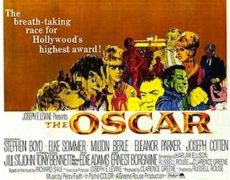
Maybe September is a 1965 song composed by Jay Livingston, Ray Evans and Percy Faith that was debuted by Tony Bennett in the 1966 drama The Oscar, a film written by Harlan Ellison, Clarence Greene, Russell Rouse and Richard Sale for Paramount Pictures.
The film was directed by Rouse and starred Stephen Boyd, singer Tony Bennett in his film debut, comedian Milton Berle in a dramatic role, Elke Sommer, Ernest Borgnine, Jill St. John, Eleanor Parker, Joseph Cotten, Edie Adams, Peter Lawford, Broderick Crawford, Ed Begley, Walter Brennan and Jack Soo. Appearing as themselves are Bob Hope, Hedda Hopper, Merle Oberon, Frank Sinatra and Nancy Sinatra.
Despite the film’s impressive cast and crew, the film did not win any Oscars, though Bennett did pick up the Golden Turkey Award for Wrost Performance By A Popular Singer. Jay Livingston, Ray Evans and Percy Faith
The StoryRising movie star Frankie Fane finds himself in Hollywood but has used and abused everyone around him, especially the two women who have loved him. Becoming box office poison, at his lowest point he unexpectedly receives an Oscar nomination, which his agent Kappy believes is the result of Fane’s portrayal of a man without morals, therefore portraying himself. To help insure a win, he hires a detective to spread sympathy rumors to influence the voters. The moment of truth comes at the Academy Awards, as the presenter announces the winner, stating the name Frank, whereupon Fane rises instantaneously to head to the stage, but then hears Sinatra, leaving him stunned and crestfallen. Clapping his hands weakly, everyone in the assemblage whom he has wronged enjoys the comeuppance for this wholly self-absorbed, unfeeling individual.
Daily Dose Of Jazz…
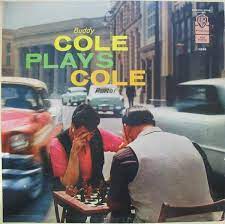
Buddy Cole was born Edwin LeMar Cole on December 15, 1916 in Irving, Illinois. He started his musical career in the theater, playing between movies and by age 19 he was recruited to be part of the Gil Evans band.
Moving to Hollywood, California in the second half of the 1930s, Buddy played in dance bands, including those led by Alvino Rey and Frankie Trumbauer. From the 1940s, his main work was as a studio musician, utilizing piano, electric organ, celeste, harpsichord and Novachord.
Cole worked with Henry Mancini, who used his Hammond organ for the soundtrack to the TV series Mr. Lucky. He also played most of the piano parts in the 1951 film Young Man with a Horn, subbing for Hoagy Carmichael, who appeared on screen. He also wrote the music for the television game show Truth or Consequences.
He performed on Bing Crosby’s hits In a Little Spanish Town and Ol’ Man River, and on the albums Some Fine Old Chestnuts and New Tricks. Buddy also played on Rosemary Clooney’s radio program and some recordings from the show were released on the album Swing Around Rosie.
Pianist, organist, orchestra leader, and composer Buddy Cole, who recorded several organ albums as a leader for Warner Brothers, Columbia, Alshi and Doric, passed away on November 5, 1964 in Hollywood, California.

More Posts: bandleader,composer,history,instrumental,jazz,music,organ,piano
Three Wishes
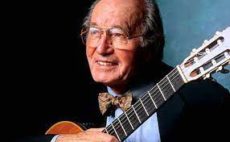
Charlie Byrd told Pannonica his three wishes were:
- “I’d like to play scales like Sabicas.”
- “I’d like to get a tone like Segovia.”
- “And rhythmic drive like Wes Montgomery. And it’s an impossibility to have all that, but that’s what I wish.”
*Excerpt from Three Wishes: An Intimate Look at Jazz Greats ~ Compiled and Photographed by Pannonica de Koenigswarter

More Posts: baroness,guitar,history,instrumental,jazz,music,pannonica,three,wishes
Daily Dose Of Jazz…
John Lurie was born on December 14, 1952 in Minneapolis, Minnesota and was raised with his brother and sister in New Orleans, Louisiana and Worcester, Massachusetts.
In high school, he played basketball and harmonica and jammed with Mississippi Fred McDowell and Canned Heat in 1968. He briefly played the harmonica in a band from Boston, Massachusetts but soon switched to the guitar and eventually the saxophone.
After high school, he hitchhiked across the country to Berkeley, California. Moving to New York City in 1974, he briefly visited London, England where he performed his first saxophone solo at the Acme Gallery.
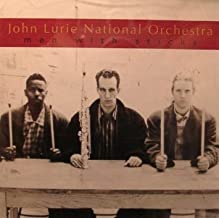
In 1978 John formed the Lounge Lizards with his brother Evan Lurie on piano. The two of them were the only constant members in the band through numerous lineup changes. In the early 1990s he formed a smaller group, the John Lurie National Orchestra and their work was heavily improvised.
By the early Nineties he was composing the theme to Late Night with Conan O’Brien with Howard Shore, which was also used when O’Brien hosted on The Tonight Show. He has written scores for over 20 movies, including Get Shorty, for which he received a Grammy Award nomination. As an actor he has starred, acted or made cameos in nineteen films and numerous television shows.
Saxophonist, painter, actor, director, and producer John Lurie has suffered debilitating ill health since 2000 with initially baffling neurological symptoms, and from symptoms attributed to chronic Lyme disease. The illness prevents him from acting or performing music, so he spends his time painting. His art has been shown in galleries and museums around the world. His 1980s NYC memoir, The History of Bones, was published by Penguin Random House in 2021.
More Posts: bandleader,history,instrumental,jazz,music,saxophone
Daily Dose Of Jazz…
Sonny Greer was born William Alexander Greer on December 13, c. 1895 in Long Branch, New Jersey. He played with Elmer Snowden’s band and the Howard Theatre Orchestra in Washington, D.C., before joining Duke Ellington. Meeting him in 1919, he was Ellington’s first drummer, playing with his quintet, the Washingtonians. He then moved with Ellington into the Cotton Club.
As a result of his job as a designer with the Leedy Drum Company of Indiana, Greer was able to build up a huge drum kit worth over a then-considerable $3,000, including chimes, a gong, timpani, and vibes.
A heavy drinker, as well as a pool-hall hustler when he needed to retrieve his drums from the pawnbroker, in 1950, Ellington responded to his drinking and occasional unreliability by taking a second drummer, Butch Ballard, with them on a tour of Scandinavia. This enraged Greer, and the consequent argument led to their permanent estrangement.
Sonny continued to play, mainly as a freelance drummer, working with musicians such as Johnny Hodges, Red Allen, J. C. Higginbotham, Tyree Glenn, and was there for the iconic 1958 Art Kane black-and-white photograph A Great Day In Harlem. He was part of a tribute to Ellington in 1974, which achieved great success throughout the United States.
Never recording as a leader, he was quite active as a sideman recording with not only seven albums with Duke but another twelve albums with Johnny Hodges, Bernard Addison, Louis Armstrong, Earl Hines, Lionel Hampton, Lonnie Johnson, Brooks Kerr, Oscar Pettiford, Rex Stewart, Victoria Spivey, and Josh White.
Drummer Sonny Greer , best known for his work with Duke Ellington, passed away of a heart attack on March 23, 1982 in Lenox Hill, on the upper East side of Manhattan.
More Posts: bandleader,drums,history,instrumental,jazz,music