


Daily Dose Of Jazz…
Rodrigo Amado was born in Lisbon, Portugal on July 15, 1964 and began studying the sax at the age of 17, briefly at the Hot Club Music School of Lisbon and with mentors Carlos Martins, Pedro Madaleno, and Jorge Reis.
With diverse musical interests, he explored improvisation in other genres, including his work with his various ensembles like the Lisbon Improvisation Players and the Motion Trio with Miguel Mira and Gabriel Ferrandini. He is an in~demand studio player on numerous recorded projects.
He started his own label Clean Feed in 2001, with brothers Pedro and Carlos Costa, before leaving the imprint in 2005 to start a second label, European Echoes. Also an accomplished professional photographer, Amado continues to be a bright light on the Portuguese and international improvisational jazz scene.
Saxophonist Rodrigo Amado continues to specialize in free-form, composition-in-the-moment jazz, and his various projects and trios have given him an international following.

More Posts: bandleader,composer,history,instrumental,music,saxophone
Daily Dose Of Jazz…
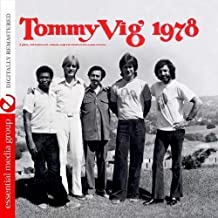
Tommy Vig was born on July 14, 1938 in Budapest, Hungary. Internationally recognized as a child prodigy by the age of 6, he played drums with his father, clarinetist Gyorgy Vig and performed concerts on Budapest State Radio, at the City Theatre, the Academy of Music, and the National Circus. By age 8, he made the album The World Champion Kid Drummer with Austrian jazz players in Vienna, Austria including Hans Koller, Ernst Landl, and the Hot Club of Vienna for Elite Special. The following year his drumming won him the 1947 MGM-Jazz Competition in Budapest and as a result made several recordings with the Chappy’s Mopex Big Band for His Master’s Voice.
Completing his studies at the Bartók Conservatory in 1955 and the Ferenc Erkel Music High School in 1956, due to the crushing of the Hungarian Revolution of 1956, he fled to Vienna, where he played concerts with Fatty George and Joe Zawinul. A move to the United States saw him on scholarship at Juilliard School of Music. Since then he has been writing and conducting concerts.
In 1970 Vig relocated to Los Angeles, California where he worked in the studios of Warner Bros., Fox, Universal, CBS, Columbia, ABC, Disney, Goldwyn, MGM, and Paramount. He played on 1500 studio sessions in Hollywood, two Academy Awards, and produced, directed, and conducted the official 1984 Olympic Jazz Festival for the Los Angeles Olympic Organizing Committee. He wrote the music for 30 films and television shows, and added percussion on the recording of Quincy Jones’s soundtrack to Roots.
Vig has worked with Red Rodney, Don Ellis, Cat Anderson, Terry Gibbs, Art Pepper, Milcho Leviev, Joe Pass, the Miles Davis-Gil Evans Big Band. Frank Sinatra, Sammy Davis Jr., Tony Curtis, Woody Allen, Judy Garland, Tony Bennett and Rod Stewart.
Since 2006, vibraharpist, drummer, percussionist, xylophonist and marimba player Tommy Vig, who has won several awards, has been performing concerts with his wife, appearing on radio and television, and recording albums.
More Posts: bandleader,drums,educator,history,instrumental,jazz,marimba,music,percussion,vibraharp,xylophone

Three Wishes
The Baroness asked Oscar Peterson what his three wishes would be and he said:
1. “I wish I could play the piano the way I want to.”
2. “I wish everyone was born with innate understanding of all art forms.”
3. “Love throughout the world, individual to individual.”
*Excerpt from Three Wishes: An Intimate Look at Jazz Greats ~ Compiled and Photographed by Pannonica de Koenigswarter

More Posts: baroness,history,instrumental,jazz,music,pannonica,piano,three,wishes

Daily Dose Of Jazz…
Pedro Iturralde Ochoa was born in Falces, Spain on July 13, 1929. He began his musical studies with his father and performed in his first professional engagements on saxophone at age eleven. GraduatING from the Royal Conservatory of Music in Madrid, he had studied clarinet, piano, and harmony.
When he was 20 years old he composed Czárdás for saxophone and dedicated the present version of the work, orchestrated by his brother Javier, to a friend, saxophonist Theodore Kerkezos. He went on to lead his own jazz quartet at the W. Jazz Club in Madrid, Spain and experimented with the combined use of flamenco and jazz, and making recordings for the Blue Note label.
In 1972 he undertook further study in harmony and arranging at the Berklee College of Music in Boston, Massachusetts. He taught saxophone at the Madrid Conservatory from 1978 until his retirement in 1994. He appeared in Spain and abroad as a soloist with the Spanish National Orchestra under the baton of Frühbeck de Burgos, Celibidache, Markevitch, and others.
He made recordings with the renowned flamenco guitarists Paco de Lucia, Paco de Algeciras and Pepe de Antequerra, and Paco Cepero. He also recorded with jazz vocalist Donna Hightower on her I’m In Love with Love album and arranged/conducted on her El Jazz y Donna Hightower album.
Saxophonist, teacher and composer Pedro Iturralde Ochoa passed away on November 1, 2020. in Madrid on November 1, 2020.
More Posts: bandleader,history,instrumental,jazz,music,saxophone
Daily Dose Of Jazz…
Jean-François “J.F.” Jenny-Clark was born July 12, 1944 in Toulouse, France. Together with drummer Aldo Romano he provided the rhythm section for Don Cherry’s 1965 European quintet of 1965. During the Seventies he recorded with Steve Lacy, performed in concerts with Keith Jarrett (around 1970) and for Jasper van’t Hof’s Pork Pie group and played with Charlie Mariano.
As a member of Diego Massons ensemble Musique Vivante he was interpreting contemporary music compositions by John Cage, Luciano Berio, Mauricio Kagel, Karlheinz Stockhausen, Pierre Boulez, or Vinko Globokar.
Along with Albert Mangelsdorff he led the German-French Jazz Ensemble from 1984 to 1987. Since 1985 Jenny-Clark was mainly working in an acclaimed trio with German pianist Joachim Kühn and Swiss drummer Daniel Humair.
His recording as a leader was minimal but as a sideman he recorded over a hundred albums. Double bassist Jean-François Jenny-Clark, one of the most important bass players of European jazz, passed away on October 6, 1998 in Paris, France.
More Posts: bandleader,bass,composer,history,instrumental,music