

Daily Dose Of Jazz…
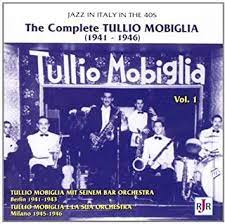
Tullio Mobiglia was born in Carezzano, Italy on April 12, 1911. Passionate about music, he graduated in violin at the Niccolò Paganini Conservatory in Genoa, Italy. In 1934 he began playing in orchestras on ships, often traveling to the United States where he was able to approach jazz, becoming friends with some musicians such as Coleman Hawkins.
He quickly emerged as the best Italian saxophonist of the period, and was called to play in the Mirador Orchestra. By 1940 Tullio was to Berlin, Germany achieving great success, to the point of being hired for a certain period in Heinz. Wehner Orchestra. 1941 saw him forming his first band of Italian musicians, with whom he published the first 78 rpm recordings.
During his career he had the opportunity to play with Django Reinhardt in another Berlin club, the Femina Bar. Due to the ban on playing American music he was only allowed to play European music, however, many pieces are written by Mobiglia himself.
Mobiglia returned to Italy in 1943 and two years later reformed his orchestra with other musicians, obtaining a contract with Columbia Records, where he recorded several 78s. In the following years he recorded with Telefunken, Cetra and Durium, resuming the playing of his first instrument, the violin. By 1967 he was teaching violin at the Jan Sibelius Conservatory of Helsinki, Finland to teach the violin, a position he held until the 1980s, while continuing to perform in the Finnish capital where he spent the last few years of his life. Saxophonist and bandleader Tullio Mobiglia passed away on July 24, 1991 at the age of 80 in Helsinki, Finland.
More Posts: bandleader,history,instrumental,jazz,music,saxophone
Requisites
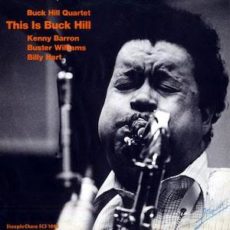
This Is Buck Hill ~ Buck Hill Quartet | By Eddie CarterMy first choice from the library for April is by one of the hidden stars of jazz. His name was Roger Wendell Hill, but everyone would know him by his nickname Buck. Hill began his professional career as a musician in 1943 while working as a Washington D.C. mailman. Buck first worked with Charlie Byrd in the late fifties, later appearing on albums by Shirley Horn, Alan Houser, and Shirley Scott. He also performed with Miles Davis, Dizzy Gillespie, Max Roach, and Sonny Stitt but didn’t record as a leader until the late seventies. Buck also played the clarinet and soprano sax, but the tenor sax was his primary instrument. This Is Buck Hill (SteepleChase Records SCS 1095) is a 1978 release offering all the excitement and energy of an after-hours jam session. He’s working with an outstanding rhythm section, Kenny Barron on piano, Buster Williams on bass, and Billy Hart on drums. My copy used in this report is the 1978 US Stereo album.
Side One starts with Tokudo, an original by Buster Williams that the bassist would record again a year later on his album, Heartbeat. This tune begins at a brisk tempo for the melody, and everyone is afforded a solo opportunity. Buck delivers the goods with aggressive momentum on the first presentation. Kenny shifts into high gear on the next reading. Buster dips into a soulful groove on the third statement, and Billy gives a dazzling performance before the out-chorus. Yesterdays by Jerome Kern and Otto Harbach is one of the most recorded jazz and pop compositions since its creation in 1933. The group swings at a medium tempo on the main theme. Hill gradually builds the excitement on the first statement to a sensational climax. Barron offers a beautiful sentiment in the next reading. Williams swings to a groovy beat preceding a luscious ending.
A blistering introduction by Billy begins Oleo by Sonny Rollins. The foursome gets things underway with a very quick melody. Buck takes off like the Road Runner for a high-octane fast ride including three unaccompanied verses of white heat. Kenny powers the next interpretation with energetic exertion, then Billy has a final furious exchange with Buck culminating into a brilliant climax.
Side Two begins with the first of three selections by the leader. I’m Aquarius is a beautiful ballad that originally appeared in a suite on trumpet player Alan Houser’s 1973 album, No Samba. It opens elegantly with a cascading flow of tenderness from Barron segueing gently into the melody with Hill directing the ensemble softly. The tenor remains tastefully restrained on the opening statement. Kenny closes with a delicate sensitivity leading to a sultry coda.
S.M.Y. is a lively original possessing an irresistible beat exuding happiness from the first notes of the opening chorus. The saxophonist starts the ball rolling with some vigorous blowing. Kenny digs in for some good rocking jazz next, then Buck supplies an abundant supply of high-voltage current into the theme’s reprise. The album closes with Two Chord Molly, an uptempo tune allowing everyone except Hart to contribute lengthy readings. The trio lays down a swinging line on the introduction with Hill providing vast amounts of energy to the festive melody. Barron delivers an enthusiastically rigorous lead solo. Buster gets down to business next with an intense workout. Buck accelerates on the closer producing electrically charged notes. During Hill’s statement, you can hear someone commenting (I’m sure positively) on his performance.
The man behind the controls is Elvin Campbell, whose work can be heard on many jazz albums. This record is well recorded, and the highs, midrange, and bottom end are all very detailed with an excellent soundstage and crystal-clear clarity. Buck recorded three more albums for SteepleChase, Scope (1979), Easy To Love (1982), and Impressions (1983). Hill passed away at age ninety on March 20, 2017. You’d never suspect this was the quartet’s first recording together because the music is excellent, and their interaction is seamless. Buck also meets the challenge of writing good compositions with strong performances inspired by Kenny Barron, Buster Williams, and Billy Hart. On your next vinyl hunt, I’ll hope you’ll consider This Is Buck Hill for a spot in your library. He was a veteran jazzman who certainly deserves a place alongside the greatest to ever blow the tenor saxophone! ~ Easy To Love (SteepleChase SCS-1160), Heartbeat (Muse Records MR 5171), Impressions (SteepleChase SCS 1173), No Samba (Straight Ahead ARS 001), Scope (SteepleChase SCS 1123) – Source: Discogs.com ~ Oleo, Yesterdays – Source: JazzStandards.com ~ Alan Houser, No Samba – Source: Album liner notes by J.R. Taylor ~ Roger Wendell Hill, Tokudo, Heartbeat, Scope, Easy To Love, Impressions, Elvin Campbell – Source: AllMusic.com, Wikipedia.org © 2021 by Edward Thomas Carter

More Posts: choice,classic,collectible,collector,history,instrumental,jazz,music,saxophone
Daily Dose Of Jazz…
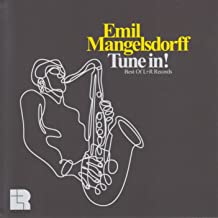
Emil Mangelsdorff was born April 11, 1925, in Frankfurt am Main, Germany. In 1942 and 1943, he studied clarinet at the Hoch Conservatory in Frankfurt, Germany.
As a member of the Frankfurt Hot Club, his performance of jazz with Hans Otto Jung among others, led to his being imprisoned by the Gestapo. He was forced into the German army and was a Russian prisoner of war for four years. In 1949 he returned to Frankfurt and decided to become a professional jazz musician. Emil played in the combos of Joe Klimm and Jutta Hipp, and was also a member of the Frankfurt All Stars and the Jazz-Ensemble des Hessischen Rundfunks from 1958.
Since the 1960s he has directed his own quartet. In 1964 Mangelsdorff wrote an instruction manual for jazz saxophone. In 2006 he was awarded the Goethe-Plakette des Landes Hessen and in 2008 he received the Bundesverdienstkreuz.
Alto saxophonist Emil Mangelsdorff, who also played soprano saxophone, clarinet and flute, has retired from music at 96.
More Posts: bandleader,clarinet,flute,history,instrumental,jazz,music,saxophone
Daily Dose Of Jazz…
Morty Corb was born Mortimer Gerald Corb on April 10, 1917 in San Antonio, Texas. He played four years with Bob Crosby’s television program, Morty also worked extensifly as a studio session musician in studios, appearing on some 300 recordings. He worked in Disneyland bands after moving to California in 1947.
Particularly interested in scary, haunted house stuff, in 1973 Morty developed the “Hallowed Haunting Grounds”, a trick or treating evening with a special flair for theatrical effects that made his homemade shenanigan impressive even to the Tinsel Town crowd.
His name has been mentioned alongside Wrecking Crew studio bassist Carol Kaye, he curbed his session availability as the rock and roll era progressed or perhaps regressed. The bassist instead went to work at Disneyland, playing in the attraction’s bands but also mingling with special effects folk.
Corb’s long career began in 1946 and lasted until his death. He performed and recorded with Pete Fountain, Ella Fitzgerald, Nat King Cole, Pearl Bailey, Louis Armstrong, Claude Thornhill, Kid Ory, Jack Teagarden, Benny Goodman, Pete Kelly, Barney Kessel, Claire Austin, George Van Eps, Eartha Kitt, Mel Lewis, Earl Grant, Red Nichols, Wild Bill Davison, Muggsy Spanier, Plas Johnson, Gene Krupa, Louie Bellson, Jonah Jones, and Billy May among numerous others.
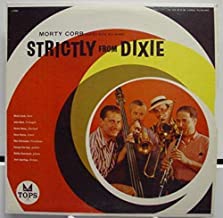
Double bassist Morty Corb, whose only album as a leader recorded in Los Angeles, California was his 1957 Strictly From Dixie featuring His Dixie All Stars, passed away on January 13, 1996 Las Vegas, Nevada..
More Posts: bandleader,bass,guitar,history,instrumental,jazz,music
Daily Dose Of Jazz…
Monty Sunshine was born on April 9, 1928 in Stepney, London, England. Along with Lonnie Donegan, Jim Bray and Ron Bowden, he formed the back line of what was the embryo Chris Barber Band. First trumpet Ken Colyer and the original 1953 band took the Colyer name until he left. Pat Halcox took over the spot and the band formally adopted the Chris Barber Jazz Band as its title.
The band quickly made an international reputation following their inaugural tour of Denmark, before their professional debut in the United Kingdom. Sunshine stayed with the band for several years, until he left in 1960, to be replaced by Ian Wheeler. He formed his own band, staying true to the original six-man line up, whilst Barber expanded his band membership to seven, then eight and finally to eleven.
Sunshine returned to play a reunion concert with the original Chris Barber Band at the Fairfield Halls, Croydon in 1975. Well received, the band reformed for an international reunion tour in 1994 and he retired from music around 2001. His discography is extensive, and compact discs have been issued of recordings with Colyer and Barber, as well as with his own band.
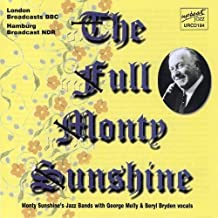
Clarinetist Monty Sunshine, known for his clarinet solo on the track Petite Fleur, passed away on November 30, 2010 at the age of 82.
More Posts: bandleader,clarinet,history,instrumental,jazz,music