


Daily Dose Of Jazz…
Charlie H. “Devil” Gaines was born on August 8, 1900 in Philadelphia, Pennsylvania. As a teenager, Gaine played in brass bands in his hometown before moving to New York City in 1920. It was there that he joined the orchestra of Wilbur Sweatman.
Signing on with Clarence Williams’s house band, he went on to play with Sam Wooding, Earl Walton, Leroy Smith, Fats Waller, Charlie Johnson, and the Hot Chocolates.
In the 1930s Gaines launched his own band in Philadelphia, recorded occasionally, including once with Williams in 1934. Simultaneously he continued playing with Smith while playing in Louis Armstrong’s orchestra. He continued to lead bands in Philadelphia into the 1950s, especially at the jazz venue Carroll’s.
The 1960s saw him performing in a trio at the Hangover Club until he went into retirement in the 1970s. Trumpeter and bandleader Charlie Gaines passed away on November 23, 1986.
More Posts: bandleader,history,instrumental,jazz,music,trumpet
Daily Dose Of Jazz…
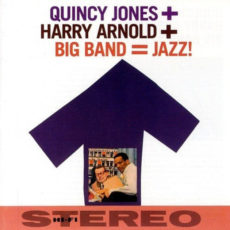
Harry Arnold Persson was born on August 7, 1920, in Helsingborg, Sweden and led his first big band in 1942, playing the saxophone initially but eventually ceased to perform, concentrating on arranging.
From 1949-52 he played and arranged for Thore Ehrling’s band and worked extensively as a studio musician, particularly writing film scores through much of the 1950s. From 1956 to 1965 Arnold led the Swedish Radio Big Band, which included Arne Domnérus, Bengt Hallberg, and Åke Persson.
American trumpeter Benny Bailey played with the band for a time, Quincy Jones arranged and briefly led the group, and they recorded with Ernestine Anderson, Lucky Thompson, Coleman Hawkins, Toots Thielemans, Tony Scott, and Stan Getz.
Disbanding the group in 1965, Arnold continued working as an arranger and led big bands in Europe. Saxophonist and bandleader Harry Arnold passed away on February 11, 1971 at the age of 51 in Stockholm, Sweden.
More Posts: arranger,bandleader,history,instrumental,jazz,music,saxophone

Conversations About Jazz & Other Distractions
Conversations About Jazz
Spotlights The Young Lions Revisited on August 6
Hammonds House Digital invites you to join us for Conversations About Jazz & Other Distractions hosted by former jazz radio host and founder of Notorious Jazz, Carl Anthony. Every other Thursday, Carl takes audiences on a unique journey through the world of jazz music with artist talks, workshops, and listening sessions.
On August 6 Conversations about Jazz revisits the iconic album, The Young Lions, recorded in 1960 and featuring incredibly talented – yet largely unknown at the time – musicians including Lee Morgan, Wayne Shorter, and Bobby Timmons. For this program, Carl will be joined by trombonist Wycliffe Gordon, pianist Eric Reed and trumpeter Marcus Printup. They will discuss their journey in jazz, beginning with the moment Wynton Marsalis recruited them as young men to perform in the Jazz at Lincoln Center Orchestra. It was through this relationship that they also became Young Lions.
This program is for the jazz novice and jazz head alike. It’s FREE, but you must register. To register click HERE.
Hammonds House Museum is generously supported by the Fulton County Board of Commissioners, Fulton County Arts and Culture, the City of Atlanta Mayor’s Office of Cultural Affairs, AT&T and WarnerMedia.
Hammonds House Museum’s mission is to celebrate and share the cultural diversity and important legacy of artists of African descent. The museum is the former residence of the late Dr. Otis Thrash Hammonds, a prominent Atlanta physician and a passionate arts patron. A 501(c)3 organization which opened in 1988, Hammonds House Museum boasts a permanent collection of more than 450 works including art by Romare Bearden, Robert S. Duncanson, Benny Andrews, Elizabeth Catlett, Jacob Lawrence, Hale Woodruff, Amalia Amaki, Radcliffe Bailey and Kojo Griffin. In addition to featuring art from their collection, the museum offers new exhibitions, artist talks, workshops, concerts, poetry readings, arts education programs, and other cultural events throughout the year.
Located in a beautiful Victorian home in Atlanta’s historic West End, Hammonds House Museum is a cultural treasure and a unique venue. During the COVID-19 pandemic, they continue to observe CDC guidelines, but look forward to welcoming in-person visitors soon! For more information about upcoming virtual events, and to see how you can support their mission, visit their website: hammondshouse.org.
MEDIA: For more information, contact Karen Hatchett at Hatchett PR, karen@hatchettpr.com
Video To Come!!!
The Quarantined Jazz Voyager
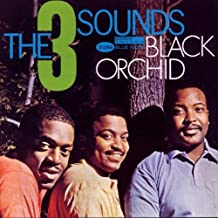
The Quarantined Jazz Voyager is pulling off the shelf for your listening pleasure comes from Black Orchid. It’s an album by jazz group The Three Sounds featuring performances recorded on March 7, 1962 (1-4, 6) and March 8, 1962 (5, 7-8) at Rudy Van Gelder Studios in Englewood Cliffs, New Jersey. It was released on the Blue Note label in 1964. The session was produced by Alfred Lion.
A 1998 reissue on compact disc added seven additional songs and as you listen to the below recording you will hear all fifteen compositions.
Track Listing | 42:37
- Black Orchid (Cal Tjader) – Erroneously credited to (Neal Hefti) – 5:25
- A Foggy Day (Gershwin, Gershwin) – 6:46
- For All We Know (Coots, Lewis) – 5:31
- Oh Well, Oh Well – 3:45
- At Last (Gordon, Warren) – 5:37
- Secret Love (Sammy Fain, Paul Francis Webster) – 5:44
- Don’t Go, Don’t Go – 5:08
- Saucer Eyes (Randy Weston) – 4:41
Personnel
- Gene Harris – piano
- Andrew Simpkins – bass
- Bill Dowdy – drums
Remain diligent my fellow voyagers in staying healthy, continue practicing social distancing, and don’t be so anxious to rush back to the new normal. It has been said that music soothes the savage beast, so listen to great music. I share that music to give you a little insight into the choices this voyager has made over the years during this sabbatical from jet setting investigations of jazz around the globe.

More Posts: adventure,bass,club,genius,jazz,museum,music,piano,preserving,restaurant,travel,voyager
Daily Dose Of Jazz…
William Marcel “Buddy” Collette was born in Los Angeles, California on August 6, 1921. Raised in the Central Gardens area of Watts in a house his father built, he was surrounded by people of all different ethnicities. His father played piano, his mother sang and the melting pot of Watts framed the way he saw his position as a black man in the future.
He began playing piano at age ten, in middle school, the saxophone. That same year, he formed his first band with Charlie Martin, Vernon Slater, Crosby Lewis, and Minor Robinson. The following year, Collette started a band with Ralph Bledsoe and Raleigh Bledsoe, then started a third group which eventually included bassist Charles Mingus. Becoming very good friends, Collette helped Mingus find his less wild, more reserved side. When he was fifteen, Collette became a part of the Woodman brothers’ band, along with Joe Comfort, George Reed, and Jessie Sailes.
While in high school, Buddy began traveling to Los Angeles, competed in a battle of the band and lost to a band that included Jackie Kelson, Chico Hamilton, and Al Adams. However, afterward, he was asked to join the winning band, and later, Charles Mingus joined this band. By 19, he started taking music lessons from Lloyd Reese, who taught him and the other musicians how to manage themselves in the music world.
After serving as a U.S. Navy band leader, he played with the Stars of Swing with Woodman, Mingus, Lucky Thompson, Louis Jordan, and Benny Carter. In 1949, he was the only black member of the band for You Bet Your Life, a TV and radio show hosted by Groucho Marx. In the 1950s, he worked as a studio musician with Frank Sinatra, Ella Fitzgerald, Duke Ellington, Count Basie, Nat King Cole, and Nelson Riddle.
In 1955 he was a founding member of the Chico Hamilton Quintet, playing chamber jazz flute with guitarist Jim Hall, cellist Fred Katz, and bassist Carson Smith. He was also an educator teaching Mingus, James Newton, Eric Dolphy, Charles Lloyd, and Frank Morgan. He helped merge an all-black musicians’ union with an all-white musicians’ union.
Flutist, saxophonist, and clarinetist Buddy Collette, 1994 co-founder of the JazzAmerica program, a non-profit organization that aims at bringing jazz into classrooms in middle school and high schools in the greater Los Angeles area tuition-free, passed away in his beloved hometown on September 19, 2010.
More Posts: bandleader,history,instrumental,jazz,music,trumpet