

Requisites
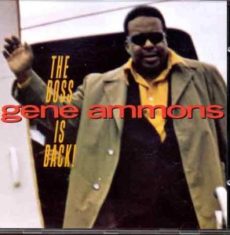
The Boss Is Back! is an album by saxophonist Gene Ammons recorded in 1969 and released on the Prestige label. Gene Ammons contributed the three originals The Jungle Boss, Tastin’ The Jug and Madame Queen to the six set session.
The compositions are tracked on the album in order:
-
- The Jungle Boss
- I Wonder
- Feeling Good
- Tastin’ the Jug
- Here’s That Rainy Day
- Madame Queen
Recorded at Van Gelder Studio in Englewood Cliffs, New Jersey, tracks 1, 2 & 4-6 were laid down on November 10, 1969 and track 3 on November 11, 1969.
Tenor saxophonist Gene Ammons enlisted the talents of Prince James, Houston Person on tenor saxophone on track 1, Junior Mance on piano on tracks 1, 2 & 4-6, organist Sonny Phillips on track 3, Buster Williams on bass on tracks 1, 2 & 4-6, electric bassist Bob Bushnell on track 3, drummers Frankie Jones on tracks 1, 2 & 4-6 and Bernard Purdie on track 3 and Candido playing congas on tracks 1, 2 & 4-6.

More Posts: choice,classic,collectible,collector,history,instrumental,jazz

Review: Lenora Zenzalai Helm | For The Love Of Big Band
For those of you who aspire to greatness, who challenge your status quo, and who dare to create something majestic, one must dig deep inside for the temerity. Whether you question the audacity of the idea, it takes confidence to even dare the monumental task of bringing nearly four dozen men and women together, producing a unique and innovative big band sound.
Under the auspicious name of The Tribe Jazz Orchestra, vocalist and bandleader Lenora Zenzalai Helm joins the ranks of Lil Hardin Armstrong, Kit McClure, Blanche Calloway, Valaida Smith, Lovie Austin, Sherrie Maracle, and In Ray Hutton among others.
Helm’s debut orchestra project, For The Love Of Big Band, was recorded live in concert over a two day period on March 26~27, 2019 and released on her own label, Zenzalai Music. This album brings new arrangements showcasing legendary composers and big band leaders ~ Nina Simone, Abbey Lincoln, Mal Waldron, Victor Young, John Coltrane, George & Ira Gershwin, Antonio Carlos Jobim, Clifford Brown, and Duke Ellington to name a few.
This twelve composition compendium of classics illuminates the musical genius of those who charted the big band course, laid the foundation and set the standard for this talented vocalist and bandleader to follow in their footsteps. Choosing Blues For Mama, Bebop, Chega de Saudade/No More Blues, It Could Happen To You, Soul Eyes, Everything But You, I Didn’t Know About You, Sandu, But Not For Me, A Conversation With God (Dear Lord), Mississippi Goddam, and Stella By Starlight, she spans several decades, from the Thirties to the Sixties. The music is a mix of jazz standards, brought swingingly to life at the live concert. Helm guided the band through the new arrangements by Stanley Cowell, Cecil Bridgewater, Maurice Myers and Brian Horton
Lenora’s Tribe Jazz Orchestra is composed of twenty-four musicians that include her voice, piano, guitar, bass,drums, reeds, trumpets,trombones and saxophone and orchestra conductor. Her Tribe Jazz Orchestra Septet, pulls three from the orchestra, adds conductor to her voice, along with cello, tenor saxophone, acoustic bass and the NCCU Vocal Jazz Ensemble as guest artists. Other special guests are pianist Joey Calderazzo, Acoustic bassist Ameen Saleem, and Maurice Myers ~ Vocal Soloist on A Conversation With God.
This is a well thought out and produced program of music that will introduce the novice to big band jazz and delight the aficionado who is seeking to expand his/her horizons and include one more big bandleader to their arsenal, who just so happens to be a vocalist, conductor, bandleader, and educator and all woman. I charge you to engage and listen carefully to the maturity of expression that Lenora Zenzalai Helm has put into and extracted from herself and the talented musicians under her purview. This is a wonderful and soulful performance by all accounts and something you will enjoy for years to come.
carl anthony | notorious jazz | february 15, 2020
Give A Gift Of Jazz ~ Share 
#preserving genius
More Posts: bandleader,big band,conductor,history,instrumental,jazz,music,orchestra,vocal

The Jazz Voyager
The Jazz Voyager is flying down to the southwest corner of South Africa to Cape Town for a few days to investigate the goings on a little known jazz spot called Asoka. Located at 8 Kloof Street, Gardens, it should prove to be good times as I will be mingling with fellow explorers and locals on this new adventure.
The restaurant and lounge serves up two days of jazz on Sunday from 8:00pm – 10:00pm with vocals every third week. On Tuesday live jazz starts at 8:30pm followed by deep house at 10:00pm.
The menu sports selections of fish, duck, beef, chicken and ostrich along with an assortment of vegetables and salads. I think I will dine on a few select delectables and the music will be a discovered surprise without advance notice. All part of the adventure of a jazz voyager.
For more info or to make reservations the number is +27 21 422 0909.

More Posts: adventure,club,genius,jazz,museum,music,preserving,restaurant,travel
Three Wishes
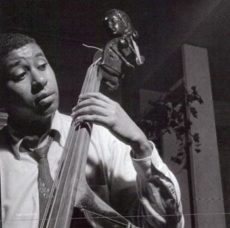
When inquiry of three wishes came from Nica to Paul Chambers, he responded with:
- “Fame.”
- “Fortune.”
- “Happiness.”
*Excerpt from Three Wishes: An Intimate Look at Jazz Greats – Complied and Photographed by Pannonica de Koenigswarter”
More Posts: baroness,history,instrumental,jazz,musician,pannonica,three,wishes
Requisites
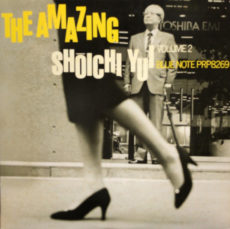
The Amazing Shoichi Yui is a compilation album of songs recorded on the Blue Note label that was released in 1985.
There are only two tracks on the album with Side One being The Golden Age Of Modern Jazz with 25 songs and Side Two Jazz In Transition with 18 songs. Included is commentary by Shoichi Oilai and numerous performances of songs like Night Dreamer, Maiden Voyage, Old Devil Moon and Moanin for example.
Some of the musicians on this 42 song compilation include Sonny Rollins, Hank Mobley, Horace Silver, Cecil Taylor, John Coltrane, Andrew Hill, Cecil Taylor, Eric Dolphy, Cannonball Adderley, Miles Davis, Herbie Hancock and Kenny Drew, among others.
Commentary is in Japanese but to listen to excerpts of the music copy and paste this link in browser: https://www.nicovideo.jp/watch/sm19249586
More Posts: choice,classic,collectible,collector,history,instrumental,jazz,music