


Daily Dose Of Jazz…
Dick Lammi was born on January 15, 1909 in Red Lodge, Montana. Early in his career he played violin and banjo, playing as a banjoist in various dance bands and orchestras in the Pacific Northwest in the late 1920s. Settlling in Portland, Oregon in the early Thirties, and played bass in a group there.
After a move to San Francisco, California in 1936 he began playing tuba alongside bass. His best-known work was as a member of Lu Watters’s rehearsal band, which evolved into the Yerba Buena Jazz Band, playing regularly at the Dawn Club.
With World War II interrupting his tenure with the ensemble, after his discharge he rejoined the YBJB and stayed with them until they disbanded in 1950. The Fifties saw Dick working with Bob Scobey, Turk Murphy, Wally Rose, and Clancy Hayes. He recorded little after the early 1960s.
Tubist and bassist Dick Lammi, who was the first tuba player to record during the San Francisco revival, died on November 29, 1969 in San Francisco.

More Posts: banjo,bass,history,instrumental,jazz,music,tuba,violin
Daily Dose Of Jazz…
David A. Young was born January 14, 1912 in Nashville, Tennessee but was raised in Chicago, Illinois. There he joined a band made up of newsboys from the Chicago Defender.
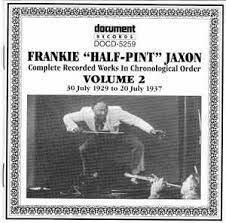
In the 1930s he worked in the bands of Frankie Half Pint Jaxon, Fletcher Henderson, Carroll Dickerson, and Roy Eldridge. He was with Horace Henderson in 1939-1940.
During World War II worked with Walter Fuller, Lucky Millinder, and Sammy Price. He was drafted into the U.S. Navy in 1944 and played in a military band until the end of the war. After his discharge Dave returned to Chicago and played with Dinah Washington.
The 1950s had Young leaving his career in music and returning to working for the Chicago Defender, this time as an advertising executive.
Tenor saxophonist Dave Young died on December 25, 1992.
More Posts: history,instrumental,jazz,music,saxophone
Daily Dose Of Jazz…
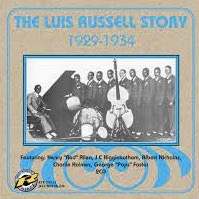
Otis Johnson was born on January 13, 1908 in Richmond, Virginia. He began his career in the late 1920s, working with Gene Rodgers, Henri Saparo, Eugene Kennedy, and Charlie Skeete. In 1929 he joined Luis Russell’s band, and rejoined Kennedy’s group before working with Benny Carter in 1934. He played with Charlie Turner and Willie Bryant in the mid-1930s.
Toward the end of the decade he performed with Louis Armstrong and Don Redman. On December 30, 1940 Otis enlisted in the 369th Coast Artillery of the New York Army National Guard. He was discharged on October 13, 1945.
Trumpeter Otis Johnson, who never returned to active performance after leaving the military, died on February 28, 1994.
More Posts: history,instrumental,jazz,music,trumpet
Daily Dose O fJazz…
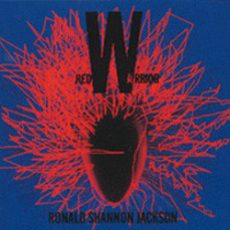
Ronald Shannon Jackson was born on January 12, 1940 in Fort Worth, Texas and as a child he was immersed in music. His father monopolized the local jukebox business and established the only African American-owned record store in the metropolitan area. His mother played piano and organ at their local church. Beginning at age five until nine he took piano lessons and in the third grade he studied music with John Carter. He graduated from I.M. Terrell High School, where he played with the marching band and learned about symphonic percussion. By the age of 15, he was playing professionally. His first paid gig was with tenor saxophonist James Clay.
Attending Lincoln University in Jefferson City, Missouri gave him access to St. Louis, Missouri and the musicians touring the Midwest. His roommate was pianist John Hicks and his bandmates also included Lester Bowie and Julius Hemphill. Transferring first to Texas Southern University, then to Prairie View A & M before landing at the University of Bridgeport in Connecticut studying history and sociology. In 1966, through trumpeter Kenny Dorham he attended New York University on a full music scholarship.
Once in New York City he performed with many jazz musicians, including Charles Mingus, Betty Carter, Jackie McLean, Joe Henderson, Kenny Dorham, McCoy Tyner, Stanley Turrentine, Charles Tyler and Albert Ayler. By 1975 he joined Ornette Coleman’s electric free funk band, Prime Time, where he learned composition and harmolodics. He would go on to play Paris, France, record four albums with Cecil Taylor, and formed his band, The Decoding Society, in 1979. In addition to leading Decoding Society lineups, guitarist James Blood Ulmer recruited Ron for another group.
Continuing to push the envelope over the next few years he formed several groups including Last Exit, SXL, Mooko, and Power Tools. Jackson joined trumpeter Wadada Leo Smith’s Golden Quartet, then played with the Punk Funk All Stars, and toured Europe with The Last Poets. In 2011 he formed a power trio called Encryption.
Drummer Ron Jackson who recorded nineteen albums as a leader, six with Last Exit and as a sideman fifteen with Albert Ayler, James Blood Ulmer, Cecil Taylor, SXL, Music Revelation Ensemble, and Ornette Coleman, died of leukemia on October 19, 2013, aged 73.
More Posts: bandleader,history,instrumental,jazz,music,percussion
Daily Dose Of Jazz…
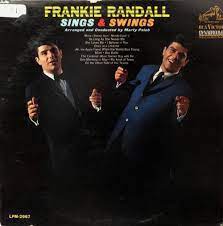
Frankie Randall was born Franklin Joseph Lisbona on January 11, 1938 in Passaic, New Jersey. In 1964, he kicked off his acting career starring in Wild on the Beach and appeared in The Day of the Wolves in 1971. He appeared numerous times on the Dean Martin TV show, and hosted the summer version of the show when Martin was not available.
He released dozens of RCA singles and albums from the 1960s onwards. After starting out in pop music, Randall, a piano player, began performing material from The Great American Songbook. His version of the song “I Can See for Miles” by The Who is included in Rhino Records’ album Golden Throats: The Great Celebrity Sing Off.
In 2001, a Golden Palm Star on the Palm Springs, California, Walk of Stars was dedicated to him. Frankie was inducted into the Las Vegas Casino Legends Hall of Fame the following year. He was presented the Amadeus Award by the Desert Symphony on January 11, 2013.
On December 28, 2014, pianist and vocalist Frankie Randall died of lung cancer in Indio, California at the age of 76.
More Posts: bandleader,history,instrumental,jazz,music,vocal