

Daily Dose Of Jazz…
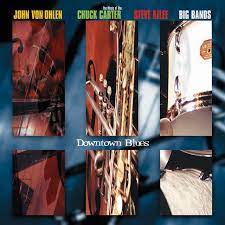
John Von Ohlen was born in Indianapolis, Indiana on May 13, 1941. He began playing trombone in middle school, and continued playing through high school. Graduating from North Central High School in 1960, he briefly studied at North Texas State, but returned to Indianapolis shortly after.
From 1967 to 1968, Von Ohlen toured with Billy Maxted’s Manhattan Jazz Band. He also worked for Woody Herman in 1967 and 1969, then with Stan Kenton from 1970 to 1972.
John went on to lead the Blue Wisp Big Band in Cincinnati from 1980 to 2018 and his own groups under his name ranging from quartets to big bands. During this period of the 1980s and 1990s, he was a member of a big band led by pianist Steve Allee.
Drummer John Von Ohlen transitioned in Cincinnati, Ohio on October 3, 2018 at the age of 77.

More Posts: bandleader,drums,history,instrumental,jazz,music
Daily Dose Of Jazz…
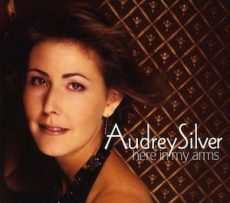
On May 12, 1964 Audrey Silver was born and raised in New York City, New York. She graduated from Brown University, where she founded The Higher Keys, the school’s first a capella singing group. After stints working in marketing for CBS Masterworks (now Sony Classical) and Chesky Records, she returned to school and earned an MBA from Columbia University Business School.
Beginning her singing career in earnest in 1998, she teamed with Jon Raney, son of pianist Jimmy Raney and produced her first demo with the help of Ronnie Zito and Jay Leonhart. In the meantime, she honed her craft through private study with singers Sheila Jordan and Mark Murphy. Building a respected career performing around the city’s jazz clubs and music venues, she also performed at national festivals and venues around the country.
She released her debut album Here In My Arms in 2004 and has since released three more, the last being before the pandemic. Silver was a 2016 semi-finalist in the International Songwriting Competition. As a songwriter, it was her four year old son that opened that door for her and the stories began to pour out.
Vocalist Audrey Silver credits Bill Evans, Annie Lennox and Arnold Schoenberg as influences as she continues to grow her catalogue of originals and performing around the world.
More Posts: bandleader,history,instrumental,jazz,music,vocal
Daily Dose Of Jazz…
Moon Edward Mullens was born on May 11, 1916 in Mayhew, Mississippi and raised in Chicago, Illinois. He played locally around the city early in his career, including with Half Pint Jaxon.
He moved to New York City and played with Chris Columbus before joining Hot Lips Page’s band in 1938, where he first recorded. He played with Earl Bostic, Columbus again in 1941, and Benny Carter before serving in the military during World War II.
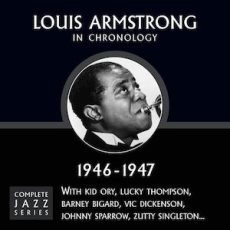
After the war he played with Louis Armstrong between 1946 and 1947, Cab Calloway, Joe Thomas, and with Lionel Hampton on and off between 1949 and 1959. From 1959 to 1961 he worked with Duke Ellington, then left music permanently, setting up a photography business, never recording as a leader.
Trumpeter Moon Mullens transitioned on April 7, 1977.
More Posts: history,instrumental,jazz,music,trumpet
Daily Dose Of Jazz…
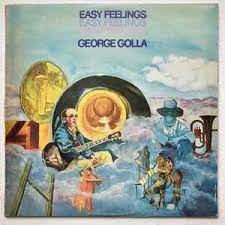
George Golla was born May 10, 1935 in Chorzów, Poland. He emigrated to Australia in the 1950s and began working in Sydney from 1957. Two years later he commenced a long-term musical partnership with the clarinetist, flautist and saxophonist Don Burrows that continued for nearly forty years.
Recording frequently in duo, quartets and other combinations, they nurtured and featured many young talents, including brassman and multi-instrumentalist James Morrison, guitarist Guy Strazzullo, drummer David Jones and others.
As educators they taught at the New South Wales Conservatorium and Golla was a teacher at the Academy of Guitar in Bondi alongside Don Andrews. He specialized in jazz and classical guitar and has written several books on theory, scales and the modes.
George toured frequently throughout Australia, playing on-call with international artists such as vibraphonist Gary Burton in the early 1970s. He has had a long association with Luis Bonfa and other Brazilian musicians. He has made hundreds of recordings, including The Don Burrows Quartet at the Sydney Opera House, Cherry Pie 1017 & 1032, and Steph’n’Us, with Stephane Grappelli during a tour with Grappelli and Burrows.
Guitarist George Golla, at 85, continues to perform in and around Sydney with flugelhorn player and singer songwriter Elizabeth Geyer, and tours interstate and internationally, records and conducts workshops.
More Posts: bandleader,guitar,history,instrumental,jazz,music
Daily Dose Of Jazz…
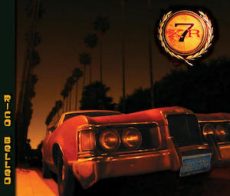
Rico Belled was born in the Netherlands on May 9, 1970 to Spanish/Swiss parents. Growing up in a multicultural environment, with a pianist father, he was exposed to many styles of music. He started playing piano at age 11, exploring everything from classical music to jazz. At 15 he started playing gigs with local bands doing pop and blues, while slowly getting interested in the bass, which he started practicing at age 17.
In 1989, while studying electrical engineering at the TU Delft, Rico met Roy Cruz in The Hague and joined his weekly Sunday night band at De Pater, exploring the world of Funk and Jazz playing Fender Rhodes. During these sessions they broke down all stylistic walls from playing Weather Report tunes to full on James Brown Funk, featuring as many as 10 people on the little stage. Here he got an education in the art of jamming.
Realizing music was his passion, in 1992 Belled gave up engineering and moved to Los Angeles, California and attended the Musicians Institute in Hollywood. Post graduation he was already playing with a few different groups in the Los Angeles area and in the following years made a name for himself as a bass and keyboard session musician. His breakthrough came when he joined Wrecking Crew pianist Don Randi and the house band at the Baked Potato in 1994. A two year residency offered the opportunity to lead his own group performing his original music at the club.
This led to him performing and recording with Marc Antoine, The Dan Band, Sound Assembly, Jeff Robinson, Leslie Paula’s Latin Soul Band, Liza Minelli, Chris Standring, Scott Grimes, Keiko Matsui and many others. He has co-written and published music with Mindi Abair and Jeff Robinson. All this led to him being asked to join the Rippingtons, starting with recording the album ‘Modern Art’, for which he received a Grammy Nomination in 2010. Still a member, bassist Rico Belled remains one of the top bassists in Los Angeles, known for his deep groove and versatility, staying busy live and in the studio.
More Posts: bandleader,bass,composer,history,instrumental,jazz,music