

Daily Dose Of Jazz…
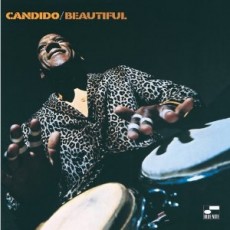
Candido was born Candido de Guerra Camero on April 22, 1921 in Havana, Cuba and learned to play percussion as a child listening to the music of his native land. Early in his career, Camero focused on conga and bongo, recording in his native Cuba with fellow jazz musician Machito. Although he has been credited as the first person to use the congas in jazz music, both Diego Iborra and Luciano “Chano” Pozo Gonzales preceded him in the 1940s.
Moving to New York in 1952 he started recording with Dizzy Gillespie and from 1953-54 he was in the Billy Taylor Quartet. The next year saw him performing and recording with Stan Kenton. During the Seventies Candido enjoyed success during the disco era, most notably with the Babatunde Olatunji-penned track “Jingo” from his Dancin’ and Prancin’ album on the Salsoul Record label, that has been acknowledged as a precursor five years prior to the birth of the house music genre.
He has performed and recorded Errol Garner, Gene Ammons, Art Blakey, Sonny Rollins, Wes Montgomery, Elvin Jones and Lionel Hampton on the short list of jazz luminaries. Percussionist Candido was honored with the National Endowment for the Arts Jazz Masters Award in 2008. In 2014, Camero recorded his last album, The Master, also for Chesky.
He continued to perform in jazz clubs in New York until the late 2010s. AWhen he was 96 years of age he was residing in his home in Cuba. Candido, who played conga, bongo, tres and bass died on November 7, 2020, at his home in New York. He was 99.
More Posts: percussion
Daily Dose Of Jazz…
Ian Carr was born on April 21, 1933 in Dumfries, Scotland. At the age of seventeen he started to teach himself trumpet and from 1952 to 1956 he attended King’s College. After graduation he joined his brother in a Newcastle band, the EmCee Five in 1960 before moving to London. From 1963-1969 he became co-leader with Don Rendell of the Rendell–Carr Quintet, recording five albums and touring internationally.
After leaving the quintet, Carr went on to form the groundbreaking jazz-rock band Nucleus that led to a successful international career, releasing twelve albums and winning first prize at the Montreux Jazz Festival. He would go on to play with the United Jazz and Rock Ensemble in 1975.
Ian worked as a session musician in non-jazz contexts, doubled up on flugelhorn, wrote a regular column for the BBC Music Magazine, penned biographies of Keith Jarrett and Miles Davis, and co-authored The Rough Guide to Jazz. Carr held the position of associate at the Guildhall School of Music and Drama in London where he founded the jazz workshop that graduated pianist Julian Joseph.
Trumpeter Ian Carr died on February 25, 2009, having suffered from Alzheimer’s disease.
More Posts: trumpet
Daily Dose Of Jazz…
Issi Rozen was born on April 20, 1967 in Haifa, Israel, his family moved to Tel Aviv during his childhood. His earliest musical memories were lullabies his mother sang. He began playing guitar at age 10, and as a teenager was practicing several hours a day. In 1991, after completing his service in the Israeli Defense Forces, he moved to Boston to study at Berklee College of Music.
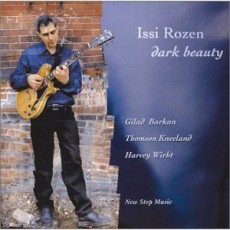
After finishing his studies at Berklee, Rozen settled in the Boston suburb of Brookline, released his debut album Red Sea in 1998for Brownstone Records. A year later he released Homeland Blues and in 2003, he released Dark Beauty.
Issi is clearly influenced by jazz guitarists Pat Metheny and Jim Hall but utilizes musical components from his native Israel leaning towards traditional Hebrew song sung primarily by Mizrah Jews while juxtaposing the bebop of the Charlie Parker tune Segment and his original compositions. This hybrid of different genres has given guitarist Issi Rozen critical acclaim as he continues to perform, record and tour.
More Posts: guitar
Daily Dose Of Jazz…
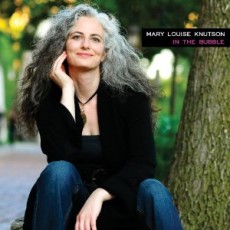
Mary Louise Knutson was born on April 19, 1966. The Minneapolis based jazz pianist and composer released her debut CD “Call Me When You Get There” in 2001 charted in the Top 50 in the U.S. and Canada that brought her national recognition. Knutson’s 2011 sophomore project on her Meridian Label, “In The Bubble”, charted in the Top 10 on JazzWeek and stayed for an unprecedented 19 weeks straight.
Mary received Lawrence University’s distinguished Nathan M. Pusey Alumni Achievement Award, was a Top 5 finalist in the Kennedy Center’s Mary Lou Williams “Women In Jazz” Pianist Competition, has been nominated for Jazz Artist of the Year and Pianist of the Year by the Minneapolis Music Awards, and has won two composition awards from Billboard Magazine.
As an educator she has sat on the faculty of Carleton College instructing jazz piano and improvisation, and currently teaches privately and conducts a variety of master classes such as Intro to Composition, Freedom From the Written Page: Beginning Improv for Pianists, and Making Sense of Jazz, among others.
Knutson has performed and toured with jazz greats Dizzy Gillespie, Bobby McFerrin, Dianne Reeves, Kevin Mahogany, Nicholas Payton, Ernie Watts, Slide Hampton, Greg Abate, Bobby Shew and Von Freeman to name a few and has crossed over into other genres to play with Smokey Robinson, Trisha Yearwood, Donny Osmond, Phyllis Diller, Rob Schneider and more. The pianist regularly performs with her group, with area vocalists Connie Evingson and Debbie Duncan; and with the JazzMN Orchestra, the Minnesota Orchestra and the Chuck Lazarus Quartet.
More Posts: piano
Daily Dose Of Jazz…
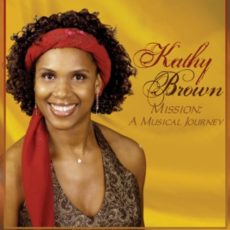
Kathy Brown was born April 18th in Mandeville, Jamaica and began playing the family piano at age 5. Initially self-taught in reading and playing by ear, she studied classical piano up to the sixth grade at the Royal School of Music in England. She took music as an elective in high school, college, while attaining her medical degree at the University of the West Indies and took classes in jazz piano after graduation.
Leading her bands Dr. Kathy Brown & Friends or Kathy Brown Band, she plays throughout Jamaica and has graced the stages of the Port Royal Music Festival, Ocho Rios Jazz Festival, Air Jamaica Jazz & Blues Festival, the Island Soul Festival in Toronto, Canada as well as performing in Suriname, Antigua and at the World Choir Games in Austria.
The pianist, composer, bandleader and recording artist, whose influences were Herbie Hancock, Joe Sample, Chick Corea, Chucho Valdes, Monty Alexander, Kenny Barron, and Michel Camilo, released her debut CD, Mission: A Musical Journey, which was nominated for Best Instrumental Album at the inaugural Jamaica Music Awards. Aside from performing as a jazz pianist and furthering her medical career, Dr. Kathy Brown is a vocalist and a member of the University Singers. When she puts on her educator hat she can be seen working with the East Queen Street Baptist and Nexus Performing Arts choirs.
More Posts: piano