

Daily Dose Of Jazz…
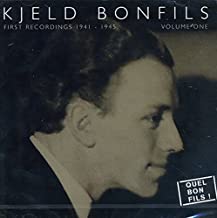
Kjeld Bonfils was born on August 23, 1918 in Copenhagen, Denmark. He was one of the figures involved in the Golden Age of Danish jazz in the 1930s.
During the Nazi occupation of Denmark from 1940 to 1945, jazz was discouraged by the regime, but Bonfils played with Svend Asmussen in Valdemar Eiberg’s band, as well as elsewhere. Jazz became a symbol of the underground and political protest.
Pianist and vibraphonist Kjeld Bonfils, who was hailed as one of the best soloists of his day, passed away on October 13, 1984 at age 66.

More Posts: bandleader,history,jazz,music,piano,vibraphone

Daily Dose Of Jazz…
Bumps Myers was born Hubert Maxwell Meyers on August 22, 1912 in Clarksburg, West Virginia. Moving to southern California with his family when he was nine years old, he began playing with Curtis Mosby in the late 1920s.
The 1930s saw him playing with Buck Clayton including on a tour of China. In addition, he played with Lionel Hampton and Les Hite. In the 1940s Bumps performed extensively with Benny Carter, Lester Young, Jimmie Lunceford, Sid Catlett, T-Bone Walker, Benny Goodman, and Russell Jacquet.
Through the 1950s he continued performing live and working as a session musician, with Jimmy Witherspoon, Helen Humes, Red Callender, Louie Bellson, and Harry Belafonte. After working with Horace Henderson in the early 1960s, he put together his own group Bumps Myers & His Frantic Five and recorded prior to retiring due to health problems.
Tenor saxophonist Bumps Myers, who also on occasion played alto and soprano, passed away on April 9, 1968 in Los Angeles, California.
More Posts: bandleader,history,instrumental,music
Daily Dose Of Jazz…
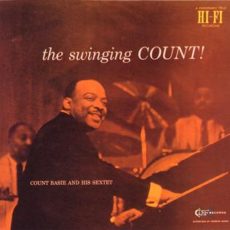
William James “Count” Basie was born on August 21, 1904 in Red Bank, New Jersey. His father played the mellophone, his mother played the piano and gave him his first piano lessons. Taking in laundry and baking cakes for sale for a living, she paid 25 cents a lesson for his piano instruction. The best student in school, he inished junior high school and spent much of his time at Red Bank’s Palace Theater, where he quickly learned to improvise music appropriate to the acts and the silent movies.
A natural pianist but preferring drums he was discouraged by the obvious talents of Sonny Greer, who also lived in Red Bank and became Duke Ellington’s drummer in 1919, He let the idea of drumming go and concentrated on the piano exclusively at age 15. He and Greer played together in venues until Greer set out on his professional career. By then, Basie was playing with pick-up groups for dances, resorts, and amateur shows, and Harry Richardson’s Kings of Syncopation.
By 1920 Basie was in Harlem where he bumped nto Greer and started meeting the musicians making the scene like Willie “The Lion” Smith and James P. Johnson. Before he was 20 years old, he toured extensively on the Keith and TOBA vaudeville circuits as a solo pianist, accompanist, and music director for blues singers, dancers, and comedians. This provided an early training that was to prove significant in his later career.
Back in Harlem in 1925, he met Fats Waller, who taught him how to play that instrument. As he did with Duke Ellington, Willie “the Lion” Smith helped Basie out during the lean times by arranging gigs at house-rent parties, introducing him to other leading musicians, and teaching him some piano technique.
In 1928, Basie joined Walter Page and his Famous Blue Devils. It was at this time that he picked up the moniker of Count. The next year saw him in Kansas City holding down the piano chair with Bennie Moten. After a couple of re-organizations of the band, Basie formed his own nine-piece band, Barons of Rhythm who played regularly at the Reno Club and on the radio. Moving to Chicago, Illinois the band eventually became the Count Basie Orchestra where they did their first recordings for Vocalion under the name Jones-Smith, as Basie had already signed with Decca.
Over the course of the fifty years he led the band he was instrumental in creating innovations like the use of two “split” tenor saxophones, emphasizing the rhythm section, riffing with a big band, using arrangers to broaden their sound, which any other bands copied. He also brought to prominence such players as Lester Young, Herschel Evans, Freddie Green, Buck Clayton, Harry “Sweets” Edison, Al Grey, Jimmy Rushing, Helen Humes, Thelma Carpenter, and Joe Williams.
Pianist, organist, bandleader, and composer Count Basie, who recorded close to two hundred albums and in 1958 became the first Black man to win a Grammy Award, passed away on April 26, 1984.
More Posts: bandleader,composer,instrumental,music,organ,piano
Daily Dose Of Jazz…
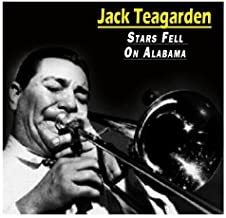
Jack Teagarden was born Weldon Leo Teagarden on August 20, 1905 in Vernon, Texas into a musical family, two brothers, a sister and father all musicians. His father started him on baritone horn but by age seven he had switched to trombone. His first public performances were in movie theaters, where he accompanied his mother, a pianist.
By 1920, Teagarden was playing professionally in San Antonio, Texas with the band of pianist Peck Kelley. In the mid-1920s he started traveling widely around the United States in a quick succession of different bands. 1927 saw him in New York City where he worked with several bands and by 1928 he was playing with the Ben Pollack band.
In the late 1920s, he recorded with such bandleaders and sidemen as Louis Armstrong, Benny Goodman, Bix Beiderbecke, Red Nichols, Jimmy McPartland, Mezz Mezzrow, Glenn Miller, and Eddie Condon. Miller and Teagarden collaborated to provide lyrics and a verse to Spencer Williams’ “Basin Street Blues”, which in that amended form became one of the numbers that Teagarden played until the end of his days.
Seeking financial security during the Great Depression, Jack signed an exclusive contract to play for the Paul Whiteman Orchestra from 1933 through 1938. In 1946, he joined his lifelong friend Louis Armstrong and his All Stars. In late 1951, he left to again lead his own band.
Suffering from pneumonia, trombonist and singer Jack Teagarden, considered the most innovative jazz trombone stylist of the pre-bebop era, passed away in New Orleans at the age of 58 on January 15, 1964.
More Posts: bandleader,history,instrumental,jazz,music,trombone,vocal
Daily Dose Of Jazz…
Dill Jones was born Dillwyn Owen Paton Jones on August 19, 1923 in Newcastle Emlyn, Carmarthenshire, Wales. He was brought up in New Quay on the Cardiganshire coast. Music was in the family, his mother a pianist and his aunt played organ at the Methodist Tabernacle. He was exposed to jazz as a 10-year-old by hearing records by Fats Waller and Bix Beiderbecke on the radio.
After leaving college, Jones followed his father into banking but was called up by the Royal Navy for wartime service in the Far East. When the war ended he enrolled at Trinity College of Music in London, England but did not complete the course, preferring the informality of late night jazz sessions.
Joining the Harry Parry Sextet and Vic Lewis’ Orchestra before plying his trade as ship’s pianist on the luxury liner, the Queen Mary, he sailed between New York City and Southampton. This gave Dill the chance to hang out in New York’s jazz clubs and hear Coleman Hawkins and Lennie Tristano, among others. After forming the Dill Jones Quartet in 1959, he emigrated to the United States in 1961, settling in New York City. He became an expert in the Harlem stride style. was soon in demand, earning his reputation playing with the likes of Gene Krupa, Jimmy McPartland and Yank Lawson.
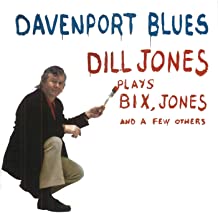
Between 1969–1973, Jones was a member of the JPJ Quartet with Budd Johnson, Oliver Jackson and Bill Pemberton. A double CD anthology of Dill Jones` work was released in 2004, entitled Davenport Blues – Dill Jones plays Bix, Jones and a Few Others.
Pianist Dill Jones, who was instrumental in bringing jazz to British television when he hosted the BBC Jazz Club, passed away from throat cancer in a New York hospital on June 22, 1984. He was 60