

Daily Dose Of Jazz…
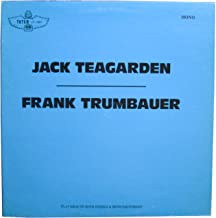
Orie Frank Trumbauer was born on May 30, 1901 in Carbondale, Illinois, Trumbauer grew up in St Louis, Missouri, the son of a musical mother who directed saxophone and theater orchestras. His first important professional engagements were with the Edgar Benson and Ray Miller bands, shortly followed by the Mound City Blue Blowers, a local group that became nationally famous through their recordings on Brunswick.
Trumbauer recruited Bix Beiderbecke for Jean Goldkette’s Victor Recording Orchestra, of which he became musical director. After leaving Goldkette, he and Beiderbecke worked briefly in Adrian Rollini’s short lived New Yorkers band, then joined Paul Whiteman in 1927. In 1927, he signed a contract with OKeh and released a 78 recording of Singin’ the Blues. Originally recorded and released by the Original Dixieland Jass Band in 1920, the Okeh recording became a smash hit. Fletcher Henderson and His Orchestra would record it in 1931 in the Trumbauer-Beiderbecke version.
He played with Whiteman for eight of the following nine years. Frank had a separate contract with OKeh from 1927 through 1930, where he recorded some of the most legendary small group jazz recordings of the era with Brunswick, Columbia, and Victor.
Leading The Three T’s, featuring the Teagarden brothers in 1936, two years later he and Mannie Klein co-led a band. In 1940 he left music to use his pilot skills to join the Civil Aeronautics Authority. Frank became a test pilot during World War II he was a test pilot with North American Aviation, and trained military crews in the operation of the B-25 Mitchell bomber. He continued to work for the CAA after the war, and also played in the NBC Orchestra. After 1947, although he continued to play and record, he earned most of his income in aviation.
Saxophonist, bassoonist, clarinetist and composer Frank Trumbauer, who was the influence for Lester Young, passed away of a sudden heart attack on June 11, 1956 in Kansas City, Missouri, age 55.

More Posts: alto saxophone,bassoon,C-melody saxophone,clarinet,history,instrumental,jazz,music
Daily Dose Of Jazz…
Sandy Mosse was born on May 29, 1929 in Detroit, Michigan and learned clarinet and alto saxophone early in life, but switched to tenor saxophone at the beginning of the 1950s. Based out of Chicago, Illinois during the decade, he made several forays abroad, playing in Paris with Wallace Bishop in 1951. On his 1953 tour of Europe he performed with Django Reinhardt and Woody Herman.
Upon returning to Chicago in 1955 he played with Bill Russo, Chubby Jackson, James Moody, and Cy Touff. Mosse and Touff also co-led an octet called Pieces of Eight late in the 1950s into the early 1960s, featuring trumpeter John Howell. He received awards from Down Beat and Playboy late in the 1950s.
The 1960s saw him playing with Buddy Rich, Maynard Ferguson, and Dave Remington. During this time Sandy formed a band with flugelhornist Warren Kime called Pieces of Eight. Unfortunately, that same decade he was diagnosed with cancer.
Marrying a Dutch woman Clara, he moved to Amsterdam in the 1970s, playing on national radio and teaching at the Royal Dutch Conservatory. Recording less, he occasionally toured the U.S. with Zoot Sims and Al Cohn. In the Netherlands, he played with an ensemble called Volume Two, with Irvin Rochlin, Klaus Flenter, Evert Hekkema, Ben Gerritsen, and Lex Cohen.
Tenor saxophonist Sandy Mosse, influenced by Lester Young, passed away on July 1, 1983 in Amsterdam, Netherlands.
More Posts: bandleader,history,instrumental,jazz,music,saxophone
Daily Dose Of Jazz…
Arthur “Traps” Trappier was born on May 28, 1910 in Georgetown, South Carolina and played with Charlie Skeets and Blanche Calloway in the late 1920s. After working steadily through the 1930s, he joined Fats Waller in 1941-42 before serving in the military during World War II.
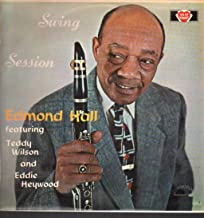
He led his own trio in various hotels in New York City in the 1950s, and played as a sideman into the 1970s. Among those he played with are Josh White, Wilbur De Paris, Edmond Hall, Sy Oliver, Hot Lips Page, Buddy Johnson, Wingy Manone, Sidney Bechet, Benny Goodman, and Red Allen.
He recorded with Waller, Hall, Conrad Janis, Punch Miller, Mutt Carey, Tony Prenti, Willie “The Lion” Smith, and Rex Stewart. Drummer Arthur Trappier passed away on May 17, 1975 in New York City.
More Posts: drums,history,instrumental,jazz,music
Daily Dose Of Jazz…
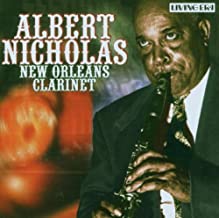
Albert Nicholas was born on May 27, 1900 in New Orleans, Louisiana and his primary instrument was the clarinet, which he studied with Lorenzo Tio in his hometown of New Orleans. Late in the 1910s he played with Buddy Petit, King Oliver, and Manuel Perez.
Spending three years in the Merchant Marines, he then joined Oliver in Chicago, Illinois from 1925 to 1927. After time in East Asia and Egypt, he returned to New York City in 1928 and played with Luis Russell until 1933. During this time in the city Albert played with Red Allen, Charlie Holmes, and J. C. Higginbotham. He would later play with Chick Webb, and Louis Armstrong with Russell and Jelly Roll Morton.
The Dixieland jazz revival of the late 1940s reinvigorated his career, playing with Art Hodes, Bunk Johnson, and Kid Ory. Nicholas had a regular gig with Ralph Sutton in 1948. In 1953 he moved to France and except for recording sessions in the U.S. in 1959-60, he remained there for the rest of his life.
Clarinetist Albert Nicholas, who was active from his teen years until his death, passed away on September 3, 1973 in Base, Switzerland.
More Posts: clarinet,history,intrumental,jazz,music
Daily Dose Of Jazz…
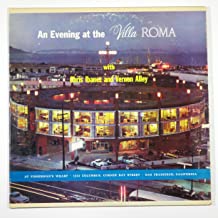
Vernon Alley was born on May 26, 1915 in Winnemucca, Nevada and played football in high school and college. His brother Eddie was a drummer and they played together often. He played with Wes People in 1937 and with the interracial Saunders King band until the end of the decade. He briefly led his own band in 1940.
Around 1940, while in Lionel Hampton’s band, Alley switched from double bass to electric upright bass, one of the first musicians to do so. In 1942 he moved to Count Basie’s ensemble, where he played only for a few months and appeared in the film Reveille with Beverly.
Enlisting in the Navy as a musician in 1942, after training at Camp Robert Smalls, he was assigned as part of a 45-piece regimental band to the Navy’s PreFlight School located at St. Mary’s College, in Moraga, California. Others who served in this band included Ernie and Marshal Royal, Jackie Kelso, Wilbert Baranco, Earl Watkins, and Buddy Collette.
After returning to civilian life, Alley put together an ensemble in San Francisco, California. He continued to play there and was an active member on local radio and in civic arts into the 1990s. Bassist Vernon Alley passed away on October 3, 2004 having become the most distinguished jazz musician in San Francisco history.
More Posts: bass,instrumental,jazz,music