

Daily Dose Of Jazz…
Kitty Kallen, born Katie Kallen on May 25, 1921 in Philadelphia, Pennsylvania, was one of seven children. As a child, she won an amateur contest by imitating popular singers. Returning home with her prize camera, her father punished her for stealing it. Only when neighbors subsequently visited to congratulate her did her father realize she had actually won it.
As a young girl, she sang on The Children’s Hour, a radio program sponsored by Horn & Hardart, an automat chain. As a preteen, Kallen had a radio program on Philadelphia’s WCAU and sang with the big bands of Jan Savitt in 1936, Artie Shaw in 1938, and Jack Teagarden in 1939. At twenty she sang the vocals for Moonlight Becomes You with Bobby Sherwood and His Orchestra at the second ever session for what was then still called Liberty Records but would soon be renamed Capitol Records. It was her only session for the label.
She joined the Jimmy Dorsey band when she was twenty-one replacing Helen O’Connell. Her recording with Dorsey, They’re Either Too Young or Too Old, was a favorite of American servicemen. She followed this with Dorsey’s #1 hit Besame Mucho. Singing duets with Bob Eberly, when he left to go into the service in 1943, she joined Harry James’s band.
With James she went on to have many hits in the top twenty with two hitting #1. In 1954 she was voted the most popular female singer in Billboard and Variety polls. She followed up with the song, In the Chapel in the Moonlight, which was another million seller. Kittty performed live at numerous prominent venues, as well as popular television shows like the Tonight Show, American Banstand and The Big Beat.
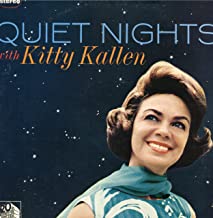
Her final album was Quiet Nights, a bossa nova–flavored release for 20th Century Fox Records. Subsequently, she retired owing to a lung ailment. On February 8, 1960, Kallen received a star on the Hollywood Walk of Fame A compilation of her hits on various labels remains available on the Sony CD set The Kitty Kallen Story. Vocalist Kitty Kallen passed away on January 7, 2016.

More Posts: history,instrumental,jazz,music,vocal
Daily Dose Of Jazz…
Herbert “Kat” Cowans, also spelled Cowens, was born May 24, 1904 in Texas. Working as a shoeshine boy as a child, his first professional engagement as a drummer was with the Satisfied Five, a local Texas ensemble. After moving to Wichita Falls, Texas he played in Frenchy’s New Orleans Jazz Band, then worked with Charlie Dixon. Quitting Dixon’s ensemble to finish high school while still in his teens, he went on to play in theater orchestras early in the 1920s.
Moving to New York City, Cowans played with Cleo Mitchell in the Shake Your Feet revue. Following this, he did work with the Kansas City Blackbirds, Jimmy Cooper’s Black and White Revue, and Eubie Blake in addition to leading his own band.
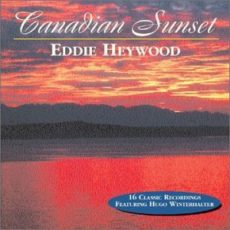
In the 1930s Herbert played with Fats Waller and Stuff Smith, before joining Eddie Heywood’s band for recordings behind Billie Holiday in 1941. He worked with Garvin Bushell in 1942, then played in the pit orchestra for the Broadway show The Pirate.
Cowans led a USO band in 1943, touring military bases worldwide, then led small ensembles for several decades thereafter. He also worked with Louis Metcalfe in 1963. He worked with USO again in East Asia in the 1970s, then retired to Dallas, Texas. Drummer Herbert Cowans passed away on January 23, 1993.
More Posts: bandleader,drums,history,instrumental,jazz,music
Daily Dose Of Jazz…
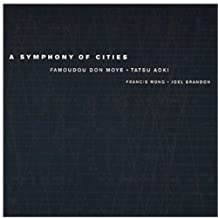
Donald Moye, Jr., known professionally as Famadou Don Moye, was born May 23, 1946 in Rochester, New York and during his youth performed in various drum and bugle corps including the Rochester Crusaders as well as church choir. He took violin lessons during this time and was exposed to jazz at an early age since his mother worked for a local social club that had a jazz club next door that hosted musicians such as Kenny Burrell and Jimmy McGriff.
He went on to study percussion at Wayne State University in Detroit, Michigan and lived in the same building as trumpeter Charles Moore, who became his mentor. He played in the groups African Cultural Ensemble, and Moore’s group, the Detroit Free Jazz. He first encountered the Association for the Advancement of Creative Musicians (AACM) due to the revolving door of musicians in and out of Moore’s residence. In early 1968, Moore’s band traveled to Europe and Moye decided to live there for the next couple of years, touring and visiting the continent as well as Northern Africa.
By 1969, the AEC had augmented into the percussion-less quartet of Roscoe Mitchell, saxophonist Joseph Jarman, trumpeter Lester Bowie and bassist Malachi Favors Maghostut. The group crossed the Atlantic Ocean and arrived in Europe to perform throughout the continent. Don at the time was rehearsing and performing in Paris, France, at the American Center for Students and Artists. When Mitchell met with Moye again at the Center, he asked Moye to join his group, which was already known as the Art Ensemble of Chicago and had issued several recordings including three releases on the European label BYG Actual.
After returning to the States in the early 1970s, he played with the Black Artists Group in St. Louis, Missouri before settling in the Chicago, Illinois area. He was also in a duo with fellow percussionist Steve McCall who later was a member of Air with Henry Threadgil while still playing with the AEC. In the mid-1980s, Moye joined The Leaders, a jazz group consisting of AEC members Bowie, Chico Freeman, Arthur Blythe, Cecil McBee, and Kirk Lightsey.
Moye has also recorded numerous solo albums as leader of his own band. Moye toured and recorded again with the AEC in the 1990s, which was dealt a blow with the 1999 death of Bowie. Other groups he led in the ’90s include the Joseph Jarman/Famoudou Don Moye Magic Triangle Band and the Sun Percussion Summit. Famadou Don Moye continues to perform and record.
More Posts: bandleader,drums,history,instrumental,jazz,music,percussion
Daily Dose Of Jazz…
Joe Springer was born on May 22, 1916 in New York City, He played locally on Coney Island from about 1931. His first major gig was with Wingy Manone in 1935.
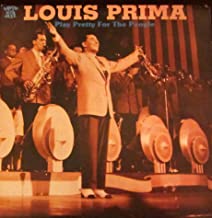
He first recorded in 1940 with Louis Prima and soon after worked with Buddy Rich in 1942, followed by a year with Gene Krupa until 1943. Joe went on to work with Oscar Pettiford, Tiny Grimes, Ben Webster, Charlie Barnet, Jimmy McPartland, Charlie Shavers, Roy Eldridge, and Raymond Scott.
Accompanying Billie Holiday regularly in the 1940s, Springer also worked with Anita O’Day. He continued working in New York City into the 1960s before retiring to Florida that decade.
Pianist Joe Springer passed away on October 24, 2004 in Miami, Florida.
More Posts: history,instrumental,jazz,music,piano

Daily Dose Of Jazz…
Billy Barber was born John William Barber on May 21, 1920 in Hornell, New York in 1920 and was known professionally as Bill or Billy. He started playing tuba in high school and studied at the Juilliard School of Music. After graduating, he travelled west to Kansas City, Missouri, where he played with the Kansas City Philharmonic and various ballet and theatre orchestras.
Joining the United States Army in 1942, he played in Patton’s 7th Army Band for three years. After the war, he started playing jazz, joining Claude Thornhill’s big band where he became friends with trombonist Al Langstaff, pianist Gil Evans and saxophone player Gerry Mulligan in 1947. Barber was one of the first tuba players to play in a modern jazz style, playing solos and participating in intricate ensemble pieces.
Becoming a founding member of Miles Davis’s nonet in 1949 in what became known as the Birth of the Cool recording sessions. He then worked in the theatre pit orchestras of The King and I, Paradiso, and the City Center Ballet. He joined up with Davis and Gil Evans in the late 1950s to record the albums Sketches of Spain, Miles Ahead and Porgy and Bess. Barber also played tuba on John Coltrane’s album Africa/Brass released in 1961.
Barber completed a master’s degree from the Manhattan School of Music and became an elementary school music teacher at Copiague, New York. He continued to play where possible including with the Goldman Band. In 1992, he recorded and toured with a nonet led by Gerry Mulligan, reworking material from Birth of the Cool. From 1998 to 2004 he was part of The Seatbelts, New York musicians who played the music of the Japanese anime Cowboy Bebop.
He is considered by many to be the first person to play tuba in modern jazz. Tubist Billy Barber passed away on June 18, 2007. of heart failure in Bronxville, New York.
More Posts: history,instrumental,jazz,music,tuba