

Daily Dose Of Jazz…
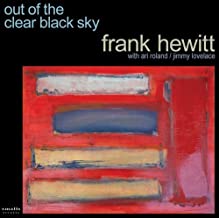
Frank Hewitt was born on October 23, 1935 in Queens, New York, living most of his life in Harlem. His mother was a church pianist, and he initially studied classical and gospel music but switched to jazz after hearing a Charlie Parker record. He took the bop pianists Thelonious Monk, Bud Powell, and Elmo Hope as his role models.
In the 1950s and 1960s, he worked with Howard McGhee, Cecil Payne, John Coltrane, Dinah Washington, and Billie Holiday, among others. 1961 saw him participating in the Living Theater’s production of Jack Gelber’s The Connection. He became a regular figure in the circle of the pianist Barry Harris. In the 1990s Hewitt became a central figure at New York’s Smalls Jazz Club; aside from playing there several nights a week, he sometimes also ended up using the walk-in refrigerator as a place to bunk when times were rough.
During his lifetime only one track of Hewitt’s playing was released, a version of the Kenny Dorham tune Prince Albert on the compilation Jazz Underground: Live at Smalls on Impulse in 1998. After his death, however, recordings made by Luke Kaven began to surface on Kaven’s Smalls Records label: the trio discs We Loved You, Not Afraid To Live, Fresh From The Cooler, and Out Of The Clear Black Sky, and the quintet date Four Hundred Saturdays.
Hard bop pianist Frank Hewitt, whose reputation as a neglected jazz master has steadily grown among fans of bebop piano, on September 5, 2002.

More Posts: bandleader,history,instrumental,jazz,music,piano
Daily Dose Of Jazz…
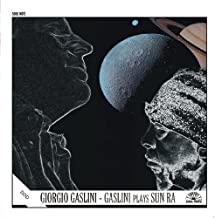
Giorgio Gaslini was born on October 22, 1929 in Milan, Italy and began performing aged 13 and recorded with his jazz trio at 16. In the 1950s and 1960s, Gaslini performed with his own quartet. He was the first Italian musician mentioned as a “new talent” in the Down Beat poll and the first Italian officially invited to the New Orleans Jazz Festival in 1976-77. He collaborated with leading American soloists, such as Anthony Braxton, Steve Lacy, Don Cherry, Roswell Rudd, Max Roach, but also with the Argentinian Gato Barbieri and Frenchman Jean-Luc Ponty.
Adapting the compositions of Albert Ayler and Sun Ra for solo piano, issued on the Soul Note label, he also composed the soundtrack of Michelangelo Antonioni’s La Notte, The Night, in 1961. In the early Seventies, he was the first holder of jazz courses at the Santa Cecilia Academy of Music in Rome.
As to contemporary music, he composed symphonic works, operas and ballets represented at the Scala Theatre in Milan and other Italian theatres. In addition from 1970 to 1977 he scored nine films, including Your Hands On My Body, Cross Current, and Kleinhoff Hotel. From 1991 to 1995, Gaslini composed works for Carlo Actis Dato’s Italian Instabile Orchestra.
Pianist, composer and conductor Giorgio Gaslini passed away on July 29, 2014 at age 84 in Borgo Val di Taro, Parma, Italy, where he had been living for years together with his longtime wife and fourteen dogs and cats.
More Posts: composer,conductor,history,instrumental,jazz,music,piano
Daily Dose Of Jazz…
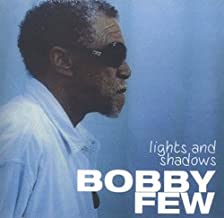
Bobby Few was born October 21, 1935 in Cleveland, Ohio and grew up in the Fairfax neighborhood of the city’s East Side. His mother encouraged him to study classical piano, later discovering jazz listening to his father’s Jazz at the Philharmonic records. His father became his first booking agent and soon he was gigging around the greater Cleveland area with other local musicians including Bill Hardman, Bob Cunningham, Cevera Jefferies, and Frank Wright.
Exposed to Tadd Dameron and Benny Bailey as a youth and knew Albert Ayler, with whom he played in high school. As a young man, Bobby gigged with local tenor legend Tony “Big T” Lovano, Joe Lovano’s father. The late 1950s had him relocating to New York City, where he led a trio from 1958 to 1964; there, he met and began working with Brook Benton, Rahsaan Roland Kirk, Jackie McLean, Joe Henderson and Ayler. Playing on several of Ayler’s albums, he also recorded with Alan Silva, Noah Howard, Muhammad Ali, Booker Ervin, and Kali Fasteau.
In 1969 he moved to France and rapidly integrated the expatriate jazz community, working frequently with Archie Shepp, Sunny Murray, Steve Lacy, and Rasul Siddik. Since 2001, he has toured internationally with American saxophonist Avram Fefer, with whom he recorded four critically acclaimed CDs. He plays extensively around Europe and continues to make regular trips back to the United States. Recently, Few has played with saxophonist Charles Gayle and leads his own trio in Paris. He is currently working on a Booker Ervin tribute project called Few’s Blues that features tenor player Tony Lakatos, bassist Reggie Johnson and drummer Doug Sides.
As a leader and co~leader, he recorded eighteen albums and fifty as a sideman. Pianist and vocalist Bobby Few, whose playing style has been described as delicate single-note melodies, roll out lush romantic chords, and rap out explicitly Monkish close-interval clanks, continued to perform and record until he passed away on January 6, 2021 at age 85.
More Posts: bandleader,history,instrumental,jazz,music,piano,vocal
Daily Dose Of Jazz…
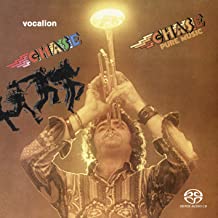
Bill Chase was born William Edward Chiaiese in Squantum, Massachusetts on October 20, 1934 His parents changed their name to Chase because they thought Chiaiese was difficult to pronounce. His father played trumpet in the Gillette Marching Band and encouraged his son’s musical interests, which included violin and drums. In his mid-teens, he settled on trumpet and attended his first Stan Kenton concert, which included trumpeters Conte Candoli and Maynard Ferguson.
After high school, he studied classical trumpet at the New England Conservatory but switched to the Schillinger House of Music, now Berklee College of Music. His instructors included Herb Pomeroy and Armando Ghitalla. By 1958 he was playing lead trumpet with Maynard Ferguson, Stan Kenton in 1959, and Woody Herman’s Thundering Herd during the 1960s.
One of Chase’s charts from this period, Camel Walk, was published in the 1963 Downbeat magazine yearbook. From 1966 to 1970 he freelanced in Las Vegas, Nevada working with Vic Damone and Tommy Vig. 1967 saw him leading a six~piece band at the Dunes and Riviera Hotel where he was featured in the Frederick Apcar lounge production of Vive Les Girls, for which Chase arranged the music.
In 1971 he started a jazz~rock band that mixed pop, rock, blues, and four trumpets. The debut album Chase was released in 1971 where he was joined by Ted Piercefield, Alan Ware, and Jerry Van Blair, three jazz trumpeters who were adept at vocals and arranging. The album contains Chase’s most popular song, Get It On, which garnered them a Best New Artist Grammy nomination.
For the next three years, he released two more and was working on a fourth when Chase’s work on a fourth studio album when en route to a scheduled performance at the Jackson County Fair, trumpeter and bandleader Bill Chase passed away at the age of 39 on August 9, 1974 along with the pilot, co-pilot, keyboardist Wally Yohn, guitarist John Emma, and drummer Walter Clark in the crash of a chartered twin-engine Piper Twin Comanche in Jackson, Minnesota.
More Posts: bandleader,composer,history,instrumental,jazz,music,trumpet

Daily Dose Of Jazz…
Masabumi Kikuchi was born on October 19, 1939 in Tokyo, Japan and lived his early life in World War II and post-war country. He studied piano and music at the Tokyo Art College High School. After graduating, he joined Lionel Hampton’s Japanese touring band.
Known for his eclectic music that ranges from vanguard classical to fusion and digital music. Not only working with Hampton, but he also performed with Sonny Rollins, Woody Herman, Mal Waldron, Joe Henderson, McCoy Tyner, Gil Evans, Elvin Jones, Miles Davis, Gary Peacock, Paul Motian, Billy Harper, and Hannibal Peterson.
As a leader and co~leader, he recorded twenty-five albums, and as a sideman or member of other groups, he recorded twenty~eight albums. Pianist and composer Masabumi Kikuchi passed away from a subdural hematoma on July 6, 2015 at a hospital in Manhasset, New York.
More Posts: bandleader,composer,history,instrumental,jazz,music,piano