

Daily Dose Of Jazz…
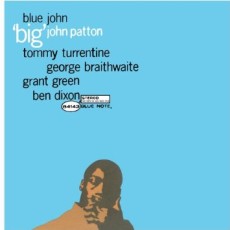
Big John Patton was born on July 12, 1935 in Kansas City, Missouri. His mother, a church pianist, taught him how to play the fundamentals. When he was about 13 years old, in 1948, he began to teach himself. He was inspired by the music he heard in Kansas City, but he wanted to play beyond his hometown jazz scene.
In 1954 after high school, he headed east and found professional work in Washington D.C., he found out that R&B star Lloyd Price was playing at the Howard Theater, that he had just fired his pianist and needed a new player. John played a few bars from the introduction to “Lawdy, Miss Clawdy” and was given the job.
It was a five-year relationship that gave him an education he couldn’t have gotten elsewhere. He was Lloyd’s “straw boss” and the leader, he recruited top players including drummer Ben Dixon, who encourage him to check out the Hammond B-3 organ when they played in clubs that had one. A man called Butts first showed Patton how to set up the organ and find the right registrations. When he moved to New York in late 1959, it was his friend Herman Green who played with Lionel Hampton who helped him learn how to play it.
That same year Big John formed his own Hammond organ trio. Blue Note artist Ike Quebec became his mentor, introducing him into Blue Note and to one of the most important relationships in his career, with guitarist Grant Green. He went on to work as a sideman for Lou Donaldson for three and a half years. During the 1960s he became one of the most recognizable figures on the jazz scene and was a driving force of the sound of electric organ.
Over the years he recorded for Blue Note with Harold Alexander, George Coleman, George Braith, Don Wilkerson, Clifford Jordan, Harold Vick, Johnny Griffin, Grachan Moncur III, Ron Carter, Black Star, James “Blood” Ulmer, John Gilmore, John Zorn, Jimmy Ponder, Johnny Lytle, Red Holloway, Art Blakey and Marshall Allen to name a few.
Patton’s style has been resistant to imitation because of its space and economy, often being called minimalist. But he claimed that he emulated the sounds of his favorite trumpet and reed players. By the time the Acid Jazz movement emerged in the 1980s there was a resurgence in interest in his music in the UK and he made several trips to England where he was embraced by the Acid Jazz community.
Patton continued recording until the late Nineties and he developed a loyal following in both Japan and Europe, both of which he toured in addition to his dates in the United States. He recorded as a part of the Red Hot Organization’s compilation album Red Hot + Indigo in tribute to Duke Ellington. He recorded 16 albums as a leader and another twenty-six as a sideman.
Pianist and organist Big John Patton, a major figure in the development of the funk and blues rooted jazz known as soul jazz and considered the inspiration for the Acid Jazz movement, passed away from complications arising from diabetes in Montclair, New Jersey on March 19, 2002.

Put A Dose In Your Pocket
Daily Dose Of Jazz…
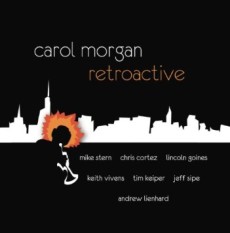
Carol Morgan was born on July 11, 1968. Originally from Texas, she decided to matriculate through and graduated from The Julliard School, subsequently making her home in New York City. A definitive voice unto herself, the influences of Woody Shaw, Freddie Hubbard, Miles Davis and Louis Armstrong can be heard in her playing. She has released five CDs as a leader working in trio, quartet and quintet setings with her latest in 2013 titled Retroactive.
She has worked with Chris Gekker, Mark Gould, Ingrid Jensen, Dennis Dotson Mike Stern, Chris Cortez, Danielle Reich, Harvie S, Rich DeRosa, Joel Frahm, Martin Wind and Matt Wilson among others. She has been a side-woman on recording dates with the DIVA Jazz Orchestra, Hawk-Richard Jazz Orchestra, the Manhattan Chamber Orchestra, and NPR’s The Engine Of Our Ingenuity.
As a composer Carol has been commissioned to create works for the Diverse Works, the Michele Brangwen Dance Ensemble, the Archdiocese of Houston/Galveston and the St. Thomas Presbyterian Church in Houston. She has authored The Practicing Improviser, a highly regarded method for jazz improvisation.
She is a member of the DIVA Jazz Orchestra, a variety of ensembles under the name of Stiggall & Associates and the group Gingerbread led by Brad Linde. Trumpeter, composer, educator and author Carol Morgan continues to record and perform across the United States and in Europe.
Jazz Is Global – Share
More Posts: trumpet
Daily Dose Of Jazz…
Noble Lee Sissle was born July 10, 1889 in Indianapolis, Indiana. His father was a pastor, his mother a schoolteacher and juvenile probation officer. As a youth he sang in church choirs and as a soloist with his high school’s glee club in Cleveland, Ohio. He went on to attend De Pauw University in Greencastle, Indiana on scholarship, later transferring to Butler University in Indianapolis before turning to music full-time.
In 1918 Sissle joined the New York 369th Infantry Regiment and helped to form the 360th Regiment Band. He played violin and also served as drum major for the 369th, and under James Europe’s leadership is now considered amongst the greatest jazz bands of all time. He sang several vocals on the last disc recorded by the band that was released in March 1919.
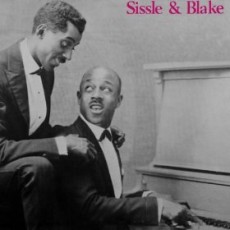
Leaving the army after the war he joined Europe’s civilian version of the band. Not long afterwards, a disgruntled band member murdered Europe thus leaving Noble to take temporary charge of the band with the help of his friend Eubie Blake. Years earlier the two had struck up a partnership after meeting in Baltimore, Maryland. They would go on to perform in vaudeville, collaborate on the songs I’m Just Wild About Harry and Love Will Find A Way, and then produce the musical Shuffle Along and The Chocolate Dandies. He is the only Black artist to appear in the Pathe film archives.
In 1923, Sissle made two films for Lee DeForest’s Phonofilm Sound-On-Film process titled Noble Sissle and Eubie Blake featuring their song Affectionate Dan, and Sissle and Blake Sing Snappy Songs featuring Sons of Old Black Joe and My Swanee Home. These films are preserved in the Maurice Zouary film collection at the Library of Congress.
He would also appear in other short films, performed with Walter Donaldson, Nina Mae McKinney, the Nicholas Brothers and Adelaide Hall. In 1954, New York radio station WMGM, owned by the Loew’s Theatre Organization, signed him as a disc jockey. His show featured the music of African-American recording artists. Jazz composer, lyricist, bandleader, singer and playwright Noble Sissle passed away on December 17, 1975 at the age of 86 in Tampa, Florida.
Give A Gift Of Jazz – Share
More Posts: vocal
Daily Dose Of Jazz…
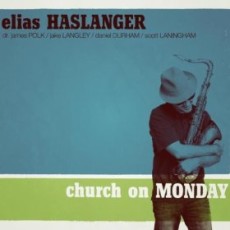
Elias Haslanger was born on July 9, 1969 in Austin, Texas. Growing up during the 1980s he listened to the Marsalis Brothers, Mark Whitfield and Roy Hargrove among others. In sixth grade he picked up the saxophone, and by the time he was in high school, he was playing gigs around his hometown and San Antonio.
After graduating from high school he attended the University of Texas at Austin studying with Harvey Pittel, then moved to New York to matriculate the Manhattan School of Music. From there his education took him back to study at Southwest Texas State University (TSU), during which time he received the Downbeat Student Music Award for College Outstanding Tenor Saxophone Performance.
His 1994 debut album Standards is a collection of straight-ahead bop and swing tunes featuring the top Austin area musicians. His second project titled For The Moment followed by his 1998 release of Kicks Are For Kids that brought the Marsalis patriarch in to collaborate. That same year Elias put on his educators cap and began teaching theory and composition at TSU.
A move to Brooklyn, New York in 2000 got the attention of Maynard Ferguson and in short order Haslanger was sitting in the same chair that Wayne Shorter once occupied. This experience help shaped him as a bandleader and performer.
In 2004 he returned to Austin, started his own label Cherrywood Records, released it debut release Dream Story. He has performed with Harry Connick Jr., Frank Foster, Clark Terry, Steve Turre, Al Grey, Lew Soloff, Marvin “Smitty” Smith, Ron Westray, Jesse Davis, J. J. Johnson, Peter Martin, Russell Gunn, among other jazz luminaries. He has also played with Chirstopher Cross, The Temptations, The Four Tops, Alejandro Escovedo, Asleep At The Wheel, Sheryl Crow and countless others in pop and soul genres.
Tenor, alto, and soprano saxophone player Elias Haslanger continues to perform, record and tour around the world with annual invites to play the North Sea and Montreux Jazz Festivals.
Inspire A Young Mind
More Posts: saxophone
Daily Dose Of Jazz…
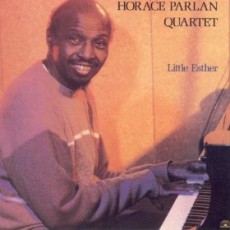
Massimo de Majo was born in Rome, Italy on July 8, 1957 and began studying music at a very young age. By 1980 while matriculating through Rome University studying Music and Literature he earned a Masters Degree in Percussion Instruments. He went on to study, apprentice and refine his skills under David Liebman, Elvin Jones, Marvin Bugalu Smith, Horace Parlan, Billy Hart, Max Roach, Richie Beirach, Wayne Shorter, Buster Williams, Harold Land, Carlos Santana and Larry Coryell.
He has developed an intense energy flow, wide dynamics and an acute sense for interplay, being comfortable playing free form music, as well as within more structured frameworks. Over the course of his career de Majo has spent most of his life outside Italy performing across Europe, the United States, Scandinavia and Japan. Though not widely known to the general public, the percussionist is regarded as a musicians’ musician and sought after on the jazz circuit.
During the last thirty years, focusing mostly on performing and teaching, he has recorded with Horace Parlan, Per Goldschmidt, Al Swainger, Andy Williamson, Biancamaria Stanzani Ghedini and Philip Clouts, among others. As a composer he has also created pieces for the theatre, contemporary dance, video, sound design and installation art. Drummer Massimo de Majo is also an educator and sits on the faculty of the University of Malta teaching several different courses in the Music Department. He continues to perform and record.
Dose A Day – Blues Away
More Posts: drums