

Daily Dose Of Jazz…
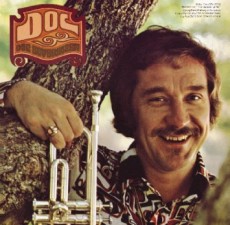
Doc Severinsen was born Carl Hilding Severinsen on July 7, 1927 in Arlington, Oregon. Nicknamed “Little Doc” after his father who was a dentist, he originally wanted to play the trombone, which he discovered at neighbor Art Fletcher’s home, but his father urged him to study that instrument instead. Insisting on the trombone, he had to settle for the trumpet, as it was the only horn available in Arlington’s small music store. A week later, with the help of his father and a manual of instructions, the seven-year-old was good enough to be invited to join the high school band.
At the age of twelve, Severinsen won the Music Educator’s National Contest. While still in high school he was hired to go on the road with the Ted Fio Rito Orchestra, however, his stay with the group was cut short by the World War II draft. After serving in the Army he made his broadcasting debut playing live popular music on KODL radio in Dalles, Oregon.
In 1952 during Steve Allen’s tenure as host of the Tonight Show, Doc played first trumpet in the band directed by Skitch Henderson. He actually joined the band several months before Johnny Carson became host in October 1962. Severinsen took over as bandleader in 1967 and soon became noted for his flashy fashions. It gave him the opportunity to update many well-known swing music and jazz standards including classics by Cole Porter, Dizzy Gillespie and others.He remained the bandleader until Carson’s retirement in 1992.
During the 1950s and 1960s, Doc released a number of albums of jazz standards. He recorded with the Enoch Light Comand Records label, with Tito Puente, Clarke-Boland Big Band, Thad Jones/Mel Lewis band, the Cincinnati Pops Orchestra, Henry Mancini and Don Caneva’s John Hersey High School Bands.
Over the course of his career he has conducted the Phoenix, Milwaukee Minnesota and Pacific orchestras, the Buffalo Philharmonic, his recording of Abblasen has been use as the theme for CBS’s Sunday Morning, he has scored films, co-wrote hit single with Mac Davis, was named Distinguished Visiting Professor of Music and Katherine K. Herberger Heritage Chair for Visiting Artists at Arizona State University. He still performs regularly with the San Miguel 5 playing gypsy jazz, Latin, American ballads and classical Spanish styles.

Take A Dose On The Road
More Posts: trumpet
Daily Dose OF Jazz
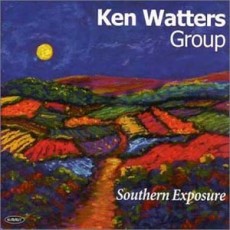
Ken Watters was born July 6, 1964 in Huntsville, Alabama. He attended the University of North Texas and became a part of the Lab Band program. He studied trumpet with internationally renowned teacher Leonard Candelaria prior to studying in New York City with Lew Soloff and Wynton Marsalis.
Ken is a member of several noted performing groups, including Tabou Combo, Natalie Cole Band, the Magic City Jazz Orchestra, Ray Reach and Friends and the W.C. Handy Jazz All-Stars. He recorded his debut release with his Haitian-Caribbean jazz septet RIYEL and has recorded a total of six projects as a leader.
He has recorded and released three CDs titled “Brothers” with his trombonist brother Harry. His latest musical project is an ongoing venture co-led alongside vocalist Ingrid Felts, called the Watters-Felts Project. The jazz-oriented sextet included pianist Keith Taylor, bassist Abe Becker, percussionist Darrell Tibbs and drummer Marcus Pope.
Trumpeter Ken Watters is also an educator currently sitting as an adjunct professor at University of Alabama in Huntsville, where he directs the UAH Jazz Ensemble I. He continues to perform, record and tour.
Give The Gift Of Knowledge
More Posts: trumpet

Daily Dose Of Jazz…
Reedman Dexter Payne was born on July 5, 1951 in Denver, Colorado. The clarinet was his first instrument and went on to master the alto and baritone saxophones adding them to his arsenal. His early influences were Artie Shaw, Buddy DeFranco, Benny Goodman, Stan Getz, Zoot Sims, Gerry Mulligan,Benny Carter, Johnny Hodges and Lester Young.
A very lyrical and melodic player, Dexter plays swing, bop, cool jazz, and Brazilian jazz as well as other forms of music including Latin. In 2000 he played with Brazilian musician Thiago de Mello, recorded the album Inspiration in 2003, with Brazilian guitarist Antonio Mello,
He followed with his sophomore release in 2005 release Another Feeling with producer Arnaldo De Souteiro on his Jazz Station label. He recorded again in 3006 and 2007 which de Mello produced and released Our Time to Remember. Clarinetist and saxophonist Dexter Payne continues to perform, record and tour.
Put A Dose In Your Pocket
Daily Dose Of Jazz…
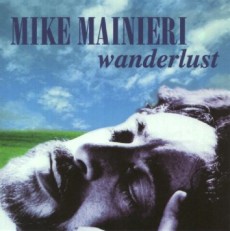
Mike Mainieri was born Michael T. Mainieri, Jr. on July 4, 1938 in Bronx, New York. He is a pioneer in introducing the electronic vibraphone, known as a “synth-vibe”.
Mike has recorded with such jazz musicians as Buddy Rich, Wes Montgomery, Jeremy Steig, Bob James, Lauro Nyro, Dire Straits, Michael Franks, David Sanborn, Neil Larsen, Robben Ford, Manny Albam, Kenny Burrell, Paul Desmond, Art Farmer, Jim Hall, Urbie Green, Joe Henderson, Pat Martino, Michael Brecker and Sonny Stitt.
Mainieri has released seven albums as a leader, 11 with Steps Ahead and another dozen as a sideman as well as videos for a variety of labels. As a producer, he produced three albums for Carly Simon. Jazz-fusion vibraphonist Mike Mainieri continues to perform, record, tour and produce.
Jazz Is Global – Share
More Posts: vibraphone
Daily Dose Of Jazz…
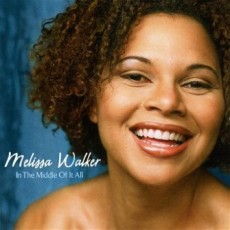
Melissa Walker was born the youngest of three sisters on July 3, 1964 in Edmonton, Alberta, Canada. She attended Brown University considering a career in law but instead after graduation local performance and out-of-town dates led her to launch a career as a vocalist in Washington, D.C., in 1990. She produced her own debut album in 1993 titled Little Wishes, which she sold at her performances.
Moving to New York she studied with pianist and master vocal accompanist Norman Simmons. In 1997, Walker signed to Enja Records and recorded May I Feel and released in Germany. She expanded her performing range with her rich, multi-octave textures and impeccable phrasing, formed her own group and appeared with the Lincoln Center Jazz Orchestra, directed by Wynton Marsalis. Her 1999 release of Moment of Truth marked her commercial U.S. album debut and two years later came I Saw The Sky.
She has been nominated for a Juno Award, won the U.S. Indie Award for Vocal Jazz, has created new material unrivaled in the American jazz tradition, and has appeared on a number of television networks and magazines. Melissa has performed across continents, working and/or recording with such talents as Hank Jones, Gary Bartz, Kenny Barron, Ray Brown, Christian McBride, Stefon Harris, Mokoto Ozone Phil Woods, Buster Williams, Russell Malone, Beny Green, Geoff Keezer, Steve Wilson, Ron Blake, Lenny White, Paul Bollenback, Steve Turre and Geri Allen. Vocalist Melissa Walker continues to perform, compose, record and tour.
Give A Gift Of Jazz – Share
More Posts: vocal