

Daily Dose Of Jazz…
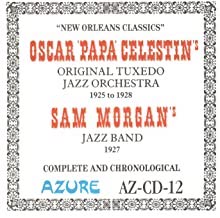
Abbey “Chinee Bébé” Foster was born on January 9, 1902 in New Orleans, Louisiana. A self-taught jazz drummer, he played in Storyville with William Ridgley’s Tuxedo Orchestra, and with Buddie Petit in the Eagle Band.
He recorded with Celestin’s Original Tuxedo Jazz Orchestra in 1927. After years of retirement, he made a comeback with Punch Miller’s Band at Preservation Hall in 1961.
On September 12, 1962 drummer Abbey Foster transitioned in his hometown.
More Posts: drums,history,instrumental,jazz,music
Daily Dose Of Jazz…
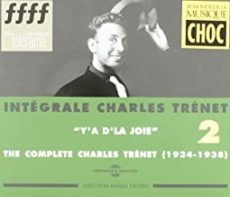
René Compère was born in Brussels, Belgium on December 28, 1906 in and by the time he was 17 he was working with the Billy Smith Brussels-based band. He then went on to found his own ensemble, the New Royal Dance Orchestra. However, as a member of Smith’s group, he met Charles Remue, with whom he worked for several years and Jean Omer who also played in Compère’s orchestra.
He recorded with Fernand Coppieters in 1929, then joined Josephine Baker’s backing band for several European tours in the first half of the 1930s. He was hired to play aboard the ship SS Normandie for transatlantic voyages. In 1937 he played at the Paris Exposition with Django Reinhardt, then worked in France with Joe Bouillon and in Belgium with Joe Heyne. During World War II he recorded with Eddie Tower.
Trumpeter René Compère, who never recorded as a leader, passed away on April 24, 1969 in his hometown.

More Posts: bandleader,history,instrumental,jazz,music,trumpet
Daily Dose Of Jazz…
Edward L. Gibbs was born on December 25, 1908 in New Haven, Connecticut. A student of the great banjoist and bandleader Elmer Snowden, he went back and forth among three different stringed instruments during his career.
Gibbs began his career late in the 1920s, playing with Wilbur Sweatman, Eubie Blake, and Billy Fowler. He played with Edgar Hayes from 1937 and played with him on a tour of Europe in 1938. After a short stint with Teddy Wilson, he joined Eddie South’s ensemble in 1940, and worked later in the decade with Dave Martin, Luis Russell, and Claude Hopkins.
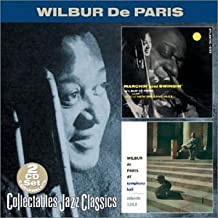
As a bassist, he led his own trio at the Village Vanguard and played in a trio with Cedric Wallace, but returned to banjo in the 1950s during the Dixieland jazz revival. He played and recorded with Wilbur de Paris among others during this time.
After studying with Ernest Hill, he returned to bass in the middle of the 1950s, but played banjo once again in the 1960s during another surge in interest in the Dixieland groups. He played at the World’s Fair in 1965 and in 1969 he played bass and occasionally banjo as a member of Buzzy Drootin’s Jazz Family, which included Herman Autrey, Benny Morton, Herb Hall, Sonny Drootin on piano and Buzzy on drums. Also, in the late ’60s he was part of a group called The Happy Family who featured him on both banjo and bass.
Banjoist, guitarist, and bassist Eddie Gibbs, who retired from active performance in the 1970s, passed away on November 12, 1994.
More Posts: bandleader,banjo,bass,guitar,history,instrumental,jazz,music
Daily Dose Of Jazz…
Jerome Darr was born on December 21, 1910 in Baltimore, Maryland. His first major professional affiliation was in a jug band, the Washboard Serenaders. The guitarist was a member of this group from 1933 through 1936, a tenure that included a well-received European tour.
He had an incredibly versatile and prolific career. He showed up on sessions from blues to bebop and even strummed a few arpeggios behind Frankie Lymon & the Teenagers.
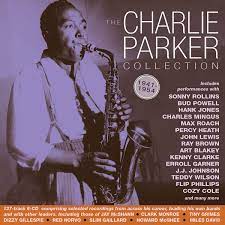
Though Jerome was not hiding in a closet during the ’40s, the guitarist simply focused on work as a studio musician during an era when the efforts of such players went largely uncredited. He was a player in the classic jazz context of Buddy Johnson’s band in the early ’50s, or was working with the much more modernistic Charlie Parker during roughly the same period.
He played on some 20 recording sessions between 1935 and 1973, though to his credit or noncredit, his playing included many other styles besides jazz. In his final years, Darr was mostly swinging in the busy band of trumpeter Jonah Jones, in a sense coming full circle with the type of playing he had started out with.
Guitarist Jerome Darr passed away on October 29, 1986 in Brooklyn, New York.
More Posts: guitar,history,instrumental,jazz,music
Daily Dose Of Jazz…
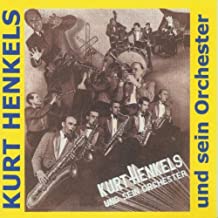
Kurt Henkels was born in Solingen, Germany on December 17, 1910. He led jazz and light music ensembles. He conducted radio and television dance bands from the 1930s well into the 1970s.
Unfortunately, little is known or written about his early childhood or his formal education years. Bandleader Kurt Henkels, who made over 250 recordings, passed away on July 12, 1986 in Hamburg, Germany.
More Posts: bandleader,history,instrumental,jazz,music