

Daily Dose Of Jazz…
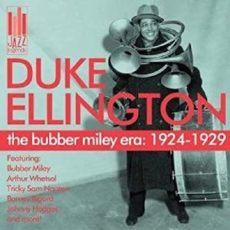
Joe “Tricky Sam” Nanton was born Joseph Irish Nanton on February 1, 1904 in New York City, New York to British West Indies immigrant parents. He began playing professionally in Washington, D.C. with bands led by Cliff Jackson and banjoist Elmer Snowden.
1923 saw him working with Frazier’s Harmony Five for a year then again with Snowden. At 22 Nanton discovered his niche in Duke Ellington’s Orchestra, when he reluctantly took the place of his friend Charlie Irvis in 1926, anchoring the trombone section with Lawrence Brown. He remained with Ellington until his early death.
Nanton was one of the great pioneers of the plunger mute after hearing trumpeter Johnny Dunn use a plunger, and realized he could have a similar effect on his trombone. Along with Ellington’s trumpeter Bubber Miley, he is largely responsible for creating the characteristic Wah-wah, or wa-wa, effect. Their highly expressive growl and plunger sounds were the main ingredient in the band’s early “jungle” sound, that evolved during the band’s late 1920s engagement at Harlem’s Cotton Club.
Trombonist Tricky Sam Nanton who was amajor soloist with the Duke Ellington Orchestra, transitioned from a stroke on July 20, 1946 in San Francisco, California while touring with the orchestra.

More Posts: history,instrumental,jazz,music,trombone
Daily Dose Of Jazz…
Sam Allen was born in Middleport, Ohio on January 30, 1909 and beginning at the age of seven started playing the piano. By 10 he accompanied silent films on piano in movie theaters, allowing him to sit and extemporize as the action unfolded on screen. Over the next few years he absorbed plenty of slapstick hi-jinx and derring-do from the Hollywood sagas he accompanied.
1928 saw the 19 year old Sam moving to New York City where he joined Herbert Cowans’s band at the Rockland Palace. It wasn’t too long after the move before he moved back to Ohio, where he played with saxophonist Alex Jackson through 1930.
He joined James P. Johnson’s orchestra as a second pianist absorbing the intense chords in the scores that required two pianos. For amuch of the ’30s, he played with the dance band of Teddy Hill including a European tour. In the 1940s he had one of his most musically satisfying collaborations as piano man in the sometimes rowdy combo of violinist Stuff Smith. Playing in the hyper-drive bebop of Dizzy Gillespie, and then the shenanigans as pianist for the madcap jive jazz duo Slim Gaillard & Slam Stewart.
As the Fifties approached he relocated to Washington, shifting gears from touring sideman to stay-at-home featured soloist. He then headed for California where he settled into the Oakland jazz scene, often accompanying the fine singer Billie Heywood. Pianist Sam Allen transitioned at the age of 63 in April 1963.
More Posts: history,instrumental,jazz,music,piano
Daily Dose Of Jazz…
Alvin “Abe” Aaron was born on January 27, 1910 in Toronto, Canada on January 27, 1910. His father, a bandleader with a theater band in Milwaukee, Wisconsin, had him playing reeds in the band for more than ten years. Early in the 1940s he left this group to play alto saxophone in the big band of Jack Teagarden, with which he recorded in 1942.
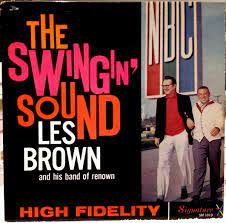
Moving to Hollywood, California in 1943, Abe played with Horace Heidt on radio. From 1945 to 1947 he played with Skinnay Ennis, then returned to work under Heidt through 1949. Through the 1950s he played in Les Brown’s Band of Renown, touring Europe and East Asia. He recorded often as a member of Brown’s band for Coral and Capitol record companies. In the band, he played clarinet and alto saxophone in the early 1950s, then switched to tenor and baritone. He also recorded on bass clarinet with Billy Usselton.
Clarinetist and saxophonist Abe Aaron transitioned on January 31, 1970.
More Posts: clarinet,history,instrumental,jazz,music,saxophone
Daily Dose Of Jazz…
Irving “Mouse” Randolph was born in St. Louis, Missouri on January 22, 1909 and started off playing on riverboats with Fate Marable’s ensemble. Following this he played in numerous territory bands, including those of Walt Farrington, Willie Austin, Art Sims, Norman Mason, Floyd Campbell, Alphonse Trent, and J. Frank Terry.
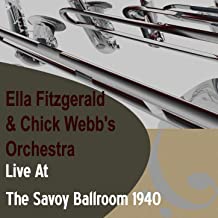
From 1931 to 1933 he was in Kansas City, Missouri playing in Andy Kirk’s Twelve Clouds of Joy, and then played briefly with Fletcher Henderson and Benny Carter in 1934. 1935 to 1939 saw Mouse playing in Cab Calloway’s orchestra, then departed to play with the Ella Fitzgerald Orchestra under the direction of Chick Webb for three years ending in 1942.
By 1943 he was playing with Don Redman and from 1944 to 1947 he did a stint with Edmond Hall. Randolph continued to play into the Seventies, including with the Chick Morrison Orchestra. He never recorded as a bandleader, though he recorded copiously with Henderson, Carter, and Calloway.
Trumpeter Mouse Randolph, who was prominent during the swing era, transitioned on December 12, 1997 in New York City, just six weeks shy of his 89th birthday.
More Posts: history,instrumental,jazz,music,trumpet
Daily Dose Of Jazz…
Edward Burke was born on January 13, 1909 in Fulton, Ohio. Adept at both violin and trombone, he played both professionally in jazz bands. He worked with Walter Barnes late in the 1920s, then with Cassino Simpson and Ed Carry in the early 1930s.
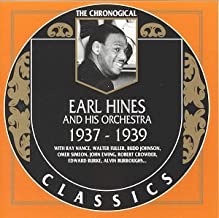
He worked with Kenneth Anderson in 1934 before joining Erskine Tate’s band through the end of 1935. Following a stint with Horace Henderson, Ed then joined Earl Hines’s band in 1938.
The 1940s saw Burke playing with Walter Fuller and Coleman Hawkins and later in the decade he was with first Duke Ellington and then Cootie Williams. In the early 1950s he joined Cab Calloway’s outfit before working with Buddy Johnson a few years later.
By the 1960s and through the 1970s he essentially went into retirement, though he occasionally played with musicians such as Lem Johnson and Wally Edwards. Violinist and trombonist Ed Bure transitioned on April 19, 1988 in East Elmhurst, New York.