

Daily Dose Of Jazz…
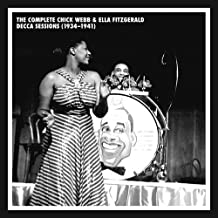
Bardu Ali was born September 23, 1906 in Mississippi. His mother, Ella, moved to the Bronx, New York, with her children and her sister Fanny. He moved into New York City in the 1920s and became leader of the Napoleon Zyas band. He was master of ceremonies for this band and for the bands of Leroy Tibbs and Chick Webb. He is credited with persuading Webb to hire singer Ella Fitzgerald.
Ali got involved with black cinema in the late 1920s and 1930s. He went on tour in England with Lew Leslie’s Blackbirds revue. Returning to the States, he replaced Webb as bandleader after Webb died.
1940 saw him move to California, where he became the business partner of Johnny Otis, performed as a singer in Otis’s band, and opened The Barrelhouse club with him in 1947. He played an important role in the early career of Charles Brown and was Redd Foxx’s business manager.
Guitarist, singer and promoter Bardu Ali, who performed in both jazz and R&B genres, passed away on October 29, 1981.

More Posts: guitar
Daily Dose Of Jazz…
Francis Williams was born September 20, 1910 in McConnell’s Mill, Pennsylvania. His first gigs were with Frank Terry’s Chicago Nightingales in the 1930s.
In 1940 he moved to New York City, and in the first half of the decade played in the bands of Fats Waller, Claude Hopkins, Edgar Hayes, Ella Fitzgerald, Sabby Lewis, and Machito. From 1945 to 1949, and again in 1951, he played and recorded extensively as a member of Duke Ellington’s orchestra.
Williams worked primarily with Latin jazz ensembles and New York theater bands in the 1950s and 1960s, and played with Clyde Bernhardt and the Harlem Blues and Jazz Band. In addition to working with his own quartet, near the end of his life he worked with Panama Francis.
Trumpeter Francis Williams, who was a single father of two, had one son, actor Greg Morris, passed away on October 2, 1983 in Houston, Texas.
More Posts: bandleader,history,instrumental,jazz,music,trumpet
Daily Dose Of Jazz…
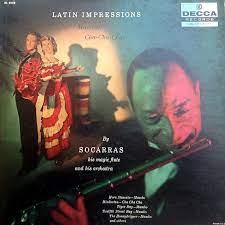
Alberto Socarrás Estacio was born in Manzanillo, Cuba on September 19, 1908 and started learning the flute at age seven with his mother and later joined the provincial music conservatory at Santiago de Cuba. He completed his studies at the Timothy Music Conservatory in New York, gaining the equivalent title to a doctorate in music. In the middle 1920s he moved to Havana to join the theatre orchestra of Arquimedes Pous, where his sister Estrella was playing the violin. He also played in one or two early Cuban jazz bands before moving to the United States in 1927.
Once stateside he recorded with Clarence Williams with his first flute solo taking place on Shooting the Pistol on the Paramount label, making him the earliest known jazz flute soloist. He played with The Blackbirds revue between 1928 and 1933, and played on Lizzie Miles’s 1928 recording You’re Such a Cruel Papa to Me.
During the Thirties he played with Benny Carter, led the all-female Cuban band Anacaona on a tour of Europe, played with Sam Wooding and Erskine Hawkins. He made one recording in 1935, with four numbers, then went on to record for RCA Victor, SMC Pro-Arte and Decca.
In the 1950s he took part in Rod Serling’s The Twilight Zone, concerts of cult music at the Carnegie Hall in New York, and in the 60s he dedicated himself to teaching.
Flautist Alberto Socarras, who in 1983 was filmed by Gustavo Paredes playing the flute in a TV documentary Música, passed away on August 26, 1987 in New York City.
More Posts: bandleader,flute,history,instrumental,jazz,music
Daily Dose Of Jazz…
Louis Nelson was born September 17, 1902 in New Orleans, Louisiana. Both parents and his sister played the piano, his brother played the saxophone. In December 1902, his parents moved to Napoleonville, Louisiana because his father couldn’t get medical patients after the July 1900 Robert Charles Race Riots in New Orleans.
At the age of fifteen he started playing the valve trombone and switched to the slide trombone, studying under Professor Claiborne Williams. Graduating high school in 1919, Louis’ first band was Joe Gabriel’s band playing in dance halls for a dollar a night.
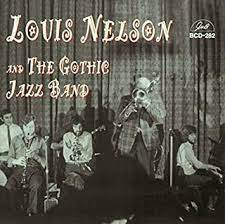
While in New Orleans in the 1920s, Nelson played jazz with Buddy Petit, Kid Rena, Kid Punch Miller, Sam Morgan, Chris Kelly, Papa Celestin, Willie Pajeaud, Kid Howard, Sidney Cates, and Kid Harris’ Dixieland Band. He would go on to join the Sidney Desvigne Orchestra. During the Depression, he joined the Works Progress Administration and became first chair in the WPA band, then volunteered for the U.S. Navy during WWII. Post Navy he played with Sidney Desvigne’s Orchestra, Kid Thomas Valentine, and Herbert Leary Orchestra. To make ends meet he took numerous day jobs from the post office to a janitor. In 1949, made his first recording with clarinetist and leader Big Eye Louis Nelson Delisle. This recording, by jazz historian Bill Russell of AM Records, marked the beginning of an extensive recording career for him.
Preservation Hall gave Louis permanent work, exposure to a new audience, and provided numerous opportunities for travel abroad as both a soloist and band member of the Billie and De De Piece and Kid Thomas Valentine’s bands.
He toured extensively from 1963, beginning with the George Lewis Band in Japan, Eastern and Western Europe, South America, Australia, Canada, and Mexico, as well as throughout the United States. Nelson appeared at every New Orleans Jazz and Heritage Festival, joined the Legends of Jazz and was featured in many New Orleans jazz documentaries.
Trombonist Louis Nelson, who in 1981 received a NEA grant and developed a program in which he played for New Orleans public school students and discussed New Orleans jazz history, passed away on April 5, 1990 of injuries suffered from a March 27 hit-and-run automobile accident. The driver was never caught.
More Posts: bandleader,history,instrumentl,jazz,music,trombone
Daily Dose Of Jazz…
Larry Binyon was born on September 16, 1908 in Urbana, Illinois and his mother shared some of her musical knowledge. By age eighteen he was at the University of Illinois at Urbana-Champaign,playing E flat soprano flute in the school’s concert band as well as flute and piccolo in its first regimental band during the 1926-27 school year.
After spending one year at college by 1927 he was already playing professionally in Chicago as part of Beasley Smith’s band, which also included drummer Ray McKinley and clarinetist Matty Matlock. Flute may have been his first instrument, or his primary one at school, but tenor saxophone became his main instrument for dance bands.
Later that year Binyon joined bandleader Ben Pollack when he returned to Victor’s Chicago studio after a five-month hiatus. History does not reveal him as a bandleader as there is little evidence of him having led his own bands, and no recordings were ever issued under his own name. He certainly has a load of credits as a band member, however, and was adept in both big band and small group settings.
Working a variety of radio jobs during the day, one eye glued open to help recover from the previous night’s late-ending gig.During the 1920s he worked with Irving Mills’ Hotsy-Totsy Gang, Roger Wolfe Kahn & His Orchestra, and Mildred Bailey with the Tommy Dorsey Orchestra to name a few.
His widest exposure on recording is his backup work on records by the Boswell Sisters, Bing Crosby, Billie Holiday, Fats Waller & His Buddies sessions, Henry “Red” Allen, Eddie Condon, Toby Hardwicke, Gene Krupa. Saxophonist, clarinetist, and flutist Larry Binyon passed away on February 10, 1974.
More Posts: clarinet,flute,history,instrumental,jazz,music,saxophone