

Daily Dose Of Jazz…
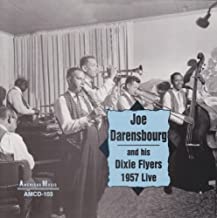
Joe Darensbourg was born in Baton Rouge, Louisiana on July 9, 1906 and in his youth moved out to California where he played gigs where he could find them and appeared in several silent films with these bands. In 1950 Joe appeared in Mahogany Magic with Kid Ory’s Creole Jazz Band. The Sixties saw him playing with Louis Armstrong’s All Stars in The Good Years of Jazz: Louis Armstrong & The All Stars.
In 1958 his Dixie Fliers recording of Yellow Dog Blues hit #43 on the pop charts, and Louis Armstrong’s version of Hello Dolly, which Drensburg played clarinet went to #1 in 1964. By the Sixties he performed on a television special with the All Stars Winter Carnival in Sun Valley, California and a March of Dimes tribute to Louis Armstrong.
He was noted for his work with Buddy Petit, Jelly Roll Morton, Charlie Creath, Fate Marable, Andy Kirk, Johnny Wittwer, Kid Ory, Wingy Manone, Joe Liggins and Louis Armstrong. Clarinetist and saxophonist Joe Darensbourg, who played Dixieland, passed away on May 24, 1985.
More Posts: clarinet,history,instrumental,music,saxophone
Daily Dose Of Jazz..
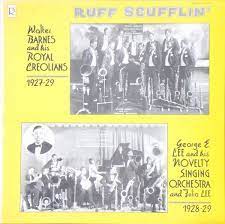
Walter Barnes was born on July 8, 1905 in Vicksburg, Mississippi but grew up in Chicago, Illinois. He studied under Franz Schoepp and attended the Chicago Musical College and the American Conservatory of Music.
Leading his own bands from the early 1920s, he also played with Detroit Shannon and his Royal Creolians. After Shannon’s retinue became dissatisfied with his leadership, Barnes took control of this group as well. He played mostly in Chicago, though the band did hold a residency at the Savoy Ballroom in New York City as well. His band recorded in 1928-29 for Brunswick Records.
He toured the American South in the 1930s to considerable success, touring there yearly and by 1938 the ensemble grew to sixteen members. Around this time, Barnes also worked as a columnist for the Chicago Defender newspaper, and used his position to advertise his own tours and promote other entertainers on the same touring trail to Black audiences. Barnes is thus credited as an early originator of what was known as the “Chitlin’ Circuit”; a network of entertainment venues where it was safe and acceptable for Black entertainers to perform.
Barnes was one of the victims of the Rhythm Club Fire in Natchez, Mississippi, on April 23, 1940. When the club caught fire, he had the group continue playing the song “Marie” in order to keep the crowd from stampeding out of the building. All of the band members except for drummer Walter Brown and bassist Arthur Edward were among the 201 victims of the fire.
Clarinetist, saxophonist and bandleader Walter Barnes, whose death was repeatedly immortalized in song, passed away on April 23, 1940.
More Posts: bandleader,clarinet,history,instrumental,jazz,music,saxophone
Daily Dose Of Jazz…
Eli Robinson was born on June 23, 1908 in Greenville, Georgia. After working in Cincinnati, Ohio in bands led by Speed Webb, Zack Whyte and also worked with McKinney’s Cotton Pickers. In 1935 he made his first recordings with Blanche Calloway.
1936 saw Eli moving to New York City, where he became a member of the Teddy Hill and Willie Bryant big bands and the Mills Blue Rhythm Band. Three years later he played with Roy Eldridge and joined the big band of Lucky Millinder.
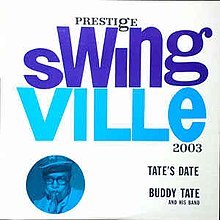
Beginning in 1941, he spent several years as a member of the Count Basie Orchestra. He returned to working with Millinder, then joined Buddy Tate in 1954.
Trombonist and arranger Eli Robinson never recorded as a leader, and passed away on December 24, 1972 in New York City.
More Posts: arranger,history,instrumental,jazz,music,trombone
Daily Dose Of Jazz…
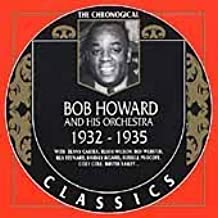
Bob Howard was born Howard Joyner on June 20, 1906 in Newton, Massachusetts, He began singing in New York City night clubs in the mid-1920s and began recording in 1931 under his real name for Columbia Records.
Under the name Bob Howard, he played New York’s Park Central Hotel, Famous Door, Hickory House and other clubs as well as theaters. Signed to Decca Records in 1934 he recorded a series of hot small group swing records between 1935 and 1938. His studio groups included Benny Carter, Buster Bailey, Rex Stewart, Ben Webster, Teddy Wilson, Russell Procope, Cecil Scott, Cozy Cole, Bunny Berigan, Artie Shaw, and Babe Russin among others. Unfortunately on these Decca recording sessions he did not play piano, only sang.
Embarking on several European tours as a solo performer in the middle and late 1930s, Bob also had his own radio series in New York. From 1936 to 1947 he performed in a handful of short films, and 1959 saw him acting in an episode of Perry Mason.
In 1948, Howard hosted The Bob Howard Show on CBS, making him the first Black man to host a regularly broadcast network TV show. The program was cancelled after 13 episodes. He also was a regular performer on Sing It Again on CBS-TV in 1950 – 1951.
Relocating to Las Vegas, Nevada and Los Angeles, California for a time, he returned East. Pianist and vocalist Bob Howard passed away on December 3, 1986 in the Bronx, New York.
More Posts: bandleader,history,instrumental,jazz,music,vocal

Daily Dose Of Jazz…
Lutz Templin was born Ludwig Templin on June 18, 1901 in Düsseldorf, Germany. He started out playing violin and saxophone, and studied composition before finding work playing and arranging in dance ensembles.
From 1941 to 1949 Lutz led a big band in Germany which recorded extensively and was broadcast on German radio. This ensemble also recorded as Charlie and his Orchestra, doing arrangements of American jazz hits with propagandistic lyrics inserted. These were broadcast on Nazi radio stations and whether he was forced to do so is unknown.
Templin’s ensemble operated out of Berlin until 1943, when Allied bombing resulted in their relocation to Stuttgart. He remained there after the war and continued performing there for most of the rest of his life. Bandleader Lutz Templin passed away on March 7, 1973 in Stuttgart, Germany.
More Posts: bandleader,history,instrumental,jazz,music,saxophone,violin