

Daily Dose Of Jazz…
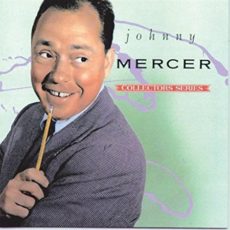
John Herndon Mercer was born November 18, 1909 into a prominent family Savannah, Georgia. He became known to the world simply as Johnny and liking music as a small child was exposed this parents singing, minstrels, vaudeville shows. Growing up with Black playmates and servants he gained further exposure to Black music listening to the fishermen and vendors, Black church music. Having no formal musical training he was singing in a choir by six and by eleven years old had memorized almost all of the songs he had heard and became curious about who wrote them.
Mercer’s talent was in creating the words and singing, he listened to Ma Rainey, Bessie Smith, and Louis Armstrong, and with his natural sense of rhythm easily learned to dance from Arthur Murray. He attended Woodberry Forest boys prep school where he was a member of the literary and poetry societies, and the hop committee that booked musical entertainment on campus. He became the stamp of approval on all orchestra and new productions and quickly learned the powerful effect songs had on girls.
Though headed for Princeton University as a legacy, his hopes were dashed with the Great Depression but eventually escaped Savannah and moved to New York in 1928, when he was 19. Jazz and blues, were booming in Harlem and Broadway was bursting with musicals and revues from George Gershwin, Cole Porter, and Irving Berlin. He got small acting parts, wrote lyrics, met Eddie Cantor who encouraged him and finally got a song, composed by Everett Miller, into the Garrick Gaieties in 1930. His first song was recorded by Joe Venuti and his New Yorkers.
At 20 he began hanging out with other songwriters to learn the trade, traveled to California on a lyric writing assignment for the musical Paris in the Spring, met Bing Crosby and Louis Armstrong returned to New York and got a job as staff lyricist for Miller Music for a $25-a-week draw. He would go on to win a vocal position with Paul Whiteman’s orchestra, then make his vocal recording debut with Frank Trumbauer’s Orchestra, and o apprentice with Yip Harburg on the score for Americana. But it was his chance pairing with Indiana-born Hoagy Carmichael that his fortunes improved dramatically with Lazybones, which became a hit one week after its first radio broadcast, and each receiving a large royalty check of $1250.
Mercer became a member of ASCAP and a recognized “brother” in the Tin Pan Alley fraternity alongside Irving Berlin, George Gershwin, and Cole Porter among others. As the demand for the stand alone song diminished he set his sights on Hollywood and landed a job with RKO and claiming his first big Hollywood song I’m an Old Cowhand from the Rio Grande was performed by Crosby in the film Rhythm on the Range in 1936. The demand for him as a lyricist took off and his second hit that year was Goody Goody followed by a move to Warner Brothers studio in 1937.
He would go on to write hits like Jeepers Creepers, You Must Have Been a Beautiful Baby, Day In, Day Out, Fools Rush In, One for My Baby (and One More for the Road), That Old Black Magic and Come Rain or Come Shine, Skylark, In the Cool, Cool, Cool of the Evening, as well as lyrics for the established instrumental hits Laura, Midnight Sun, Satin Doll and Autumn Leaves among others.
By the mid-1940s enjoyed a reputation as one of the premier Hollywood lyricists. With the advent of rock and roll in the 1950s and the transition of jazz into “bebop” Mercer’s natural audience and venues for his songs dwindled. He continued to write a string of hits for some MGM films, made occasional television appearances, teamed up with Henry Mancini and wrote the wrote the lyrics to Moon River, Days of Wine and Roses and Charade. He would go on to write I Wanna Be Around and Summer Wind and the lyrics for I Remember You which was the most direct expression of his feelings for the affair he had in 1941 with then 19-year old Judy Garland.
Over the course of his career Johnny would team up with Richard Whiting, Harry Warren and Johnny Mandel, have his lyrics recorded as part of Ella Fitzgerald’s Songbook series, received eighteen Oscar nominations, winning four for Best Song, founded Capitol Records, and helped establish the National Academy of Popular Music’s Songwriters Hall of Fame.
Diagnosed was an inoperable brain tumor, lyricist Johnny Mercer passed away on June 25, 1976 in Bel Air, California. Posthumously, the Songwriters Hall of Fame established the Johnny Mercer Award, he was honored with a postage stamp, received a star on the Hollywood Walk Of Fame, given tribute in the book and film Midnight in the Garden of Good and Evil, a statue was unveiled in Ellis Square in Savannah, and The Johnny Mercer Collections, including his papers and memorabilia, are preserved in the library of Georgia State University in Atlanta, GA.

Dose A Day-Blues Away

More Posts: lyrics,songwriter,vocal
Daily Dose Of Jazz…
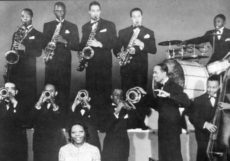
Ben Thigpen was born Benjamin F. Thigpen on November 16, 1908 in Laurel, Mississippi. He played piano as a child and was trained by his sister Eva. He played in South Bend, Indiana with Bobby Boswell in the 1920s before moving to Chicago, Illinois to study under Jimmy Bertrand.
Chicago saw Ben playing with many noted Chicago bandleaders and performers, including Doc Cheatham. He played with Charlie Elgar’s Creole Band from 1927 to 1929 but never recorded with them. Following this he spent time in Cleveland, Ohio with J. Frank Terry, and then became the drummer for Andy Kirk’s Clouds of Joy, where he stayed from 1930 to 1947.
Much of his work is available on collections highlighting the piano work of Mary Lou Williams, who also played in this ensemble. After his time performing and recording with Kirk, his career was not well documented and it appears that he never recorded as a leader. He did however, lead his own quintet in St. Louis, Missouri, recorded with Mary Lou Williams, Booker Collins and Ted Robinson and also recorded Dixieland with Singleton Palmer in the 1960s.
Drummer Ben Thigpen, father of Ed Thigpen, who followed in his footsteps, passed away on October 5, 1971.
Take A Dose On The Road
More Posts: drums
Daily Dose Of Jazz…
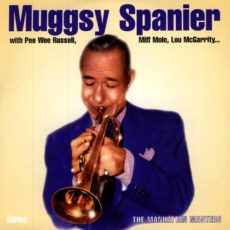
Muggsy Spanier was born Francis Joseph Julian Spanier on November 9, 1906 in Chicago, Illinois. He borrowed the nickname from the manager of the NY Giants, John “Muggsy” McGraw. In the early 1920s, he was playing cornet with The Bucktown Five in Chicago.
He led several traditional hot jazz bands, most notably Muggsy Spanier and His Ragtime Band, that actually played Dixieland. This band set the style for all later attempts to play traditional jazz with a swing rhythm section of key members George Brunies on trombone and vocals, clarinetist Rod Cless, pianists George Zack or Joe Bushkin, Ray McKinstry, Nick Ciazza or Bernie Billings playing tenor saxophone, and Bob Casey on bass.
Muggsy’s theme song was Relaxin’ at the Touro, named for the infirmary in the New Orleans, Louisiana hospital where Spanier was treated for a perforated ulcer in 1938. Saved by Dr. Alton Ochsner he homaged a song titled Oh Doctor Ochsner.
Spanier made numerous Dixieland recordings, co-led a quartet, the Big Four, with Sidney Bechet in 1940 and co-led a traditional band with pianist Earl Hines at the Club Hangover in San Francisco, California in the 1950s. He followed this engagement up playing with the Bob Crosby band. Winding down his career in the late 1950’s and early 1960’s by 1959 he was leading a small band at the College Inn in the Sherman Hotel, then appeared in the Blue Note, Jazz Ltd. and in the Empire Room of the Palmer House, all in Chicago. His last appearance was at the Newport Rhode Island Jazz Festival in 1964.
Cornetist, composer and bandleader Muggsy Spanier passed away on February 12, 1967.
Jazz Is Global – Share
More Posts: cornet
Daily Dose Of Jazz…
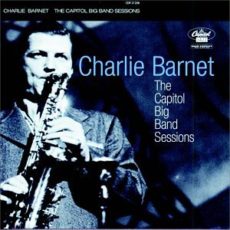
Charlie Barnet was born Charles Daly Barnet on October 26, 1913 in New York City. His parents divorced when he was two and he was raised in well-to-do surroundings by his mother and her grandparents. His grandfather was Charles Frederick Daly, a vice-president for the New York Central Railroad, banker and businessman. He attended various boarding schools, both in the New York and Chicago areas, learning to play piano and saxophone as a child. He was often found leaving school to listen to music and to try to gain work as a musician.
By sixteen, Barnet had done road work with a Jean Goldkette satellite band and was in New York, where he joined Frank Winegar’s Pennsylvania Boys on tenor saxophone. Always restless, by 1931 he had relocated to Hollywood and appeared as a film extra while trying to interest local bandleaders in hot music, which was increasingly unpopular due to the Great Depression. By late 1932 he was 18 and returning east, where he persuaded a contact at CBS’ artist bureau to try him out as an orchestra leader.
Charlie began recording in 1933, during an engagement at New York’s Park Central Hotel, but was not a great success for most of the 1930s. Regularly breaking up his band and changing its style by early 1935 he attempted to premiere swing music at New Orleans’ Hotel Roosevelt. However, Louisiana’s Governor Huey Long, disliking the new sound, had the band run out of town, arranged with Joe Haymes to take several of his now-jobless sidemen, and he went to Havana, Cuba as an escort to well-to-do older women.
1936 saw another swinging Barnet edition featuring the up-and-coming vocal quartet The Modernaires but this too quickly faded from the scene. The height of Barnet’s popularity and his first really permanent band came between 1939 and 1941. It was a period that began with his hit version of the Ray Noble tune Cherokee arranged by Billy May. 1944 saw him with another big hit with Skyliner. During his swing period his orchestra included Buddy DeFranco, Roy Eldridge, Neal Hefti, Lena Horne, Barney Kessel, Dodo Marmorosa, Oscar Pettiford, Art House, Maynard Ferguson, Doc Severinsen, Clark Terry and trumpeter Billy May was his arranger before joining Glenn Miller in 1940.
He was one of the first bandleaders to integrate his band; the year is variously given as 1935 or 1937. He was an outspoken admirer of Count Basie and Duke Ellington. Ellington recorded the Charlie Barnet composition In a Mizz. In 1939, Basie lent Barnet his charts after Barnets’ had been destroyed in a fire at the Palomar Ballroom in Los Angeles, California. Throughout his career he was an opponent of syrupy arrangements, however, in the Billy May song The Wrong Idea, he lampooned the “sweet” big band sound of the era.
Barnet penned an autobiography The Swinging Years where he noted the orchestra was a notorious party band where drinking and vandalism were not uncommon. He had several hits across America and in Europe during the late 1940s, thanks to the U.S. Armed Forces Network powerful twin 100 kW transmitters stationed in Munich, Germany.
By 1947, he started to switch from swing music to bebop and in 1949 he retired, apparently because he had lost interest in music. He was able to retire when he chose because he was one of the few heirs in a very wealthy family. He occasionally returned from retirement for brief tours but never returned to music full-time. Tenor, alto and soprano saxophonist, composer and bandleader Charlie Barnet passed away from complications of Alzheimer’s disease and pneumonia on September 4, 1991 in San Diego, California.
Jazz Is Global – Share
More Posts: saxophone
Daily Dose Of Jazz…
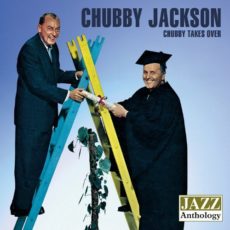
Chubby Jackson was born Greig Stewart Jackson on October 25, 1918 in New York City and began at the age of seventeen as a clarinetist but soon after changed to bass.
In the 1950s, Jackson worked as a studio musician, freelanced, and hosted some local children’s TV shows: Chubby Jackson’s Little Rascals and The Chubby Jackson Show, from 1959 to 1961. He briefly served as the fourth and last emcee of WOR TV’s Looney Tunes Show/The Chubby Jackson Show weekday afternoons, the first six months of 1962.
Jackson performed and/or recorded over the course of his career with Louis Armstrong, Raymond Scott, Jan Savitt, Henry Busse, Charlie Barnet, Oscar Pettiford, Charlie Ventura, Lionel Hampton, Bill Harris, Woody Herman, Gerry Mulligan, Lennie Tristano and others.
Double-bassist Chubby Jackson, who was inducted into the Big Band and Jazz Hall of Fame and is best known for his spirited work both with the Herman bands and as a leader of his own small and big bands, passed away on October 1, 2003 in Rancho Bernardo, California at the age of 84.
Sponsored By

Voices From The Community
More Posts: bass