

Daily Dose Of Jazz…
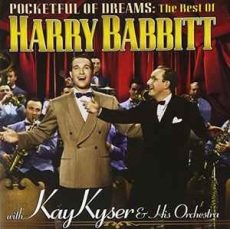
Harry Babbitt was born November 2, 1913 in St. Louis, Missouri. He organized his own band after high school, directing the group in addition to singing and playing saxophone and drums.
With his baritone voice Babbitt joined the Kay Kyser band in 1936 and recorded several hits, his biggest was the cover of Vera Lynn’s The White Cliffs of Dover. He appeared as a regular on Kyser’s radio program, Kay Kyser’s Kollege of Musical Knowledge and in seven movies with Kyser between 1939 to 1944.
Serving in the U.S. Navy from 1944 to 1946, he returned to Kyser’s band, but eventually left for good in 1949. Harry hosted an early morning radio show, The Second Cup of Coffee Club on CBS, which ran 10 years in the 1940s and 1950s. He also co-starred with Mary Small on By Popular Demand in the mid-Forties.
He retired from show business in 1964 and made money in real estate, managed the Newport Tennis Club and headed public relations for a retirement community in Orange County, California.
After Kyser died he went on tour with a new band, using Kyser’s name and music. He retired from that in the mid-1990s. Vocalist Harry Babbitt, who found fame during the big band era, died at the age of 90 in Aliso Viejo, California on April 9, 2004.

More Posts: bandleader,history,instrumental,jazz,music,vocal
Daily Dose Of Jazz…
William Sebastian “Sabby” Lewis was born November 1, 1914 in Middleburg, North Carolina. Raised in Philadelphia, Pennsylvania he started taking piano lessons when he was five and moved to Boston, Massachusetts in 1932 at fourteen. After working with Tasker Crosson’s Ten Statesmen two years later, he organized his own seven-piece band in 1936.
The late 1930s and early Forties saw Sabby and his band as mainstays at notable Boston jazz venues. In 1942, Lewis’ band won a listener contest on a broadcast from the Statler Hotel’s Terrace Room in Boston. The win garnered the band a regular gig on NBC’s The Fitch Bandwagon, heard on 120 stations at the time.
Though Lewis did not tour frequently nor leave Boston often, he did perform on Broadway, in ballrooms and clubs in Manhattan on 52nd Street. He performed with Dinah Washington and Billy Eckstine. During World War II his orchestra included tenor saxophonist Paul Gonsalves, and drummer Alan Dawson spent much of the 1950s in the band. His band also included trumpeter Cat Anderson, Sonny Stitt, Roy Haynes, Al Morgan, Idrees Sulieman and Joe Gordon.
Having been seriously injured in an automobile accident in 1962, his performing was greatly curtailed. Sabby became Boston’s first Black disk jockey at WBMS, which later became WILD in the Fifties. He went on to be a housing investigator for the Massachusetts Commission Against Discrimination until his retirement in 1984.
Pianist, bandleader, and arranger Sabby Lewis died on July 9, 1994.
More Posts: arranger,bandleader,history,instrumental,jazz,music,piano
Daily Dose Of Jazz…
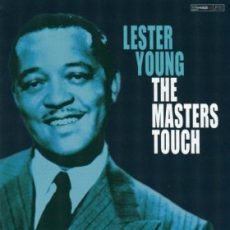
James Theodore Powell was born October 24, 1914 in New York City. In the Thirties he worked with Frank Newton and other leaders in the city. In 1940 and ‘41 he recorded with Billie Holiday, whose band was composed of Roy Eldridg, Carl Frye, Kermit Scott, Sonny White, Lawrence Lucie, John Williams and Hal West. The second date had him working with Lester Boone, Ernie Powell, Eddie Heywood, Paul Chapman, Grachan Moncur, and Herbert Cowans.
Throughout the decade he recorded with Billy Eckstine and His Orchestra. The resulting album was released in 1960 as Mr. B. He also recorded in New York with Don Byas and Hal Singer. Powell then joined the Illinois Jacquet Orchestra with Tadd Dameron and Jimmy Mundy arranging
The Fifties saw Jimmy as a member of the Dizzy Gillespie Big Band that recorded Groovin’ High live at Birdland. He went on to record several albums with Gillespie. He recorded with Betty Carter, Bernard Purdie and Otis Redding. Throughout the rest of his career he performed and recorded into the !970s.
Alto saxophonist Jimmy Powell died on February 16, 1994.

More Posts: history,instrumental,jazz,music,saxophone
Daily Dose Of Jazz…
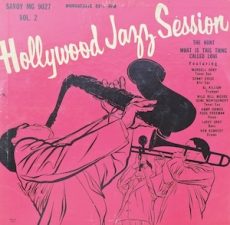
Albert Killian was born in Birmingham, Alabama, on October 15, 1916 and got his start playing with Charlie Turner’s Arcadians in the mid-1930s. He went on to play with big bands led by Baron Lee, Teddy Hill, Don Redman, and Claude Hopkins. The early to mid-1940s saw him swapping between bands led by Count Basie and Charlie Barnet, as well as being with Lionel Hampton for a period in 1945.
He appeared on film several times, played with Norman Granz’s Jazz at the Philharmonic concert series, and his interest in bebop led to Albert forming his own band to play the new music in 1947, but this was short-lived. Following this he briefly toured with bands led by Earle Spencer and Boyd Raeburn, before landing a the year residency in Duke Ellington’s band.
Trumpeter and bandleader Al Killian who was prominent during the big band era, died, murdered in his home at the hands of a psychopathic landlord on September 5, 1950 in Los Angeles, California.
More Posts: bandleader,history,instrumental,jazz,music,trumpet
Daily Dose Of Jazz…
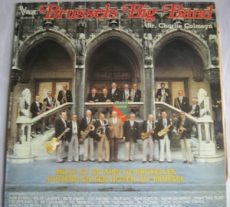
Alphonse “Al” Goyens was born October 1, 1920 in Wetteren, Belgium. He took piano lessons as a child but abandoned them at the age of twelve. In 1936, he bought a trumpet and began playing music again, teaching himself and playing with amateur bands. Completing a degree in industrial engineering, he was interned in Germany at the outbreak of the war and had to stop playing. Starting again he played too intensely, which paralyzed his lips, but overcame this situation through careful practice.
His return from captivity saw him a member of orchestras led by Henri Van Bemst and Jean Omer, making his first recordings with the latter. He then joined the orchestra of Léo Souris who played for the American army in Germany. Returning to Belgium, Al joined other musicians to form the Orchestre régulier du Cosmopolite , which gave him the opportunity to perform with major names of the jazz scene who were guests in Brussels.
In 1949 he and his orchestra again toured for the US Army, performing in Germany, the Azores, and the USA. Goyens led his orchestra for nearly a decade from 1949 featuring Jacques Pelzer, Bobby Jaspar, Francy Boland, Jean Warland, Freddy Rottier, and occasionally Don Byas and Kenny Clarke.
Once again he went on to work for the US Armed Forces and later with an international orchestra in Spain and the United States. Al later arranged and played in the Brussels Big Band. His favorite trumpeters were Clifford Brown, Dizzy Gillespie, and Clark Terry but his playing was more reminiscent of Harry Edison.
Trumpeter, arranger and orchestra leader Al Goyen played flugelhorn, and bugle, who never recorded as a leader, appreciated the sound of the muted trumpet, died on January 30/31, 2008 in Forest/Vorst, Belgium.
More Posts: arranger,bandleader,bugle,flugelhorn,history,instrumental,jazz,music,trumpet