

Daily Dose Of Jazz…
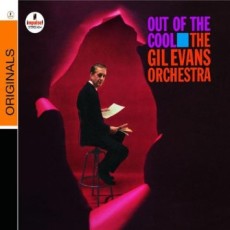
Gil Evans came into this world on May 13, 1912 in Toronto, Ontario, Canada as Ian Ernest Gilmore Green. His name was changed to his stepfather’s Evans early in his life. His family moved to Stockton, California where he spent most of his youth.
Between 1941 and 1948, Evans worked as an arranger for the Claude Thornhill Orchestra. His basement apartment behind a New York City Chinese laundry became a meeting place for musicians looking to develop new musical styles outside of the dominant bebop style of the day that included the leading bebop performer Charlie Parker, Gerry Mulligan and John Carisi.
In 1948, Gil collaborated with Miles Davis, Mulligan and others to create a nonet utilizing French horns and tubas keeping the big sound with less cost. The Davis-led group was booked for a week at the Royal Roost as an intermission group on the bill with the Count Basie Orchestra. Subsequently, Capitol Records recorded 12 numbers at three sessions in 1949 and 1950 that were reissued on the 1957 Miles Davis LP titled Birth Of The Cool. He was also instrumental in contributing behind the scenes to Davis’ classic quintet albums of the 1960s.
From 1957 onwards Evans recorded albums under his own name. He brought tubist Bill Barber, trumpeter Louis Mucci along with im and featured soloists Lee Konitz, Jimmy Cleveland, Steve Lacy, Johnny Coles and Cannonball Adderley. By 1965 he was arranging the big band tracks on Kenny Burrell’s Guitar Forms album.
Evans’ influence by Latin, Brazilian and Spanish composers Manuel de Falla and Joaquin Rodrigo as well as German expat Kurt Weill led him to create arrangements that included two basses, using Richard Davis, Paul Chambers, Ron Carter, Ben Tucker and Milt Hinton on many of his recordings. He was prolific in his recording until he became discouraged by the commercial direction Verve Records was taking with his arrangements for Astrud Gilberto’s Look To The Rainbow, causing him to take a hiatus from music.
During this period he began listening to Jimi Hendrix at the suggestion of his wife. He became interested in scoring the music of the rock guitarist, put together another orchestra in the Seventies and began working with in the free jazz and jazz rock idioms. He eventually released an album of arrangements of Hendrix’s music with John Abercrombie and RyoKawasaki and his ensembles featured electric guitars and basses, like that of Jaco Pastorious, from that date forward.
He would go on to release Where Flamingos Fly in 1981 with Coles, Harry Lookofsky, Richard Davis and Jimmy Knepper, Howard Johnson, Don Preston and Billy Harper. He created his Monday Night Orchestra in 1983 that became a staple for five years at Sweet Basil Jazz Club in Greenwich Village. Members of the band were Lew Soloff, Hiram Bullock, David Sanborn, Mark Eagan and Tom “Bones” Malone and Gil Goldstein among others. He recorded a big band album of The Police songs with Sting collaborating with apprentice arranger Maria Schneider.
Gil won two Grammy awards, has four films to his credit and was inducted into the Down Beat Jazz Hall of Fame in 1986. He ha a catalogue of eighteen studio albums, 16 live albums, arranged fifteen albums for Miles Davis, Hal McKusick, Helen Merrill, Johnny Mathis, Macy Lutes, Don Elliott, Astrud Gilberto and Kenny Burrell.
Pianist, composer, arranger and bandleader Gil Evans, who played an important part in the development of cool, modal, free and fusion styles of jazz, passed away of peritonitis in Cuernavaca, Mexico at the age of 75 on March 20, 1988.

Put A Dose In Your Pocket

More Posts: piano
Daily Dose Of Jazz…
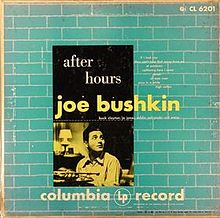
Sid Weiss was born April 30, 1914 in Schenectady, New York and learned clarinet, violin, and tuba when young. He switched to bass in his teens. He moved to New York City around 1931 and worked the following decade with Louis Prima, Bunny Berigan, Wingy Manone, Artie Shaw, Tommy Dorsey, Charlie Barnet and Adrian Rollini.
He was with Benny Goodman from 1941–1945, then played in the second half of the 1940s and the early 1950s with Muggsy Spanier, Pee Wee Russell, Cozy Cole, Bud Freeman, Duke Ellington and Eddie Condon. He quit full-time performing in the mid-1950s and in 1968 was an executive of the musicians’ union in Los Angeles, California. Bassist Sid Weiss passed away on March 30, 1994.
Dose A Day-Blues Away
More Posts: bass
Daily Dose Of Jazz…
Dave Tough, born April 26, 1907 in Oak Park, Illinois was sometimes Davie or Davey Tough. His decision to become a drummer was not supported by his family or community, so he ventured from his upper-middle class world to the evolving jazz scene of Chicago’s Southside, breaking both cultural and musical boundaries.
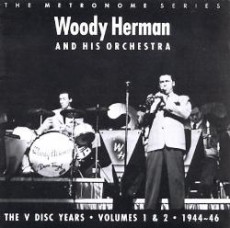
Dave worked Bud Freeman, Woody Herman, Eddie Condon, Red Nichols, Red Norvo, Tommy Dorsey, Bunny Berigan and Benny Goodman. Appearing as the poet-drummer character Dick Rough in the Autobiographical Novel of Kenneth Rexroth, he played at Chicago’s legendary Green Mask,
In the later 1920s, Tough floated between Nice and Paris doing freelance work, touring and recording throughout Europe mostly on the Tri-Ergon label in the early Thirties. During this overseas period he worked loosely with George Carhart and while in Paris he had extensive sessions with Mezz Mezzrow.
Though without official record,he spent portions of 1942-44 in the Navy playing behind Shaw’s Naval Band. He only led one album, a small-sided release by the Jamboree label. Although he had varied successes, one being with the Artie Shaw band, Dave also had difficulties with alcoholism and illness that caused him to lose a number of prominent jobs.
Although he was not known as a bebop drummer, he was a fan and admired the drumming of Max Roach. He was not a flashy, crowd-pleasing drummer like Gene Krupa or Buddy Rich, he was widely admired by other musicians for his taste and subtle rhythmic drive. Dixieland and swing drummer Dave Tough, described as the most important of the drummers of the Chicago circle in the 1930s and 1940s, passed away from a cerebral trauma after falling down on a Newark, New Jersey street on December 9, 1948 at age 41. He was inducted into the Big Band and Jazz Hall of Fame in 2000.
Put A Dose In Your Pocket
More Posts: drums
Daily Dose Of Jazz…
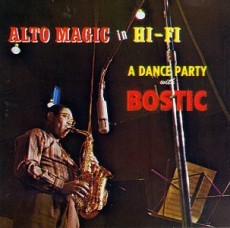
Earl Bostic was born in Tulsa, Oklahoma on April 25, 1912. He turned professional at the age of 18 when he joined Terence Holder’s Twelve Clouds of Joy. He then performed on the riverboats of New Orleans with Frank Marable before graduating from Xavier University.
He worked with territory bands as well as with Arnett Cobb, Hot Lips Page, Rex Stewart, Don Byas, Charlie Christian, Thelonious Monk, Edgar Hayes, Cab Calloway and others His first recording session was with Lionel Hampton in 1939 along with Charlie Christian, Clyde Hart and Big Sid Catlett. In 1938, and again in 1944, Earl led the house band at Smalls Paradise and while there he doubled on guitar and trumpet. During the early 1940s, he was a well-respected regular at the famous jam sessions held at Minton’s Playhouse.
Forming his own band in 1945, Bostic made his first recordings as a leader on the Majestic label. In the late Forties turned to rhythm and blues and had his biggest hits with Temptation, Sleep, You Go To My Head, Cherokee and his signature hit Flamingo. At various times his band included Keter Betts, Jaki Byard, Benny Carter, John Coltrane, Teddy Edwards, Benny Golson, Blue Mitchell, Tony Scott, Cliff Smalls, Sir Charles Thompson, Stanley Turrentine, Tommy Turrentine and others who rose to prominence in jazz.
He would go on to record Jazz As I Feel It with Shelly Manne, Joe Pass and Richard “Groove” Holmes. He wrote arrangements for Paul Whiteman, Louis Prima, Lionel Hampton, Gene Krupa, Artie Shaw, Hot Lips Page, Jack Teagarden, Ina Rey Hutton and Alvino Rey. His songwriting hits include Let Me Off Uptown that was performed by Anita O’Day and Roy Eldridge, and Brooklyn Boogie, which featured Louis Prima and members of the Booklyn Dodgers.
During the early 1950s Earl lived in Addisleigh Park in St. Albans, Queens before moving to Los Angeles, California where he opened his club, the Flying Fox. Suffering a heart attack he concentrated on writing arrangements. Alto saxophonist Earl Bostic, whose recording career encompassed small group swing-based jazz, big band jazz, jump blues, organ-based combos and a string of commercial successes, passed away October 28, 1965 from a heart attack while performing with his band in Rochester, New York. He was inducted into the Oklahoma Jazz Hal of Fame in 1993.
Uplift Someone’s World
More Posts: saxophone

Daily Dose Of Jazz…
Vera Auer was born on April 20, 1919 in Vienna, Austria, the grandniece of violinist Leopold Auer. She learned classical piano and later accordion. In 1948, along with guitarist Attila Zoller formed a combo. She later added vibraphone to her list of instruments and teamed with Helmuth Zukovits on bass and Franz Mikuliska on drums.
In 1950 the group performed and recorded under her own name and appeared on the Austrian radio AG RAVAG. 1951 saw the band The Audience Award for best combo at the taking was the band at the Vienna Jazz Competition. This was followed by her first tour abroad in Turkey and West Germany, where they also played with Friedrich Gulda.
Vera would go on to play with Joe Zawinul, Hans Salomon and Toni Stricker in her band. By 1954 she was playing mainly in West Germany due to poor working conditions for jazz musicians in Austria. She accompanied Donald Byrd, Lucky Thompson and Art Taylor. In 1956 she performed with Jean-Louis Chautemps at the German Jazz Festival.
In 1959 after marrying Brian Boucher and moved to the United States the next year. She attended the Lenox School of Jazz studying under Gunther Schuller, John Lewis and George Russell. She played with Dave Burns, Cal Massey, J. J. Johnson, Mal Waldron, Ted Curson, Zoot Sims, Walter Perkins and Richard Williams. Around 1970, she recorded as a leader an LP titled Positive Vibes with her quintet, which wasn’t released until 1977 and still amazingly fresh sounds.
She continued to perform into the Nineties on the Jazz Mobile and Jazz Vespers of St. Peter’s Church in New York City. In 1984 the American Public Broadcasting Service Program dedicated a one-hour portrait of her. On August 2, 1996 vibraphonist Vera Auer passed away in Newsane, Vermont.
Take A Dose On The Road
More Posts: vibraphone