


Daily Dose Of Jazz…
Clarence Profit was born on June 26, 1912 in New York City. Coming from a musical family, he began studying piano at the age of three and led a ten-piece band in New York City in his teens.
A visit to his grandparents in Antigua resulted in his staying in the Caribbean for five years. He also led a group in Bermuda. Returning to the States, Clarence led a trio. He co-composed Lullaby In Rhythm with Edgar Sampson. He was respected in his era, but after his early death he fell into obscurity. He was born, and died, in New York City.
Pianist and composer Clarence Profit, closely associated with the swing era, passed away in New York City on October 22, 1944.
More Posts: bandleader,composer,history,instrumental,jazz,music,piano
Daily Dose Of Jazz…
Albert King was born on June 19, 1912 in Panama and raised in Kingston, Jamaica where he attended Alpha Boys School. During the 1930s he led his own band, Bertie King and his Rhythm Aces, one of Jamaica’s foremost dance orchestras.
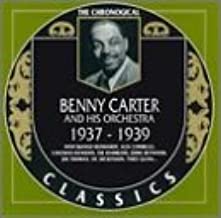
Leaving the island in 1936, he sailed to England on the same ship as his friend Jiver Hutchinson. Once in London he joined Ken Snakehips Johnson’s West Indian Dance Band, then played with Leslie Hutchinson’s band. He also worked with visiting American musicians including Benny Carter, George Shearing and Coleman Hawkins.
In 1937, while in the Netherlands he recorded four sides in the Netherlands with Benny Carter, and the next year he recorded with Django Reinhardt in Paris, France. In 1939 he joined the Royal Navy. He left the Navy in 1943 and formed his own band, also working and recording with Nat Gonella.
Returning to Jamaica in 1951, he assembled his own band, the Casa Blanca Orchestra, playing in the mento style. With no Jamaican record labels at this time, he arranged for his recordings to be pressed in a plant in Lewisham, England, owned by Decca Records. Bertie returned a number of times to the United Kingdom, working and recording with Kenny Baker, George Chisholm, Chris Barber, Kenny Graham and Humphrey Lyttelton. During this period in his career he toured Asia and Africa with his own band and played and recorded in London with some of the leading Trinidadian calypsonians.
King went on to lead the Jamaica Broadcasting Corporation house band in the 1950s. His sidemen included Ernest Ranglin and Tommy Mowatt. He recorded extensively with this outfit, until 1965 when he moved to the USA. His last known public performance was in New York City in 1967. Clarinetist and saxophonist Bertie King passed away in 1981.
More Posts: bandleader,clarinet,history,instrumental,jazz,music
Daily Dose Of Jazz…
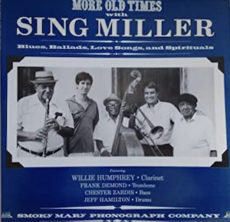
Sing Miller was born James Edward Miller on June 17, 1914 in New Orleans, Louisiana. He started his career as a singer with the Harmonizing Browns Quartet. His main instrument was banjo until late in the 1920s, when he moved to piano. He worked as a freelance musician with the Percy Humphrey band during the 1930s.
After serving in the military during World War II, he was in a band led by drummer Earl Foster from 1945 to 1961. He became a member of the Preservation Hall Jazz Band in New Orleans in the 1960s. He played in that band with Polo Barnes, Kid Sheik, Jim Robinson, and Kid Thomas Valentine.
His rare performances as a solo act included 1979 and 1981 when he went on tour in Europe. He recorded one album for Dixie Records in 1972 and one for Smoky Mary in 1978.
Pianist Sing Miller, who was a member of the Preservation Hall Jazz Band, passed away on May 18, 1990.
More Posts: history,instrumental,jazz,music,piano

Daily Dose Of Jazz…
Sanford Gold was born on June 9, 1911 in Cleveland, Ohio and played locally in Cleveland and led regional bands. Moving to New York City in the 1930s he collaborated with Babe Russin and Raymond Scott in 1935, and formed a trio with Dave Barbour in 1941.
In 1942 he worked as a studio musician for CBS before serving in World War II until 1946. After being discharged Sanford worked with Don Byas, Mary Osborne and others before he went to work for CBS rival NBC, from 1949-1954. An album was recorded under his name on the Prestige label in 1955 titled Piano d’Or.
A sideman, Gold worked with Johnny Smith, Al Cohn, Vic Dickenson, Coleman Hawkins and Sally Blair. He was one of the premier jazz piano teachers of his time. He self-published a book, A Modern Approach to Keyboard Harmony and Piano Techniques. Pianist Sanford Gold passed away on May 29, 1984.
More Posts: bandleader,history,instrumental,jazz,music,piano
Daily Dose Of Jazz…
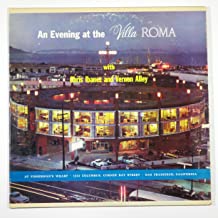
Vernon Alley was born on May 26, 1915 in Winnemucca, Nevada and played football in high school and college. His brother Eddie was a drummer and they played together often. He played with Wes People in 1937 and with the interracial Saunders King band until the end of the decade. He briefly led his own band in 1940.
Around 1940, while in Lionel Hampton’s band, Alley switched from double bass to electric upright bass, one of the first musicians to do so. In 1942 he moved to Count Basie’s ensemble, where he played only for a few months and appeared in the film Reveille with Beverly.
Enlisting in the Navy as a musician in 1942, after training at Camp Robert Smalls, he was assigned as part of a 45-piece regimental band to the Navy’s PreFlight School located at St. Mary’s College, in Moraga, California. Others who served in this band included Ernie and Marshal Royal, Jackie Kelso, Wilbert Baranco, Earl Watkins, and Buddy Collette.
After returning to civilian life, Alley put together an ensemble in San Francisco, California. He continued to play there and was an active member on local radio and in civic arts into the 1990s. Bassist Vernon Alley passed away on October 3, 2004 having become the most distinguished jazz musician in San Francisco history.

More Posts: bass,instrumental,jazz,music