

Daily Dose Of Jazz…
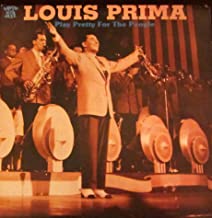
Joe Springer was born on May 22, 1916 in New York City, He played locally on Coney Island from about 1931. His first major gig was with Wingy Manone in 1935.
He first recorded in 1940 with Louis Prima and soon after worked with Buddy Rich in 1942, followed by a year with Gene Krupa until 1943. Joe went on to work with Oscar Pettiford, Tiny Grimes, Ben Webster, Charlie Barnet, Jimmy McPartland, Charlie Shavers, Roy Eldridge, and Raymond Scott.
Accompanying Billie Holiday regularly in the 1940s, Springer also worked with Anita O’Day. He continued working in New York City into the 1960s before retiring to Florida that decade.
Pianist Joe Springer passed away on October 24, 2004 in Miami, Florida.

More Posts: history,instrumental,jazz,music,piano

Daily Dose Of Jazz…
Billy Barber was born John William Barber on May 21, 1920 in Hornell, New York in 1920 and was known professionally as Bill or Billy. He started playing tuba in high school and studied at the Juilliard School of Music. After graduating, he travelled west to Kansas City, Missouri, where he played with the Kansas City Philharmonic and various ballet and theatre orchestras.
Joining the United States Army in 1942, he played in Patton’s 7th Army Band for three years. After the war, he started playing jazz, joining Claude Thornhill’s big band where he became friends with trombonist Al Langstaff, pianist Gil Evans and saxophone player Gerry Mulligan in 1947. Barber was one of the first tuba players to play in a modern jazz style, playing solos and participating in intricate ensemble pieces.
Becoming a founding member of Miles Davis’s nonet in 1949 in what became known as the Birth of the Cool recording sessions. He then worked in the theatre pit orchestras of The King and I, Paradiso, and the City Center Ballet. He joined up with Davis and Gil Evans in the late 1950s to record the albums Sketches of Spain, Miles Ahead and Porgy and Bess. Barber also played tuba on John Coltrane’s album Africa/Brass released in 1961.
Barber completed a master’s degree from the Manhattan School of Music and became an elementary school music teacher at Copiague, New York. He continued to play where possible including with the Goldman Band. In 1992, he recorded and toured with a nonet led by Gerry Mulligan, reworking material from Birth of the Cool. From 1998 to 2004 he was part of The Seatbelts, New York musicians who played the music of the Japanese anime Cowboy Bebop.
He is considered by many to be the first person to play tuba in modern jazz. Tubist Billy Barber passed away on June 18, 2007. of heart failure in Bronxville, New York.
More Posts: history,instrumental,jazz,music,tuba
Daily Dose Of Jazz…
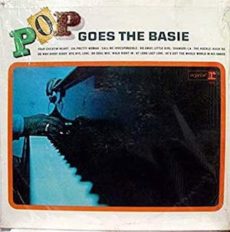
Robert C. Plater was born May 13, 1914 in Newark, New Jersey and began playing alto sax at age 12. He played locally in Newark with Donald Lambert and the Savoy Dictators in the 1930s. From 1940-42 he played with Tiny Bradshaw before spending 1942-45 serving in the U.S. military during World War II. After his discharge he worked briefly with Cootie Williams, then played intermittently with Lionel Hampton between 1946 and 1964, recording eleven albums with the band.
He also arranged with Hampton, as well as doing some freelance work on the side. In 1964 he took Frank Wess’s place in the Count Basie Orchestra, where he recorded thirty-nine albums and played until his death. His only recordings as a leader were four songs for Bullet Records in 1950.
He was the co-composer of Jersey Bounce, a popular dance number in the 1940s, recorded by various musicians including Glenn Miller and Ella Fitzgerald. Alto saxophonist Bobby Plater passed away on November 20, 1982 in Lake Tahoe, Nevada.
More Posts: arranger,history,instrumental,music,saxophone
Daily Dose Of Jazz…
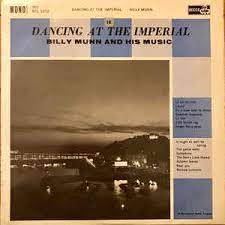
Billy Munn was born William on May 12, 1911 in Glasgow, Scotland. He studied at the Athenaeum School of Music before moving to London, England and joining the band of Jack Hylton from 1929 to 1936.
During the Thirties he played on recordings with Spike Hughes and Benny Carter. Following these engagements Billy then played with Sydney Lipton from 1936 to 1940, and concomitantly played with Louis Armstrong and Coleman Hawkins on their tours of England, as well as with Wingy Manone in the United States.
He played with Stephane Grappelli in 1943 and George Chisholm in 1944, then led his own ensemble at the Orchid Room in Mayfair from 1945 to 1948. He co-founded the BBC program Jazz Club in the 1940s with producer Mark White and clarinettist Harry Parry.
From 1948 to 1949, Munn directed the Maurice Winnick Orchestra at Ciro’s club in London, England and subsequently led the house band at the Imperial Hotel in the seaside resort town of Torquay, England for three decades, from 1949 to 1979. He recorded several times with this group. After 1979 he played solo, mostly locally in Torquay.
Pianist and arranger Billy Munn passed away on May 2, 2000 in Ayrshire, Scotland, a few days shy of his 89th birthday.
More Posts: arranger,bandleader,history,instrumental,jazz,music,piano
Three Wishes
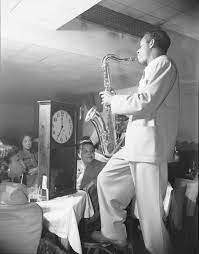
The Baroness made an inquiry of Kermit “Scotty” Scott of his three wishes were he given them and he responded with just one:
- “I wish I could get on a good recording date.”
*Excerpt from Three Wishes: An Intimate Look at Jazz Greats ~ Compiled and Photographed by Pannonica de Koenigswarter

More Posts: baroness,history,instrumental,jazz,music,pannonica,saxophone,three,wishes