


Daily Dose Of Jazz…
Pete Daily was born on May 5, 1911 in Portland, Indiana. He started his career in Chicago, Illinois in 1930 playing with various bands in and around the city. He was the leader of Pete Daily and his Chicagoans in the 1940s and 50s and recorded for Capitol Records as Dixie by Daily and Pete Daily’s Dixieland Band. They also recorded on the Jump and Decca labels in the 1950s.
In 1942, he moved to the West Coast and, after service in World War II, formed the Chicagoans. He played long engagements at several Hollywood night clubs in the 1950s such as Sardis, The Royal Room, and the Astors in Studio City. He continued to play during the 1970s until a stroke in 1979 forced him to retire.
During the filming of Pete Kelly’s Blues, actor Jack Webb, the cornet-playing star of the film, repeatedly went to the nightclub where Daily performed to study his mannerisms for his role in the film. The band which recorded the soundtrack appeared at Dixieland festivals supported by Pete Daily’s band.
His driving style on the cornet endeared him to generations of Dixieland Jazz enthusiasts. Cornetist and valve trombonist Pete Daily, who played swing and dixieland, passed away on August 23, 1981.

More Posts: bandleader,cornet,history,instrumental,jazz,music,valve trombone

Daily Dose Of Jazz…
John G. Blowers Jr. was born April 21, 1911 in Spartanburg, South Carolina and learned to play percussion during his schooldays and began performing with the Bob Pope Band in 1936.
After attending Oglethorpe College, in 1937 he travelled to New York City, where he found employment as a drummer in Greenwich Village. In 1938 he joined Bunny Berigan’s band, and in 1942 he began performing with the up-and-coming Frank Sinatra, who asked Johnny to record with him. They performed and recorded together regularly until the 1950s.
In 1947, he opened Club Blowers in the Queens district. In addition to Sinatra, Blowers performed with Louis Armstrong, Perry Como, Bing Crosby, Sidney Bechet, Eddie Fisher, Ella Fitzgerald, Judy Garland, Billie Holiday, and Mel Tormé.
Johnny Blowers, drummer of the swing era, passed away on July 17, 2006.
More Posts: bandleader,drums,history,instrumental,jazz,music

Daily Dose Of Jazz…
Alton Purnell was born in New Orleans, Louisiana on April 16, 1911. He sang before playing piano professionally, beginning to do so locally in New Orleans in 1928. He played in the 1930s with Isaiah Morgan, Alphonse Picou, Big Eye Louis Nelson, Sidney Desvigne, and Cousin Joe, and with Bunk Johnson in the middle of the 1940s.
Purnell joined George Lewis’s band after Johnson’s broke up in 1946, and remained there well into the 1950s, including for international tours. In 1957 Purnell relocated to Los Angeles. There he worked with Teddy Buckner, Young Men from New Orleans, Joe Darensbourg, Kid Ory, Barney Bigard, and Ben Pollack. He also recorded extensively as a leader, including for Warner Bros. Records, GHB, and Alligator Jazz. He toured internationally as a guest soloist from 1964.
He sang before playing piano professionally, beginning to do so locally in New Orleans in 1928. He played in the 1930s with Isaiah Morgan, Alphonse Picou, Big Eye Louis Nelson, Sidney Desvigne, and Cousin Joe, and with Bunk Johnson in the middle of the 1940s. Purnell joined George Lewis’s band after Johnson’s broke up in 1946, and remained there well into the 1950s, including for international tours.
Pianist Alton Purnell, who was a longtime Dixieland performer, passed away January 14, 1987 in Inglewood, California.
More Posts: bandleader,history,instrumental,jazz,music,piano
Daily Dose Of Jazz…
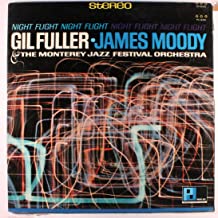
Gil Fuller was born Walter Gilbert on April 14, 1920 in Los Angeles, California. In the 1930s and 1940s, Fuller did extensive work writing and arranging for bandleaders such as Les Hite, Floyd Ray, Jimmie Lunceford, Billy Eckstine, and Tiny Bradshaw. He also worked with Benny Carter, Benny Goodman, Woody Herman, Count Basie, Machito, and Tito Puente.
Post World War II, he found himself increasingly in demand as a bebop arranger along with fellow modern arrangers Tadd Dameron, Gil Evans, and George Russell. Fuller’s work with Dizzy Gillespie was of particular note, yielding the tunes Manteca, Swedish Suite, Tin Tin Deo, and One Bass Hit. He is the composer of the jazz standard ballad I Waited For You, co-credited with Dizzy Gillespie.
Starting his own publishing company in 1957, he continued to work with some jazz musicians including Stan Kenton in 1955 and again during the 1960s. Gil also branched out into film music and pop with Ray Charles, among others. Arranger Gil Fuller passed away on May 26, 1994 in San Diego, California.
More Posts: arranger,history,instrumental,jazz,music
Three Wishes
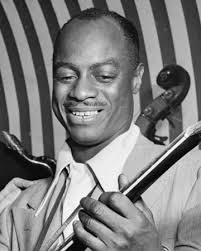
When Tiny Grimes responded to Pannica’s inquiry, he only had a single wish:
- “I don’t need but one: security. Pay my rent, my automobile. The rest would take care of itself. Just give me a telephone, so I can get to my gigs.”
*Excerpt from Three Wishes: An Intimate Look at Jazz Greats ~ Compiled and Photographed by Pannonica de Koenigswarter

More Posts: baroness,guitar,history,instrumental,jazz,music,pannonica,three,wishes