

Daily Dose Of Jazz…
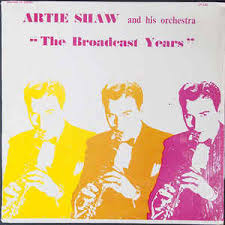
Bernard Privin was born of Jewish ancestry on February 12, 1919 in New York City. An autodidact on trumpet, he played professionally while in his teens. When he was 13, he bought a trumpet the day after he heard Louis Armstrong perform.
In 1937 Berniee became a member of Harry Reser’s band, and in the same year also worked with Bunny Berigan and Tommy Dorsey. The following year, he joined the Artie Shaw Orchestra, and then worked with Charlie Barnet, Mal Hallett, and Benny Goodman. Drafted in 1943 Bernie played from 1943 to 1946 with the Glenn Miller Army Air Force Band in Europe.
Returning to the United States, he worked with Goodman once more, then became a staff musician for radio and television, working with NBC and then CBS, the latter well into the 1960s. Concomitantly he played as a session musician, especially with Goodman throughout the 1950s, as well as for musicians such as Sy Oliver and Al Caiola.
Privin played frequently in Europe from the Sixties onward, playing in Sweden multiple times in the decade, and was a member of the Tommy Dorsey Orchestra, under the direction of Warren Covington and Pee Wee Erwin, for tours of Europe in the mid-1970s. He was a member of the New York Jazz Repertory Company when it toured the Soviet Union in 1975.
Trumpeter Bernie Privin passed away on October 8, 1999 in the city of his birth.

More Posts: history,instrumental,jazz,music,trumpet
Daily Dose Of Jazz…
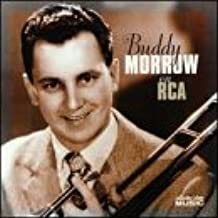
Buddy Morrow was born Muni Zudekoff on February 8, 1919 in New Haven, Connecticut. Receiving a scholarship at age 16, he studied trombone with Ernest Horatio Clarke at Juilliard from October to December 1936. During the next year he began playing trombone with Sharkey Bonano’s Sharks of Rhythm, an Eddie Condon group. He then worked with Eddy Duchin, Vincent Lopez, and Artie Shaw.
In 1938 Muni became known as Buddy Morrow when he joined the Tommy Dorsey band. The following year he performed with Paul Whiteman’s Concert Orchestra for their recording of Gershwin’s Concerto in F. In 1940, Morrow joined the Tony Pastor band, but this was only a short detour on his way to replacing Ray Conniff in the Bob Crosby band. Shortly after, he joined the U.S. Navy, during which he recorded with Billy Butterfield, leading a ten-piece band with three trombones, accompanying Red McKenzie singing four arrangements, including Sweet Lorraine and It’s the Talk of the Town.
After demobilization, Morrow joined Jimmy Dorsey’s band, then went into radio freelancing as a studio musician. He began conducting sessions, which introduced him to bandleading. RCA Victor sponsored him as director of his band in 1951. The band’s first hit, Night Train by Jimmy Forrest, was a hit in rhythm and blues.
Morrow was a member of The Tonight Show Band. His early 1950s records such as Rose, Rose, I Love You and Night Train appeared on the Billboard magazine charts. Night Train reached No. 12 in the U.K. Singles Chart in 1953. In 1959 and 1960 Morrow’s Orchestra released two albums of American television theme songs: Impact and Double Impact respectively.
In 2009 he received a Lifetime Achievement Award from the International Trombone Association. He led the Tommy Dorsey Orchestra from 1977 through 2010, when he appeared with the band for the final time. Over the course of his career he recorded 18 albums as a leader and 30 as a sideman. Trombonist, arranger, composer and bandleader Buddy Moorow, who was also known as Moe Zudekoff, passed away on September 27, 2010 in Maitland, Florida.
More Posts: arranger,bandleader,composer,history,instrumental,jazz,music,trombone
Daily Dose Of Jazz…
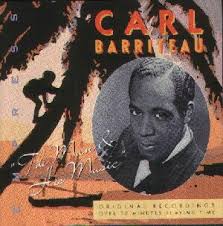
Carl Alrich Stanley Barriteau was born on February 7, 1914 in Trinidad, but was raised in Maracaibo, Venezuela. He played tenor horn in Trinidad from 1926 to 1932, before playing the clarinet in a local police band from 1933 to 1936. At the same time, he also played in Port of Spain with the Jazz Hounds and the Williams Brothers Blue Rhythm Orchestra.
Moving to London, England where he played in Ken Johnson’s West Indian Swing Band. Melody Maker named him “best clarinetist” for seven consecutive years. In the 1940s Carl led his own group on recordings for Decca Records.
He did several USO tours for American troops from 1958 to 1966. He emigrated to Australia in 1970. Clarinetist Carl Barriteau passed away on August 24, 1998, in Sydney, Australia.
More Posts: clarinet,history,instrumental,jazz,music
Daily Dose Of Jazz…
Fred Ramsey was born Charles Frederic Ramsey, Jr. on January 29, 1915 in Pittsburgh, Pennsylvania and received his BA at Princeton University in 1936. After graduation he took jobs at Harcourt Brace until 1939, the United States Department of Agriculture from 1941 to 1942, and then with Voice of America.
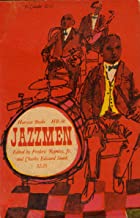
In 1939 with Charles Edward Smith, he wrote Jazzmen, an early landmark of jazz scholarship particularly noted for its treatment of the life of King Oliver. After receiving Guggenheim fellowships, Fred visited the American South in the middle of the 1950s to make field recordings and do interviews with rural musicians, some of which were used in releases by Folkways Records and in a 1957 documentary, Music of the South.
He curated an anthology of early jazz recordings for Folkways, titled simply Jazz. Ramsey worked with the Institute of Jazz Studies at Rutgers University from 1970. He researched Buddy Bolden’s life with a grant from the National Endowment for the Humanities in 1974–75 and continued with a Ford Foundation grant in 1975–76. He presented early jazz interviews on National Public Radio in 1987.
Writer and record producer Fred Ramsey, who authored six books on jazz, passed away on March 18, 1995 in Paterson, New Jersey.
More Posts: author,history,intrumental,jazz,music,record producer
Daily Dose Of Jazz…
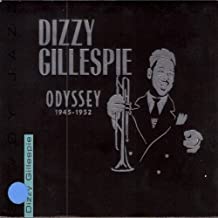
Ray Abrams was born January 23, 1920 in New York City, His younger brother was jazz drummer Lee Abrams. He first worked with Dizzy Gillespie in 1945, toured Europe with Don Redman in 1946 and was with Andy Kirk in 1947. He went back and forth between Kirk and Gillespie for decades.
Outside of his work with Gillespie he was best known for the Ray Abrams Big Band. Other bands with which he played into the early 1950s include those of Hot Lips Page, Roy Eldridge, and Slim Gaillard.
Tenor saxophonist Ray Abrams, known for his jazz and jump blues playing, passed away in July 1992.
More Posts: history,instrumental,jazz,music,saxophone