

Daily Dose Of Jazz…
Ray Perry was born on February 25, 1915 in Boston, Massachusetts to a musical family and began playing the violin at a young age, and didn’t pick up the alto saxophone till he was twenty. He organized his first band, the Arabian Knights, in 1932.
Working the bread and butter gigs, he performed with the best in the business from 1935 to 1943, among numerous others, Dean Earl in the Little Harlem Orchestra, Clarence “Chick” Carter Orchestra with Gerald Wilson, then with Joe Nevils band when it masqueraded as the Blanche Calloway Orchestra, before joining the Lionel Hampton band. In the mid-thirties Ray developed a technique of simultaneously singing an octave below his playing as he bowed his violin. Hearing him, bassist Slam Stewart adopted the same technique, except he sang an octave above his playing.
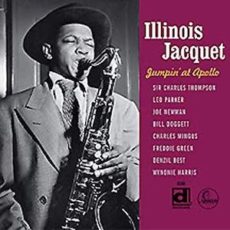
Poor health forced him to return to Boston in late 1942, where he found work with Sherman Freeman, Sabby Lewis, and his fraternal band, the Perry Brothers Orchestra with Joe on tenor saxophonoe and Bey on drums, Performing more frequently on alto saxophone, despite his short career, Perry worked with Shadow Wilson, Illinois Jacquet Vernon Alley, J. C. Heard, Joe Newman, Fred Beckett, Sabby Lewis, Sir Charles Thompson, and Irving Ashby.
Health problems continued to dog him for almost a decade leading to the passing away of violinist and alto saxophonist Ray Perry from kidney disease at age 35 in November 1950 in New York City. However, his final record date was with Illinois Jacquet earlier that year. Some of his best surviving violin work was recorded with a Hampton septet in late 1940.

More Posts: bandleader,history,instrumental,jazz,music,saxophone,violin
Daily Dose Of Jazz…
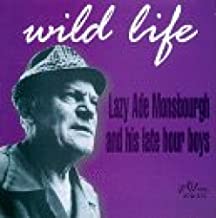
Ade Monsbourgh was born on Febrauary 17, 1917 in Melbourne, Victoria, Australia. He studied piano first before taking up reeds, valve trombone, trumpet and even recorder. He met pianist Graeme Bell early on and was part of his band regularly during 1944 to 1952. During his tenure with the band he recorded several times with Bell’s freewheeling band and toured Europe and Czechoslovakia.
He had occasional opportunities to lead his own dates, in addition to playing with groups led by Roger Bell, Dave Dallwitz, Len Barnard and Frank Traynor. His band, the Late Hour Boys, recorded prolifically for Swaggie through 1971.
During the 1992 Australia Day Honours, Monsbourgh was made an Officer of the Order of Australia (AO) for service to music, particularly jazz as a performer and composer.
Retiring from fulltime playing in the 1970’s, clarinetist Ade Monsbourgh, known as Lazy Ade or Father Ade, and who also played alto and tenor saxophone, trumpet, trombone and recorder, passed away on July 19, 2006 in Nathalia, Victoria, Australia.
More Posts: bandleader,history,instrumental,jazz,music,recorder,saxophone,trombone,trumpet
Daily Dose Of Jazz…
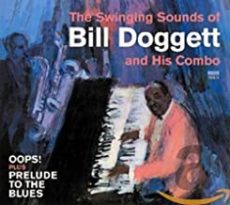
William Ballard Doggett was born February 16, 1916 in Philadelphia, Pennsylvania. During the 1930s and early 1940s he worked for Lucky Millinder, Frank Fairfax and arranger Jimmy Mundy. In 1942 he was hired as the Ink Spots’ pianist and arranger.
By 1951 Doggett had organized his own trio and began recording for King Records. He also arranged for many bandleaders and performers, including Louis Armstrong, Count Basie, Ella Fitzgerald, and Lionel Hampton. He also recorded with Fitzgerald, as well as Coleman Hawkins, Helen Humes, Willis Jackson, Illinois Jacquet, Louis Jordan, Lucky Millinder, Paul Quinichette, Buddy Tate, Lucky Thompson
Crossing over to rhythm & blues his best known recording is Honky Tonk, a rhythm and blues hit of 1956, which sold four million copies (reaching No. 1 R&B and No. 2 Pop), and which he co-wrote with Billy Butler. The track topped the US Billboard R&B chart for over two months. He also worked with the Ink Spots, Johnny Otis, and Wynonie Harris.
Pianist and organist Bill Doggett continued to play and arrange until passing away of a heart attack on November 13, 1996 in New York City. He was 80.
More Posts: bandleader,history,instrumental,music,organ,piano
Daily Dose Of Jazz…
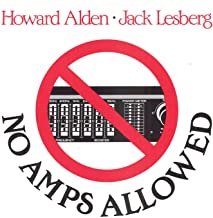
Jack Lesberg was born February 14, 1920 in Boston, Massachusetts. He had the misfortune of playing in that city’s Cocoanut Grove on the night in 1942 when 492 people lost their lives in a fire. His escape was memorialized by fellow bassist Charles Mingus.
Jack performed in the New York City Symphony under Leonard Bernstein in the 1940s. Lesberg continued to tour in the 1980s and performed in Menlo Park, California in 1984. Jack played with Louis Armstrong, Earl Hines, Jack Teagarden, Coleman Hawkins, Sarah Vaughan, Urbie Green, George Barnes, Ruth Brown, Tony Bennett, Johnny Hodges and Benny Goodman among others, He went on several international tours.
Double-bassist Jack Lesberg, who co~led two sessions and twenty-one as a sideman, passed away from Alzheimer’s Disease in Englewood, California at the age of 85 on September 17, 2005.
More Posts: bandleader,bass,history,instrumental,jazz,music
Daily Dose Of Jazz…
Irving “Irv” Cottler was born February 13, 1918 in Brooklyn, New York. He would become a sometime member of Los Angeles, California based The Wrecking Crew, who recorded with Nat King Cole, Louis Armstrong, Bing Crosby, Dinah Shore, Ella Fitzgerald, and many others.
Best known as the drummer for Frank Sinatra, with whom he worked for over 30 years beginning in 1955, Irv’s first recording session with Sinatra was in October 1955 on ‘Love Is Here To Stay’ and he played on many of the remaining Songs For Swingin’ Lovers tracks, alternating with Alvin Stoller.
From 1956 on, Irv was Sinatra’s preferred drummer and played a world tour with Sinatra during 1962, as well as on his many TV recordings. He also performed for twelve years with The Dinah Shore Show house band.
Drummer Irv Cottler passed away of a heart attack on August 8, 1989 in Templeton, California at the age of 71.
More Posts: drums,history,instrumental,jazz,music