

Daily Dose Of Jazz…
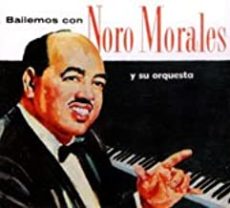
Noro Morales was born into a family with a long musical tradition in Puerta de Tierra, San Juan, Puerto Rico on January 4, 1911. As a child, he studied trombone, saxophone, and drums, finally settling on the piano. In 1935 he moved to New York City in search of a professional career and played with different bands including Alberto Socarras and Augusto Coén.
1937 saw him creating his own orchestra together with his brother Ismael, featured flutist, which competed with the likes of Tito Puente, Machito Grillo, the brothers Tito and Johnny Rodríguez, Davilita, and José Esteves known as Joe Loco. They began to record their first disc for Columbia and Decca Records and in a short time, Noro and their band became a staple on the New York City Latin music scene. The orchestra frequently performed in important clubs such as El Morocco, the Conga, and Copacabana. In 1942 with the Xavier Cugat Orchestra popularizing rumba, Morales got the opportunity to play for the first time, the prestigious dance of Harvest Moon organized by the Daily News newspaper.
At the time of the great mambo and swing bands, Morales was able to consolidate a unique style and original, and in the late 1940s and early 1950s, he achieved commercial success with several albums produced by the CODA label. His most famous compositions recorded were Rumba Rhapsody, Cute Woman, Nothing Is True, Palm Trees, Ponce, Cursed Jealousy, Rhythmic Serenade, and 110th Street & 5th Avenue.
Suffering from glaucoma, diabetes, and joint problems, in 1960 he decided to return to Puerto Rico, where he put together another band, consisting among others percussionist Ana Carrero and singer Vitín Avilés.
Composer, arranger, and pianist Noro Morales, who was a pioneer in the introduction of the Latin musical element in New York City, passed away on January 14, 1964 in San Juan.
More Posts: bandleader,composer,history,instrumental,jazz,music,piano
Daily Dose Of Jazz…
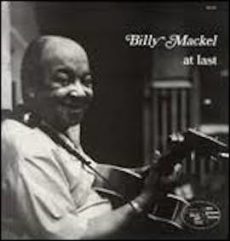
Billy Mackel was born John William Mackel on December 28, 1912 in Baltimore, Maryland and played banjo early in his career, but like many banjoists of his time he switched to guitar.
He led a band early in the 1940s, then joined Lionel Hampton in 1944 and spent the next thirty years with him. In the 1940s he also recorded with Milt Buckner, Arnett Cobb, Herbie Fields, and others, and worked with Billy Williams in the 1960s.
Guitarist Billy Mackel, who played left~handed and recorded as a leader, passed away on May 5, 1986.
More Posts: bandleader,guitar,history,instrumental,jazz,music
Daily Dose Of Jazz…
George McKinley Treadwell was born on December 21, 1918 in New Rochelle, New York. He played in the house band at Monroe’s in Harlem from 1941 to 1942 before working with Benny Carter in late 1942 in Florida. Following stints with Ace Harris’s Sunset Royals and Tiny Bradshaw, he worked with Cootie Williams for three years from 1943 to1946.
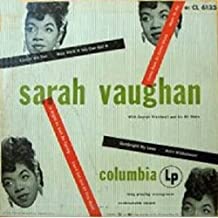
Joining J.C. Heard in 1946 he stayed for a year and the ensemble accompanied Etta Jones and Sarah Vaughan, whom he married in 1947. He also recorded with Dicky Wells and Ethel Waters in 1946.
George quit playing late in the 1940s to work as Vaughan’s manager, and continued in this capacity after their divorce in 1957. He also managed the Drifters and Ruth Brown and did artists and repertoire (A&R) work in the 1950s. After 1959 Treadwell also worked as a songwriter.
Trumpeter George Treadwell, whoalso led a big band and orchestra, passed away on May 14, 1967 in New York City.
More Posts: bandleader,history,instrumental,jazz,music,trumpet
Daily Dose Of Jazz…
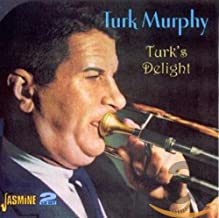
Turk Murphy, born Melvin Edward Alton Murphy on December 16, 1915 in Palermo, California. Serving in the Navy during World War II, during which he played and recorded with Lu Watters and Bunk Johnson. In 1952, he headed Turk Murphy’s Jazz Band, which included pianist Wally Rose, clarinetist Bob Helm, banjoist Dick Lammi, and tubist Bob Short, and had a residency at San Francisco North Beach’s Italian Village. The band appeared twice on The Ed Sullivan Show, in 1959 and 1965.
1979 saw Robert Schulz joining the band for eight years with various members joining as others departed. They included trumpeters Don Kinch and Leon Oakley; pianists Pete Clute and Ray Skjelbred; banjoist Carl Lunsford, tubist and trombonist Bill Carroll, singers Pat Yankee and Jimmy Stanislaw.
Murphy was the singer for the 1971 Sesame Street cartoon shorts, The Alligator King and No. 9 Martian Beauty, animated and produced by his friend Bud Luckey. Murphy arranged and performed on many of Luckey’s other Sesame Street animated shorts.
Murphy’s band played his nightclub, Earthquake McGoons, which opened in 1960 and moved three times before closing in 1984. He got an opportunity to play Carnegie Hall in 1987. Trombonist and bandleader Turk Murphy, who played traditional and Dixieland jazz, passed away on May 30, 1987 in San Francisco, California.
Daily Dose Of Jazz…
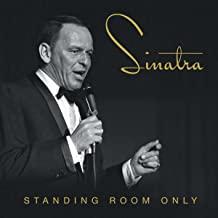
Francis Albert Sinatra was born December 12, 1915 in Hoboken, New Jersey and at an early age was greatly influenced by the intimate easy listening vocal style of Bing Crosby. While Sinatra never learned how to read music, he worked very hard from a young age to improve his abilities in all aspects of music. A perfectionist, renowned for his dress sense and performing presence, he always insisted on recording live with his band. He began his musical career in the swing era with bandleaders Harry James and Tommy Dorsey. Finding success as a solo artist after signing with Columbia Records in 1943, he became the bobbysoxers idol.
Releasing his debut album, The Voice of Frank Sinatra, in 1946, by the early 1950s, his professional career had stalled. Turning to Las Vegas, Nevada he became one of its best-known residency performers as part of the Rat Pack. Venturing into Hollywood, his career was reborn in 1953 with the success of From Here to Eternity, and his subsequent wins of an Academy Award and Golden Globe Award for Best Supporting Actor.
Through the Sixties Sinatra released several critically lauded albums, including In the Wee Small Hours, Songs for Swingin’ Lovers!, Come Fly with Me, Only the Lonely, and Nice ‘n’ Easy. Leaving Capitol in 1960 to start his own record label, Reprise Records and released a string of successful albums. In 1965, he recorded the retrospective album, September of My Years and starred in the Emmy-winning television special Frank Sinatra: A Man and His Music.
After releasing Sinatra at the Sands, recorded at the Sands Hotel and Casino in Vegas with frequent collaborator Count Basie in early 1966, the following year he recorded one of his most famous collaborations with Tom Jobim, the album Francis Albert Sinatra & Antonio Carlos Jobim. It was followed by 1968’s Francis A. & Edward K. with Duke Ellington.
Retiring for the first time in 1971 he came out of retirement two years later. He recorded several albums and resumed performing at Caesars Palace, and released New York, New York in 1980. Using his Las Vegas shows as a home base, he toured both within the United States and internationally until shortly before his death in 1998.
Forging a highly successful career as an actor during the Sixties he starred in The Man with the Golden Arm, The Manchurian Candidate, On the Town, Guys and Dolls, High Society, Pal Joey, Ocean’s Eleven, and Tony Rome, as well as television appearances.
He was honored at the Kennedy Center Honors in 1983, was awarded the Presidential Medal of Freedom by Ronald Reagan in 1985, and the Congressional Gold Medal in 1997. Sinatra was also the recipient of eleven Grammy Awards, including the Grammy Trustees Award, Grammy Legend Award, the Grammy Lifetime Achievement Award, and included in Time magazine’s compilation of the 20th century’s 100 most influential people.
Vocalist, actor, and producer Frank Sinatra, who was one of the most popular and influential musical artists of the 20th century and sold more than 150 million records worldwide, passed away on May 14, 1998.
More Posts: bandleader,history,instrumental,jazz,music,vocal