

Three Wishes
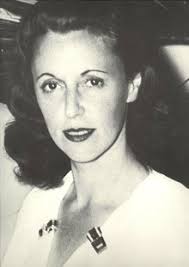
From the Notes of Nica de Koenigswarter:
You can quote Satchmo as saying:
“Health is wealth! If I were sick, and I wanted to borrow a dime, d’you think that cat would cross the street to offer it to me? No, sir! I’d have to have my health to go and get it from him.”
“And people would never get sick if they didn’t get constipated. Why, I’ve never had an operation in my life, because I never let myself get constipated.”
*Excerpt from Three Wishes: An Intimate Look at Jazz Greats ~ Compiled and Photographed by Pannonica de Koenigswarter

More Posts: baroness,history,instrumental,jazz,music,pannonica,patron,three,wishes,writer
Daily Dose Of Jazz…
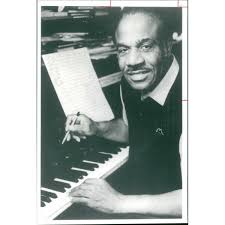
William Moore, Jr., better known as Billy Moore was born on December 7, 1917 in Parkersburg, West Virginia. Chiefly known as an arranger for most of his jazz career, Billy wrote charts for Jimmie Lunceford, Charlie Barnet, Jan Savitt, and Tommy Dorsey in the 1940s. He also worked for publishing companies in New York City.
In the 1950s he relocated to France, where he accompanied and wrote for The Peters Sisters from 1953 to 1960. Following this, he worked from 1960 to 1963 as an arranger for Berliner Rundfunk and then accompanied the Delta Rhythm Boys on tour.
He formed his own music publishing company in order to combat the then prevalent habit of band leaders taking credit for the work of their arrangers and composers. Amongst his uncredited works is the famous countermelody to Barnet’s million-selling hit Skyliner. Moving to Copenhagen, Denmark in the 1970s, he remained active as an arranger. Being friends with Leonard Feather, he sometimes used Moore’s name for songwriting credits.
In his later years in Denmark, he was the administrator of the music foundation established in Ben Webster’s name and for whom he also worked as a business aide. He was also the manager and musical director for the European tours of the Peters Sisters. Pianist and arranger Billy Moore passed away on February 28, 1989 in Copenhagen, Denmark.
Daily Dose Of Jazz…
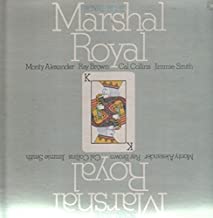
Marshal Walton Royal Jr. was born into a musical family on December 5, 1912 in Sapulpa, Oklahoma. His first professional gig was with Lawrence Brown’s band at Danceland in Los Angeles, California. In a very short time, he secured a regular gig at the Apex, working for Curtis Mosby in Mosby’s Blue Blowers, a 10-piece band. Following that gig, he began an eight-year stint from 1931–1939 with the Les Hite Orchestra at Sebastian’s Cotton Club in Los Angeles. He spent 1940 to 1942 with Lionel Hampton, until the war interrupted his career.
With his brother Ernie, he served in the U.S. Navy in the 45-piece regimental band that was attached to the Navy’s pre~flight training school for pilots at St. Mary’s College in Moraga, California. Two swing bands were organized from the larger regimental band, and they played for smokers and dances at USOs and officers clubs. Royal was the leader of the Bombardiers, one of those bands, which also included not only his brother Ernie, but Jackie Kelson (later known as Jackie Kelso), Buddy Collette, Jerome Richardson, and Vernon Alley.
When he left Basie in 1970, Royal settled permanently in Los Angeles, continuing to play and record, working with Bill Berry’s big band, Frank Capp and Nat Pierce, Earl Hines, and Duke Ellington. Royal recorded as a soloist with Dave Frishberg and Warren Vache. He co-led a band with Snooky Young in the 1970s and 1980s, recording with the band in 1978.
Alto saxophonist and clarinetist Marshal Royal, best known for his twenty years with Count Basie, passed away in Culver City, California, on May 9, 1995, aged 82.
More Posts: bandleader,clarinet,history,instrumental,jaz,music,saxophone
Three Wishes
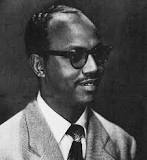
Nica inquired of Adriano Acea what his three wishes would be and he told her:
- “I would like to play music as it should be played.”
- “I’d love to have money to make my family happy. I thinkI could enjoylife from there.”
*Excerpt from Three Wishes: An Intimate Look at Jazz Greats ~ Compiled and Photographed by Pannonica de Koenigswarter
More Posts: baroness,history,instrumental,jazz,music,pannonica,piano,three,wishes

Daily Dose Of Jazz…
Skeeter Best was born Clifton Best was born on November 20, 1914 in Kinston, North Carolina. From 1935 to 1940 he played in Philadelphia, Pennsylvania recording with Slim Marshall and Erskine Hawkins. In 1940, he joined the Earl Hines Orchestra, playing with him until he joined the U.S. Navy in 1942.
After his Naval discharge, he played with Bill Johnson from 1945 to 1949. He toured East Asia with Oscar Pettiford in 1951 and 1952, forming his own trio in during the decade. He did a critically acclaimed session with Ray Charles and Milt Jackson in 1957 called Soul Brothers.
In 1958, he recorded with Mercer Ellington and taught in New York City. He also recorded with Harry Belafonte, Etta Jones, Nellie Lutcher, Milt Hinton, Osie Johnson, Paul Quinichette, Jimmy Rushing, Sonny Stitt, Charles Thompson, and Lucky Thompson.
From 1959 to 1980 he recorded twenty-six albums as a sideman with Eugenie Baird, Aretha Franklin, Bennie Green & Paul Quinichette, Lionel Hampton, Erskine Hawkins, Earl Hines, Marva Josie, Mahalia Jackson, Milt Jackson, Ray Charles, Etta Jones, Frankie Laine, Buck Clayton, Ellis Larkins, Howard McGhee, The Modern Jazz Sextet, Mel Powell, Ike Quebec, Freddie Roach, Jimmy Rushing, Charles Thompson, Lucky Thompson, Cootie Williams. Guitarist Skeeter Best passed away on May 27, 1985, New York City.
More Posts: guitar,history,instrumental,jazz,music