

Daily Dose Of Jazz…
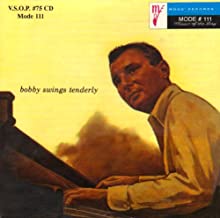
Robert William Troup Jr. was born on October 18, 1918 in Harrisburg, Pennsylvania. Graduating from The Hill School in 1937, he went on to graduate Phi Beta Kappa from the Wharton School at the University of Pennsylvania with a degree in economics. His earliest musical success came in 1941 with the song Daddy and Sammy Kaye and His Orchestra recorded it sending it to #1 for eight weeks on the Billboard chart and #5 record of 1941.
After graduating from college in 1941, he enlisted in the United States Marine Corps, completed officer training, and was assigned to recruit the first Black Marines at Montford Point. While there, he organized the first Negro band of U.S. Marines. During this time he composed Take Me Away From Jacksonville, which became an anthem of sorts for the Marines at Montford Point and other areas of Camp Lejeune. In 1942, his song Snootie Little Cutie was recorded by Frank Sinatra and Connie Haines with the Tommy Dorsey Orchestra and the Pied Pipers.
In 1946, Nat King Cole had a hit with Troup’s most popular song, Route 66. Troup’s fifteen albums in the 1950s and 1960s were not commercially successful, recording for Liberty and Capitol. He composed the music for the instrumental version of his song The Meaning of the Blues that appeared on the Miles Davis album Miles Ahead.
While relying on songwriting royalties, Bobby worked as an actor, appearing in Bop Girl Goes Calypso, The High Cost of Loving, The Five Pennies, and playing musician Tommy Dorsey in the film The Gene Krupa Story. He also appeared on several television shows in the Sixties. It was during this time that he met Julie London, encouraged her to pursue her singing career, and in 1955 produced her million-selling hit record Cry Me a River. Four years later, London married Troup. On February 7, 1999, pianist, singer, songwriter and actor Bobby Troup passed away of a heart attack in the Los Angeles, California neighborhood of Sherman Oaks.

More Posts: actor,history,instrumental,jazz,music,piano,songwriter,vocal
Daily Dose Of Jazz…
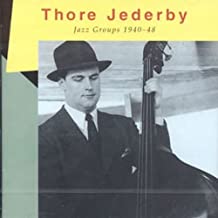
Thore Jederby was born on October 15, 1913 in Stockholm, Sweden, receiving formal training in music at the Royal Swedish Academy of Music. He began playing jazz in the mid-1930s, playing with Arne Hülphers’s band from 1934 to 1938, and then with Thore Ehrling’s ensemble from 1938 through the end of World War II.
He led his own group, the Swing Swingers, for studio recordings in the mid-1930s, and led smaller ensembles for recording sessions well into the 1940s. Later in his life, Thore went on to become active in the capturing of the history of Swedish jazz. He was involved in reissues of early Swedish recordings, curated radio shows devoted to Swedish jazz, and participated in a national commission on the history of jazz in Sweden.
Double bassist Thore Jederby, who was also a record producer and radio broadcaster, passed away on January 10, 1984 in Stockholm.
More Posts: bandleader,bass,history,instrumental,jazz,music
Daily Dose Of Jazz…
Scoville “Toby” Browne was born on October 13, 1909 in Atlanta, Georgia and played in the late 1920s with Junie Cobb’s band and the Midnight Ramblers in Chicago, Illinois. From 1931 to 193232 he played saxophone and clarinet for Fred Avendorph. He went on to work with Louis Armstrong from 1933–35, and in the mid- and late Thirties with Jesse Stone, Jack Butler, Claude Hopkins, and Blanche Calloway.
By the end of the decade, he was attending the Chicago College of Music and the 1940s Browne played with Slim Gaillard, Fats Waller, Buddy Johnson, Hot Lips Page, and Eddie Heywood before serving in the U.S. military during World War II. Following his discharge, he played with Hopkins again and with Buck Clayton.
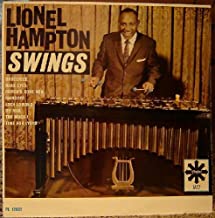
Taken on the role of bandleader on and off in the 1950s, Toby also studied classical music. He was the main clarinet soloist with Lionel Hampton and toured overseas with Muggsy Spanier late in the decade, and appeared in the 1958 photograph A Great Day in Harlem.
Continuing to work with Hopkins well into the Seventies, alto saxophonist and clarinetist Toby Browne who never recorded as a bandleader but only a sideman, passed away on October 3, 1994 in Chicago.
More Posts: bandleader,clarinet,history,instrumental,jazz,music,saxophone
Daily Dose Of Jazz…
Jimmy Archey was born on October 12, 1902 in Norfolk, Virginia. He began playing when he was twelve and was getting professional gigs a year later. He studied at Hampton Institute from 1915 to 1919, played in Atlantic City, New Jersey for a while before moving to New York City in 1923.
During the Roaring Twenties, he played with Edgar Hayes, Most noteworthy for his work was in several prominent jazz orchestras and big bands of his time, including leading one of his own. He performed and recorded with the James P. Johnson Orchestra, King Oliver, Fats Waller, and the Luis Russell Orchestra, among others.
The late 1930s saw Archey participating in big bands that simultaneously featured musicians such as Benny Carter, Coleman Hawkins, Cab Calloway, Duke Ellington, and Claude Hopkins. In the 1940s he toured France with Mezz Mezzrow and in the 1950s, he spent much of his time working with New Orleans revivalist bands with artists such as Bob Wilber and Earl Hines.
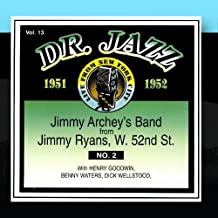
Becoming a bandleader, during the next few years, he headed a sextet, which in 1952 had trumpeter Henry Goodwin, Benny Waters on clarinet and pianist Dick Wellstood. A major yet underrated musician, his only sessions recorded as a leader were for Nec Plus Ultra, the French Barclay and the 77 label. Trombonist Jimmy Archey passed away on November 16, 1967 in Amityville, New York.
More Posts: bandleader,history,instrumental,jazz,music,trombone
Daily Dose Of Jazz…
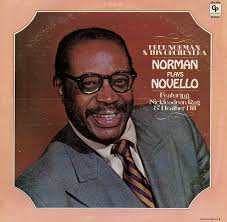
Fred Norman was born on October 5, 1910 in Leesburg, Florida and started out playing trombone when he was 14. After working with local bands in Florida, until moving to Washington, D.C. in 1930. There he worked with Duke Eglin’s Bell Hops, Booker Coleman, and Elmer Calloway (Cab’s younger brother). When he joined Claude Hopkins’ Orchestra in 1932, he doubled as a singer and contributed many arrangements.
Norman was with the Hopkins Big Band during its key years (1932-37), and when he departed, gave up the trombone and stuck exclusively to writing. Norman wrote arrangements for many big bands including those of Benny Goodman (1938), Bunny Berigan, Gene Krupa, Lionel Hampton, Jack Teagarden, Glenn Miller, Harry James, Artie Shaw, and Tommy Dorsey.
Landing the position of staff arranger for Krupa from 1940 to 1943, he spent periods writing exclusively for Dorsey and Charlie Spivak. In the 1950s, Fred started working closely with MGM and Carlton record labels, among others, and often as a musical director for singers such as Dinah Washington, Sarah Vaughan, and Brook Benton.
Although his orchestra backed numerous singers, he led his own orchestra record date, producing Norman Plays Novello. Trombonist, vocalist, and arranger Fred Norman, who spent most of the swing era as a busy arranger, passed away on February 19, 1993 in New York City, New York.
More Posts: arranger,bandleader,history,instrumental,jazz,music,trombone,vocal