

Daily Dose Of Jazz…
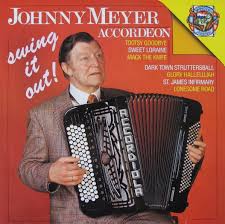
Johnny Meyer or Johnny Meijer was born Jan Cornelis Meijer on October 1, 1912 in Amsterdam, Netherlands. He began playing accordion as a child and before World War II was playing in Dutch big bands. The post-war years were fertile for him and the liberating sound of his swing accordion, opened opportunities for him to record many swing standards from 1952 to 1957.
He toured Europe but mainly performed in the Netherlands and for a time was known as a virtuoso jazz accordionist. Besides the popular songs, Meyer also played fast swing numbers, Romanian music and classical pieces. In 1974 he recorded the Dutch Swing College Band Johnny Goes Dixie LP, which went gold.
Typically seen during performances with a cigar in his mouth, his accordion showed several burn marks as a result of this. In the last years of his life, Johnny Meyer was rarely invited to play large performances, mainly in connection with his short temper and his drinking, and thus the King of the Accordion saw out his final days mostly in silence, reduced to occasionally playing weddings and parties.
Accordionist Johnny Meyer, who played jazz, swing, classical, folk and was the subject of a film, passed away on January 8, 1992 in Amsterdam.

More Posts: accordion,history,instrumental,jazz,music
Daily Dose Of Jazz…
Skip Hall was born Archie Hall on September 27, 1909 in Portsmouth, Virginia and studied piano under his father. He lived in New York from age eight and in the late twenties, he relocated to Cleveland, Ohio where he led his own band for most of the 1930s.
He worked as an arranger on contract, arranging for Jay McShann from 1940 to 1944. During World War II he played with Don Redman and in 1943 he entered military service and played in a band while stationed in England.
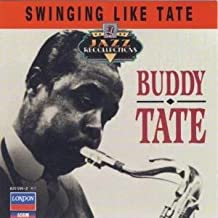
He would eventually work with Hot Lips Page around the year 1945 and then joined the Sy Oliver band, who was his brother-in-law. Following this he worked with Wynonie Harris, Thelma Houston, and Jimmy Rushing before joining Buddy Tate’s group in 1948. He worked with Tate for twenty years both as a performer and arranger.
In the 1950s and 1960s, he performed with Dicky Wells, Emmett Berry, and George James, as well as working solo and with his own small groups. Arranger, pianist, and organist Skip Hall passed away in November 1980, Ottawa, Ontario, Canada.

More Posts: arranger,bandleader,history,instrumental,jazz,music,organist,pianist
Daily Dose Of Jazz…
Charlie Allen was born on September 25, 1908 in Jackson, Mississippi and grew up in Chicago, Illinois and in the early 1920s just out of high school began playing. In 1925 he was a member of the band led by Hugh Swift, then went on to play with Dave Peyton and Doc Cook in 1927, and Clifford King in 1928 and Johnny Long by the end of the decade.
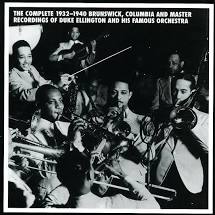
Allen joined Earl Hines from 1931 to 1934, then did a short stint in Duke Ellington’s orchestra in 1935, though he never recorded any solos with the orchestra. He would play with Fletcher Butler in 1936 and then returned to play with Hines again in 1937.
Charlie played in various groups in Chicago in the 1940s and 1950s and later in his life became a music educator, working in the Chicago Musicians’ Union. He also designed custom trumpet mouthpieces, used by Cat Anderson, among others. Trumpeter Charlie Allen passed away on November 19, 1972 in Chicago, Illinois.
More Posts: history,instrumental,jazz,music,trumpet
Daily Dose Of Jazz…
Jimmy Butts was born on September 24, 1917 in New York City, New York. Early in his career, he played with local groups Dr. Sausage and His Pork Chops and Daisy Mae’s Hepcats. Early in the 1940s, he played in the orchestras of Les Hite and Chris Columbus. He accompanied Frances Brock on USO tours during World War II.
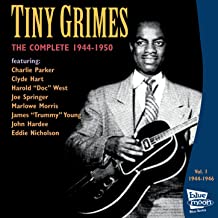
In the 1940s Jimmy played with Don Redman, Art Hodes, Lem Johnson, Tiny Grimes, and Noble Sissle. Late in the decade he played in a duo with Doles Dickens and formed his own ensemble, which continued into the early 1950s.
The 1960s had Butts emigrating to Canada and playing with Juanita Smith. In the 1970s returning to New York City, he played with his own small group, working almost up until his death.
Double-bassist Jimmy Butts passed away on January 8, 1998 in New York City. His band remained together under the name Friends of Jimmy Butts after his death.
More Posts: bass,history,instrumental,jazz,music
Daily Dose Of Jazz…
John L.Thomas was born September 18, 1902 in Louisville, Kentucky, but relocated to Chicago, Illinois as a child, receiving his formal education in the Windy City. Sliding into on-stage trombone performances with the Clarence Miller Orchestra around 1923. Between 1927 and 1928 he worked with Erskine Tate, which led to his entry into Louis Armstrong’s legendary Hot Seven, replacing Kid Ory in Armstrong’s band and also played with Erskine Tate, among others, becoming associated with the Chicago jazz scene.
He was briefly with McKinney’s Cotton Pickers for jobs in the Northeast in the ’30s; in 1937 he was part of a touring revue fronted by pianist and singer Nat King Cole. He was once again with Tate as well as drummer Floyd Campbell’s outfit prior to switching his trombone case for the tool kit of a defense plant worker during the Second World War. That hiatus from playing took place prior to dropping out completely during the ’50s, as he did gig once again in a group led by guitarist Walter Dysett in 1944.
He had a wonderful repertory band led by Franz Jackson with which Thomas performed and recorded through the first half of the ’60s. The ’50s, on the other hand, may have simply depressed the trombonist with its onslaught of rock & roll, because he simply stopped playing completely representing the first major halt in musical action for this performer since his professional activities began in the Roaring Twenties.
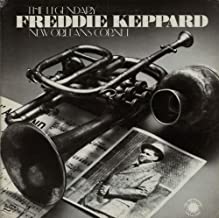
The trombonist continued working with a wide range of classic jazz bandleaders, including trumpeter Freddie Keppard. Preferring to move in and out of groups such as that of the aforementioned Tate and Reuben Reeves, in one lineup and then out of the next. Trombonist John L. Thomas passed away on November 7, 1971 in Chicago, Illinois.
More Posts: history,instrumental,jazz,music,trombone