

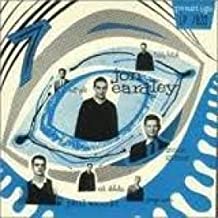
Daily Dose Of Jazz…Trumpet
Jon Eardley was born on September 30, 1928 in Altoona, Pennsylvania and first started on trumpet at the age of 11. His father played in the Paul Whiteman Orchestra. From the age of eighteen, he played1946 to 1949 he played in the Air Force Band in Washington, D.C., then led with his own quartet in D.C. from 1950 to 1953.
A move to New York City in 1953 got him introduced to the jazz scene. The following year he played with Phil Woods, then left for Gerry Mulligan for three years, and during that time played with Hal McIntyre. Returning to his hometown, Jon played there until 1963, when he moved to Europe and settled for a time in Belgium.
1969 saw his next residency in Cologne, Germany where he played with Harald Banter and Chet Baker and working through the 1980s. The last years before death he played in the WDR Big Band Cologne, Germany. Trumpeter Jon Eardley passed away on April 1, 1991 in Lambermont, near Verviers, Belgium.

More Posts: bandleader,history,instrumental,jazz,music,trumpet
Three Wishes
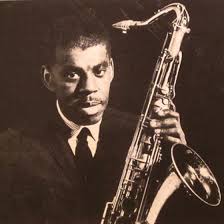
What Roland Alexander told Nica his three wishes were when the inquiry came his way was:
-
-
“Creation.”
-
“Peace.”
- “More creation.”
-
*Excerpt from Three Wishes: An Intimate Look at Jazz Greats ~ Compiled and Photographed by Pannonica de Koenigswarter

More Posts: baroness,history,instrumental,jazz,music,pannonica,piano,saxophone,three,wishes
Daily Dose Of Jazz…
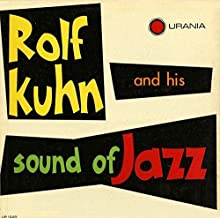
Rolf Kühn was born on September 29, 1929 in Köln, Germany, the older brother of the pianist Joachim Kühn. He started out playing in dance bands in the late ’40s, then worked with radio orchestras starting in 1952 before moving west across the Atlantic to America.
Living in the United States for three years from 1956 to 1959, subbing for Benny Goodman on a few occasions, played in the Tommy Dorsey ghost band, and worked in a big band led by Urbie Green. Rolf drew favorable reviews, and over the course of his career, he recorded more than two-dozen albums as a leader, ten with his younger brother, and as a sideman, eighteen.
He has recorded with Eddie Costa, Buddy DeFranco,Klaus Doldinger, Tommy Dorsey, European Jazz Ensemble, Urbie Green, Friedrich Gulda, Greetje Kauffeld, Eartha Kitt, Albert Mangelsdorff, Oscar Pettiford, and George Wallington.
In 2008 he founded a band with Christian Lillinger, Ronny Graupe, and Johannes Fink. In 2019, the New York Times Magazine listed him among the hundreds of artists whose material was reportedly destroyed in the 2008 Universal fire. Clarinetist and saxophonist Rolf Kühn at 90 continued to perform and compose for the next two years until his passing on August 18, 2022 in Berlin, Germany.
More Posts: bandleader,clarinet,composer,history,instrumental,jazz,music,saxophone
Daily Dose Of Jazz…
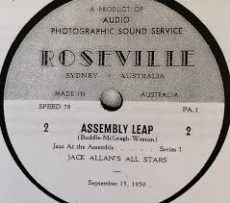
Jack Allan was born on September 28, 1929 in Sydney, Australia. As a child, he began playing accordion before switching to the piano in his teens. While working in Sydney cabarets and clubs, he was heavily influenced by swing-era pianists, especially Teddy Wilson. He became one of the few Australian musicians to play the early post-war modern jazz styles.
In 1949 Allan’s recording debut was as a member of the Rex Stewart And His Sydney Six. The following year he made his first recordings as a leader with his group the Katzenjammers. During the early 50s they performed and recorded frequently with a variety of personnel, including Ken Silver, Don Burrows, Errol Buddle, John Bamford and Edwin Duff. The mid-50s had him beginning an acting career and with his generous bulk was often cast as a villain, an amiable bar patron, or playing a musician. His film credits include On The Beach, Ned Kelly, They’re A Weird Mob, and Caddie, as well as numerous television appearances.
Maintaining his musical prowess, Jack’s performances however became spasmodic. In 1983 he recorded with percussionist John Sangster and in the following year made a tasteful, swinging solo album for the Anteater label. Moving north to the Sunshine Coast, he lived in semi-retirement with occasional acting and musical activity.
Pianist Jack Allan, a reliable studio musician with the ABC and a writer/director for musical revues, passed away on February 7, 1995 on the Sunshine Coast, Queensland, Australia.
More Posts: bandleader,history,instrumental,jazz,music,piano
Daily Dose Of Jazz…
William Overton Smith was born on September 22, 1926 in Sacramento, California and grew up in Oakland, California where he began playing clarinet at the age of ten. Putting together a jazz group to play for dances at 13, by 15 he joined the Oakland Symphony. Idolizing Benny Goodman, after high school and a brief cross-country tour with a dance band, he ended his romance for the road. Giving notice when the band reached Washington, D.C., he was encouraged by an older band member to get the best education he could, so he headed to New York.
He started his formal music studies at the Juilliard School of Music, playing in New York jazz clubs at night. Uninspired at Juilliard, he returned to California after hearing the music of Darius Milhaud, who was then teaching at Mills College in Oakland. At Mills, Smith met pianist Dave Brubeck, with whom he often played, was a member of the Dave Brubeck Octet, and later occasionally subbed for saxophonist Paul Desmond in the Dave Brubeck Quartet. Brubeck’s 1960 album Brubeck à la mode that featured ten of his own compositions. Rejoining Brubeck’s group in the 1990s.
Bill went on to study composition with Roger Sessions at the University of California, Berkeley, where he was graduated with a bachelor’s and a master’s degree. He won the Prix de Paris, study at the Paris Conservatory, was awarded the prestigious Prix de Rome in 1957, and spent six years in Italy. After a teaching stint at the University of Southern California, he went on to a thirty-year career at the University of Washington School of Music in Seattle, Washington. He co-led the forward-thinking Contemporary Group, first with Robert Suderburg, and then with trombonist Stuart Dempster, from 1966 to 1997.
Clarinetist and composer Bill Smith, who recorded in jazz, classical and third stream genres, passed away at age 93 in his home from complications of prostate cancer on February 29, 2020.
More Posts: bandleader,clarinet,educator,history,instrumental,jazz,music