

Daily Dose Of Jazz…
Herbie Mann was born Herbert Jay Solomon on April 16, 1930 in Brooklyn, New York and while attending Lincoln High School in Brighton Beach, failed a music class. Be that as it may his first professional gig was in the Catskills at age 15. During the 1950s was primarily a bop flutist, playing in combos with artists such as Phil Woods, with occasional forays into bass clarinet, tenor sax and solo flute.
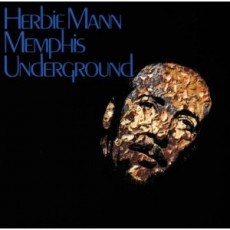
An early pioneer in the fusing of jazz and world music, he has incorporated elements of African, Afro-Cuban, Brazilian, Reggae, Middle-Eastern and Eastern European styles into his music. During the Sixties he was jazz’s preeminent flutist with his emphasized groove approach coming to the fore on his albums Memphis Underground and Push Push due to the rhythm section locked in one perception. It was mid-60’s period that he hired a young Chick Corea to play in some of his bands.
Mann’s shift to a more smooth jazz during the Sixties brought criticism from purist but allowed him to remain relevant as interest in jazz waned. He worked with Cissy Houston, Duane Allman, Larry Coryell, Donald “Duck” Dunn and Chuck Rainey, along with Al Jackson and Bernard Purdie out of Muscle Shoals in Alabama. His #1 dance hit Hijack stayed on the charts for three consecutive weeks in 1975.
In this period Mann had a number of songs cross over to the pop charts, a rarity for a jazz musician. He has provided music for the animated short film Afterlife, founded his own label, Embryo Records, that produced jazz albums, such as Ron Carter’s Uptown Conversation, Miroslav Vitous’ first solo album, Infinite Search; and Phil Woods and his European Rhythm Machine at the Frankfurt Jazz Festival. In 1996, Mann collaborated with Stereolab on the song “One Note Samba/Surfboard” for the AIDS-Benefit album Red Hot + Rio.
Herbie Mann’s final appearance was on May 3, 2003 at the New Orleans Jazz and Heritage Festival at age 73, passing away that same year on July 1, 2003 after a long battle with prostate cancer.
More Posts: flute
Daily Dose Of Jazz…
Herb Pomeroy was born Irving Herbert Pomeroy, III on April 15, 1930 in Gloucester, Massachusetts. He began playing trumpet at an early age, and in his early teens started gigging in the greater Boston area, claiming inspiration from the music of Louis Armstrong. By age 16, he became a member of the Musicians Union and after high school, went on to study music at the Schillinger House that is now the Berklee College of Music in Boston. It was here he developed his interest in bebop.
Herb Pomeroy studied dentistry at Harvard University for a year but dropped out to pursue his jazz career. Charlie Parker liked Pomeroy’s playing and hired him frequently when the alto saxophonist performed at Boston’s Hi-Hat and Storyville clubs. Pomeroy also played with Lionel Hampton, Duke Ellington, Stan Kenton and Serge Chaloff among other jazz musicians.
He led his own 13-piece big band in the early 1950s and another that gained national acclaim later in the decade. He would back up singers like Mel Torme, Tony Bennett, Irene Kral, Ella Fitzgerald and Frank Sinatra. By the mid Sixties he began abandoning the big band sound for small combos and switched from trumpet to flugelhorn.
Although his first love was performing, Pomeroy was a respected educator. He helped found the Jazz Workshop on Stuart Street, joined the faculties of the Berklee School of Music where he taught for 41 years, the Lenox School of Music, Music at MIT and was the director Festival Jazz Ensemble for 22 years. He was inducted into the International Association of Jazz Educators (IAJE) Hall of Fame and the Down Beat Jazz Education Hall of Fame. On August 11, 2007, Herb Pomeroy, trumpeter and flugelhornist in the swing and bebop tradition passed away.
More Posts: trumpet
Daily Dose Of Jazz…
Eddie Marshall was born Edwin Marshall on April 13, 1938 in Springfield, Massachusetts and learned to play the drums as a child. He played in his father’s swing group and R&B bands while in high school. He moved to New York City in 1956, developing his percussion style under the influence of Max Roach and Art Blakey.
Two years later he was playing with Charlie Mariano followed by a stint with Toshiko Akiyoshi prior to Army service. He reunited with Akiyoshi in 1965, then worked with the house band at The Dom in New York, and with Stan Getz, Sam Rivers and toured with Dionne Warwick.
In 1967 he was a member of the fusion group The Fourth Way, touring San Francisco during the early Seventies, followed by work with Jon Hendricks and the Pointer Sisters. He would go on to work in Almanac with Bennie Maupin, Cecil McBee and Mike Nock releasing an album in ’77.
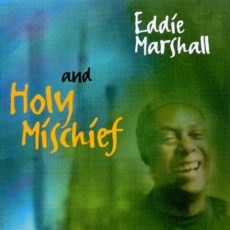
In the 1980s he worked in the project Bebop & Beyond, recording tribute albums to Dizzy Gillespie and Thelonious Monk. Undergoing heart surgery in 1984, temporarily sidelined his career, but he continued to perform on the recorder. He then taught at the San Francisco School of the Arts, issued his second release as a leader in 1999 and in the 2000s worked on the San Francisco Arts Commission. Drummer Eddie Marshall died of a heart attack on Wednesday, September 7, 2011.
More Posts: drums
Daily Dose Of Jazz…
Herbie Hancock was born Herbert Jeffrey Hancock on April 12, 1940 in Chicago, Illinois. Starting with a classical music education, he was considered a child prodigy, studied from age seven and played the first movement of Mozart’s Piano Concerto No. 5 with the Chicago Symphony at age eleven.
Through his teens he was influenced by the vocal group Hi-Lo’s, Herbie never had a jazz teacher, developing his ear and sense of harmony. Influenced by Clare Fischer, Bill Evans, Ravel and Gil Evans, his harmonic guru was Chris Anderson with whom he studied. In the Sixties he attended Grinnell College, moved to Chicago, began working with Donald Byrd and Coleman Hawkins, studied at the Manhattan School of Music, quickly gained a reputation and played sessions with Oliver Nelson and Phil Woods.
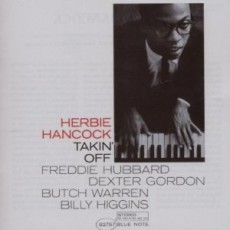
In 1962 Hancock recorded his first solo album Takin’ Off for Blue Note Records that contained the hit for both Hancock and Mongo Santamaria – Watermelon Man. More importantly it caught the ear of Miles Davis and landed him an introduction by Tony Williams and membership of the second great quintet in 1963. It was during the Davis years that Herbie found his voice and subsequently produced two of the decade’s most influential albums, Empyrean Isles and Maiden Voyage.
He has recorded a catalogue of nearly sixty albums as a leader dozens of sessions as a sideman, working with the likes of Wayne Shorter, Tony Williams, Grant Green, Bobby Hutcherson, Sam Rivers, Donald Byrd, George Coleman, Kenny Dorham, Hank Mobley, Lee Morgan and Freddie Hubbard among others. He has been the subject of five films, won an Oscar for “Round Midnight soundtrack, received 14 Grammy Awards, five Playboy Music Polls and was honored as a NEA Jazz Master in 2004 along with a host of other recognitions. He is currently occupies the Creative Chair for Jazz with the Los Angeles Philharmonic.
Hancock joined the University of California, Los Angeles faculty as a professor in the UCLA music department where he teaches jazz music. He has received a Kennedy Center Honors Award for achievement in the performing arts, won 14 Grammy Awards, 1 Oscar for the Original Soundtrack of ‘Round Midnight and has been honored as an NEA Jazz Master among numerous other accolades.
He is the 2014 Charles Eliot Norton Professor of Poetry at Harvard University. Holders of the chair deliver a series of six lectures on poetry, “The Norton Lectures”, poetry being “interpreted in the broadest sense, including all poetic expression in language, music, or fine arts.” His theme is “The Ethics of Jazz. Pianist Herbie Hancock continues to advance the jazz genre in new directions.
More Posts: piano

Daily Dose Of Jazz…
Reuben Wilson was born April 9, 1935 in Mounds, Oklahoma but grew up in Pasadena, California from age five when his family moved. While in his teenage years he taught himself to play piano, but boxing diverted his attention. When he was 17, he moved to Los Angeles, married a nightclub singer, met a number of professional musicians and returned to music. Instead of pursuing the piano, he decided to take up the organ, and it wasn’t long before he became a regular at the Caribbean club.
Reuben played the L.A. circuit for several years before trying his luck unsuccessfully in Las Vegas. Returning to L.A. he struck up a friendship with Richard “Groove” Holmes, an organist who would greatly influence his own style. In 1966 he moved to New York City, formed the soul-jazz group Wildare Express and began concentrating more on hard bop and soul-jazz. This proved fortuitous as Grant Green, Roy Haynes and Sam Rivers among others took notice and began to perform with him.
Two years later Wilson began recording a series of five albums for Blue Note Records, his debut being On Broadway. Throughout the 70s he recorded sporadically, eventually retired from music in the early 80s and but by the end of the decade a rediscovery of his music by fans, saw his music sampled by A Tribe Called Quest, Brand New Heavies and Nas.
He returned to music in the 90s writing new material, performing and recording in new groups, including combos he led himself. Over the course of his career organist Reuben Wilson has recorded 16 albums as a leader and eight as a sideman working with Grant Green Jr., Bernard Purdie, Melvin Sparks and Willis Jackson. He currently resides in New York City and continues to pursue new directions in jazz.
More Posts: organ