

Daily Dose Of Jazz…
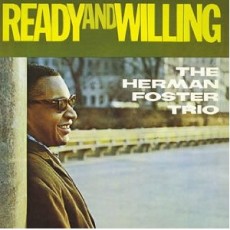
Herman Foster was born on April 26, 1928 in Philadelphia, Pennsylvania and began his musical career before age ten playing the violin, clarinet, saxophone, and piano. A self-taught pianist, Foster created a distinguished earthy sound. When his family moved to New York City in 1947, Herman began to attend jam sessions and then played with Eric Dixon, Dick Carter and the big band of Herb Jones.
His success came when he met Lou Donaldson and the two played together for thirteen years from 1953 to 1966. During the 1950s he worked with King Curtis, Bill English and Seldon Powell, in the 1960s with Al Casey, in addition to playing with his own trio over the next decade. He returned to work in Donaldson’s quartet in the 1980s.
He released four records as a leader for Epic, Argo and Timeless Records and as a sideman recorded nineteen albums with Lou Donaldson, Gloria Lynne, Johnny Hartman, Hisayo Tominaga, George V. Johnson Jr., Joan Shaw, Al Casey and King Curtis.
On April 3, 1999, bebop pianist Herman Foster passed away in New York City.
More Posts: piano
Daily Dose Of Jazz…
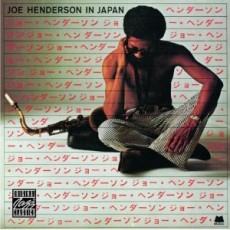
Joe Henderson was born on April 24, 1937 in Lima, Ohio and was encouraged by his parents to study music. Growing up he studied drums, piano, saxophone and composition, and listened to Lester Young, Stan Getz, Dexter Gordon, Charlie Parker, Flip Phillips, Lee Konitz and Jazz at the Philharmonic recordings. While in high school he wrote several scores for the school band and rock groups.
Active on the Detroit jazz scene by eighteen, Henderson was playing jam sessions with visiting New York stars in the mid-50s. He attended Wayne State University studying sax, flute and bass, Joe played with fellow classmates Yusef Lateef, Barry Harris and Donald Byrd.
A two-year Army stint saw him touring worldwide entertaining troops and while in Paris met Kenny Drew and Kenny Clarke. After discharge he moved to New York, and soon joined Horace Silver’s band, providing the seminal solo on Song For My Father. Leaving Silver he freelanced and in 1966 co-led a big band with Dorham, whose arrangements went unrecorded until 1996 on the Joe Henderson Big Band.
Henderson appeared on nearly three-dozen albums as a leader and over 50 as a sideman during his career. He would join but never record with Miles Davis, move to Milestone Records, co-lead the Jazz Communicators with Freddie Hubbard, became more politically and socially conscious with his music, played with Blood, Sweat & Tears briefly and started teaching.
He would play with Echoes Of An Era, the Griffith Park Band, Chick Corea, but remained a leader experiencing a resurgence in 1986, record for An Evening with Joe Henderson for Red Records, get signed with Verve and enjoy critical success and popularity after releasing Lush Life: The Music of Billy Strayhorn.
On June 30, 2001, saxophonist Joe Henderson passed away of heart failure after a long battle with emphysema.
More Posts: saxophone
Daily Dose Of Jazz…
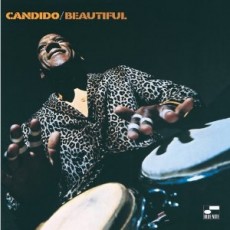
Candido was born Candido de Guerra Camero on April 22, 1921 in Havana, Cuba and learned to play percussion as a child listening to the music of his native land. Early in his career, Camero focused on conga and bongo, recording in his native Cuba with fellow jazz musician Machito. Although he has been credited as the first person to use the congas in jazz music, both Diego Iborra and Luciano “Chano” Pozo Gonzales preceded him in the 1940s.
Moving to New York in 1952 he started recording with Dizzy Gillespie and from 1953-54 he was in the Billy Taylor Quartet. The next year saw him performing and recording with Stan Kenton. During the Seventies Candido enjoyed success during the disco era, most notably with the Babatunde Olatunji-penned track “Jingo” from his Dancin’ and Prancin’ album on the Salsoul Record label, that has been acknowledged as a precursor five years prior to the birth of the house music genre.
He has performed and recorded Errol Garner, Gene Ammons, Art Blakey, Sonny Rollins, Wes Montgomery, Elvin Jones and Lionel Hampton on the short list of jazz luminaries. Percussionist Candido was honored with the National Endowment for the Arts Jazz Masters Award in 2008. In 2014, Camero recorded his last album, The Master, also for Chesky.
He continued to perform in jazz clubs in New York until the late 2010s. AWhen he was 96 years of age he was residing in his home in Cuba. Candido, who played conga, bongo, tres and bass died on November 7, 2020, at his home in New York. He was 99.
More Posts: percussion
Daily Dose Of Jazz…
Ian Carr was born on April 21, 1933 in Dumfries, Scotland. At the age of seventeen he started to teach himself trumpet and from 1952 to 1956 he attended King’s College. After graduation he joined his brother in a Newcastle band, the EmCee Five in 1960 before moving to London. From 1963-1969 he became co-leader with Don Rendell of the Rendell–Carr Quintet, recording five albums and touring internationally.
After leaving the quintet, Carr went on to form the groundbreaking jazz-rock band Nucleus that led to a successful international career, releasing twelve albums and winning first prize at the Montreux Jazz Festival. He would go on to play with the United Jazz and Rock Ensemble in 1975.
Ian worked as a session musician in non-jazz contexts, doubled up on flugelhorn, wrote a regular column for the BBC Music Magazine, penned biographies of Keith Jarrett and Miles Davis, and co-authored The Rough Guide to Jazz. Carr held the position of associate at the Guildhall School of Music and Drama in London where he founded the jazz workshop that graduated pianist Julian Joseph.
Trumpeter Ian Carr died on February 25, 2009, having suffered from Alzheimer’s disease.
More Posts: trumpet
Daily Dose Of Jazz…
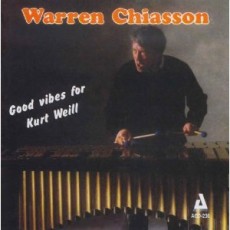
Warren Chiasson was born on April 17, 1934 in Cheticamp, Nova Scotia and began his music training on the violin and by age 13 was playing sessions with noted fiddlers at dances, stage and radio shows. In high school he played the trombone and became inspired by George Shearing, which led him to study modern jazz.
But it was seeing Lionel Hampton play while in college that sealed his career path. He bought a small xylophone, left school, joined the Royal Canadian Artillery Band as a trombonist, practiced 8 hours a day, got a chance audition in New York for George Shearing and a week later was touring the world playing opposite Dave Brubeck and the Modern Jazz Quartet.
A pioneer of the four-mallet vibraphone technique, Warren has formed his own group and collaborated, played and recorded with such artists as Paul Bley, Chet Baker, Roland Hanna, Tal Farlow, Jimmy Garrison, Charlie Haden, Lee Konitz, Joe Farrell, Hank Crawford, Les McCann, Helen Ward, Wilbur Ware and Joe Chambers.
He played vibes in New York through the 1960s and spent four years playing percussion for the Broadway musical Hair. In 1972 he reunited with Shearing again, released a record under his own name and in the mid-1970s he toured with Roberta Flack.
Chiasson played on B.B. King’s Grammy winning album Blues ‘n Jazz, and played the 50th anniversary of From Spirituals to Swing at Carnegie Hall, filling in for Lionel Hampton, who was unable to perform. At 83 vibraphonist Warren Chiasson continues to record and perform.
More Posts: vibraphone