

Daily Dose Of Jazz…
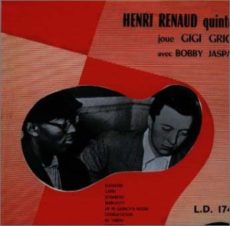
Henri Renaud was born April 20, 1925 in Villedieu-sur-Indre, France. His styles was evolutionary over the decades he was musically active and represented the swing, bebop and cool styles. His international renown came when he served as an ensemble-organizing point-man for visiting jazz performers from the United States.
Moving to Paris in 1946, Renaud established a career as a jazz pianist and joined tenor-saxophonist Jean-Claude Fohrenbach’s combo. During 1949 and 1950 he accompanied Don Byas, James Moody and Roy Eldridge. In 1952 he performed at various times with Lester Young, Sarah Vaughan and Clifford Brown.
Henri would go on to record several times with Brown as well as with Milt Jackson, J. J. Johnson, Al Cohn, Oscar Pettiford, Max Roach, Frank Foster and Bob Brookmeyer. In 1954, he visited the United States and recorded during that time.
He became an executive for French CBS’ jazz division in 1964 and for the most part stopped performing, though he occasionally worked as a film composer. Pianist Henri Renaud passed away in Paris, France on October 17, 2002.
Sponsored By


#preserving genius
More Posts: piano

Daily Dose Of Jazz…
Glauco Masetti was born on April 19, 1922 in Milan, Italy and was an autodidact on reed instruments as well as a classically trained violinist, attending the Milan and Turin conservatories.
In the late 1940s he worked with Gil Cuppini for the first time, an association that would continue well into the latter part of the 1960s. He worked often as a session musician in the first half of the 1950s, with Gianni Basso and Oscar Valdambrini among others.
He led his own ensemble from 1955, and played with Eraldo Volonté and Chet Baker. In the Sixties, he also played with Giorgio Gaslini during that decade. Clarinetist and alto saxophonist Glauco Masetti passed away on May 27, 2001 in Milan.
Sponsored By

#preserving genius
Daily Dose Of Jazz…
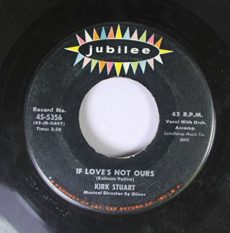
Kirk Stuart was born Charles Kincheloe Stuart on April 13, 1934 in Charleston, West Virginia. He studied at a conservatory before accompanying singers such as Billie Holiday in 1956, Della Reese from 1957–59 and for another two years with Sarah Vaughan beginning in 1961. He also arranged and conducted for these singers.
Stuart led his own unit in Los Angeles, California later in the 1960s, and recorded with Al Grey and once more with Reese along with a few 45 rpm records as a leader on the Josie and Jubilee labels during the decade. In later years he led ensembles in Las Vegas, and accompanied Joe Williams at the Smithsonian Institution in 1982.
Pianist, vocalist and educator Kirk Stuart, who taught at Howard University, passed away during spleen surgery on December 17, 1982.
Sponsored By
#preserving genius

Daily Dose Of Jazz…
Ollie Mitchell was born Oliver Edward Mitchell in Los Angeles, California on April 8, 1927. His father, Harold Mitchell, lead trumpeter for MGM Studios, taught his son to play the trumpet.
His career would see him playing in the big bands of Harry James, Buddy Rich and Pérez Prado, among others, as well as the NBC Symphony Orchestra. In the 1960s, Mitchell joined The Wrecking Crew, a group of studio and session musicians who played anonymously on many records for popular singers of the time, as well as television theme songs, film scores, advertising jingles.
An original member of Herb Alpert’s Tijuana Brass, Ollie would go on to lead his own bands under the names of Ollie Mitchell’s Sunday Band and the Olliephonic Horns. It was in 1995 that he moved from to Puako, Hawaii and founded the Horns.
Mitchell recorded some two dozen albums over the course of his career with Chet Baker, Harry James, Stan Kenton, Irene Kral, Shorty Rogers, Pete Rugolo, Dan Terry and Gerald Wilson, among others.
In 2010, Ollie published his memoir, Lost, But Making Good Time: A View from the Back Row of the Band. Around this time he stopped playing the trumpet, due to macular degeneration, hand problems from an automobile accident and complications from cancer. Trumpeter and bandleader Ollie Mitchell passed away on May 11, 2013 in Puako, Hawaii at the age of 86.
Sponsored By

#preserving genius
More Posts: trumpet
Daily Dose Of Jazz…
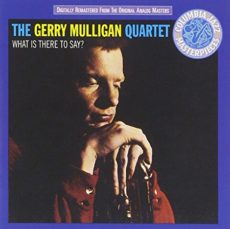
Gerry Mulligan was born Gerald Joseph Mulligan on April 6, 1927 in Queens Village, Queens, New York. His father’s career as an engineer moved them frequently through numerous cities and while less than a year old, the family moved to Marion, Ohio. Taking on a nanny to help raise the children, Lily rose became fond of Gerry and he spent time at her home and became enamored with her player piano that had amongst it collection of rolls, Fats Waller. Her home was also a boarding house for Black musicians who came through town giving him the chance to meet them..
During a family move to Kalamazoo, Michigan he took up the clarinet in the Catholic school’s orchestra and made an attempt to arrange the Richard Rodgers song Lover. By 14 he was in Reading, Pennsylvania studying clarinet with dance-band musician Sammy Correnti, who encouraged his arranging. During this period Mulligan began professionally playing the saxophone in dance bands in Philadelphia, Pennsylvania, which was the family’s next move.
He attended the West Philadelphia Catholic High School for Boys, organized a school big band, and wrote arrangements and by 16 was selling arrangements to local radio station WCAU. Dropping out of high school during his senior year he worked with a touring band Tommy Tucker, picking up a $100.00 a week for two or three arrangements.
A move to New York City in 1946 saw Gerry joining the arranging staff on Gene Krupa’s bebop-tinged band pumping out arrangements of Birdhouse, Disc Jockey Jump and How High the Moon” that quoted Charlie Parker’s “Ornithology” as a countermelody. He began arranging for the Claude Thornhill Orchestra, along with Gil Evans and occasionally sitting in as a member of the reed section.
In September 1948, Miles Davis formed a nine-piece band that featured arrangements by Mulligan, Evans and John Lewis that ended up on the Capitol Records album, titled Birth of the Cool. The band initially consisted of Davis on trumpet, Mulligan on baritone saxophone, trombonist Mike Zwerin, alto saxophonist Lee Konitz, Junior Collins on French horn, tubist Bill Barber, pianist John Lewis, bassist Al McKibbon and drummer Max Roach. The Davis nonet has been judged by history as one of the most influential groups in jazz history, creating a sound that, despite its East Coast origins, became known as West Coast Jazz.
Throughout the late Forties and early Fifties he worked with Davis, George Auld, Chubby Jackson and led his debut as a leader with Mulligan Plays Mulligan. By 1952 he was moving to Los Angeles, California and arranging for Stan Kenton and getting a recording contract with Pacific Jazz Records. These sessions enlisted trumpeter Chet Baker as part of his pianoless quartet that included bassist Bob Whitlock and Chico Hamilton on drums.
Valve trombonist Bob Brookmeyer would replace Baker, and Mulligan and Brookmeyer both occasionally play piano, would enlist Jon Eardley, Art Farmer, Zoot Sims, Al Cohn, Lee Konitz and Annie Ross. He performed as a soloist or sideman with Paul Desmond, Duke Ellington, Ben Webster, Johnny Hodges, Jimmy Witherspoon, André Previn, Billie Holiday, Marian McPartland, Louis Armstrong, Count Basie, Stan Getz, Thelonious Monk, Fletcher Henderson, Manny Albam, Quincy Jones, Kai Winding and Dave Brubeck, to name a few. Mulligan appeared in Art Kane’s A Great Day in Harlem portrait of 57 major jazz musicians taken in August 1958.
Gerry appeared in the films Follow That Music, I Want to Live!, Jazz on a Summer’s Day, The Rat Race, The Subterraneans and Bells Are Ringing and wrote music for A Thousand Clowns, Luv, La Menace, and Les Petites galères and I’m Not Rappaport.
Baritone saxophonist, clarinetist, composer and arranger Gerry Mulligan passed away on January 20, 1996 in Darien, Connecticut at the age of 68, following complications from knee surgery. He had won numerous awards not limited to Down Beat Poll Winners, Kennedy Center Honors, and a Grammy Award for Best Jazz Instrumental Performance by a Big Band for Walk on the Water.
Sponsored By
#preserving genius
More Posts: saxophone