

Daily Dose Of Jazz…
Gene Perla was born on March 1, 1940 in Woodcliff Lake, New Jersey. He studied piano at Berklee School of Music and Boston Conservatory before switching to bass.
In 1969 Perla played with Woody Herman, as well as Thad Jones/Mel Lewis, Sarah Vaughan, Miles Davis, Nina Simone, Jeremy Steig, Elvin Jones and Sonny Rollins in the early Seventies.
During the decade Gene founded PM Records and later headed Plug Records and under his leadership the labels recorded Dave Liebman, Elvin Jones, Steve Grossman, Pat La Barbera and Jerry Bergonzi. Forming the Stone Alliance with Grossman and Don Alias in 1975, he continues to perform.
As a sideman he has recorded several albums with Frank Foster, Elvin Jones and Mickey Tucker. Bassist Gene Perla currently teaches at Lehigh University and the New School of Jazz & Contemporary Music.

Dose A Day-Blues Away
More Posts: bass
Daily Dose Of Jazz…
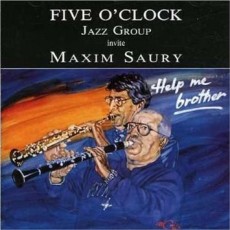
Maxim Saury was born in Enghien-les-Bains, in the Val-d’Oise, France on February 28, 1928. The son of a professional violinist, Andrew “Kiki” Saury, he first took violin lessons between 1940 and 1942, but not suiting him, he turned to the clarinet.
In 1946, he joined the orchestra of Christian Azzi and the following year joined Claude Bolling before leaving in 1949 to mount a trio in 1951. Between 1955 and 1968, Saury played almost exclusively at Caveau de la Huchette in Paris, performed at all the major French jazz festivals including Cannes, Antibes, Nice and Juan-les-Pins.
Maxim represented the middle of French traditional jazz and was invited to perform on television shows and also appear in several films made in the late 1950s and early 1960s, particularly Otto Preminger’s Bonjour Tristesse, The Cheaters by Marcel Carne, My Uncle by Jacque Tati and Jacques Rozier’s Adieu Philippine.
Since the late 1960s, Maxim Saury performed regularly in concert in France and worldwide. In 2007, he was one of few performers selected for the four volume compilation The 100 Greatest Success of Saint-Germain-des-Prés , alongside Yves Montand, Boris Vian, Juliette Greco, Les Freres Jacques, Catherine Sauvage, Sidney Bechet, Marcel Mouloudji and Stephane Grappelli.
Clarinetist, conductor and arranger Maxim Suary, one of the symbols of revival of New Orleans jazz in Saint Germain-des-Pres during the Fifties and Sixties, passed away at the age of eighty-four, on November 15, 2012 at the Ambroise Pare Hospital in Boulogne-Billancourt, following heart problems.
Put A Dose In Your Pocket
More Posts: clarinet
Daily Dose Of Jazz…
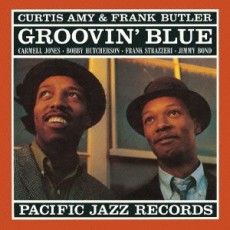
Frank Butler was born on February 18, 1928 in Kansas City, Missouri. A drummer from childhood he later moved west, becoming associated in large way with the West Coast school.
Never becoming well known or publicly popular Butler was highly regarded by fellow musicians. He performed and recorded with Duke Ellington, Dave Brubeck, John Coltrane and Art Pepper in the decades of the Fifties and Sixties.
In the mid-to-late 1950s, he was a member of the Curtis Counce Quintet and recorded with Joyce Collins, Ben Webster, Hampton Hawes, Elmo Hope, Fred Katz and Harold Land. By the Sixties he was co-leading a group with Curtis Amy, and recording with Phineas Newborn, Miles Davis on Seven Steps To Heaven.
However, sidelined for many years by his heroin addiction, he did not record an album under his own name until the 1970s. During this period he also recorded with Dolo Coker, Kenny Drew and Teddy Edwards. Drummer Frank Butler passed away on July 24, 1984 in Ventura, California at the age of 56.
Give A Gift Of Jazz – Share
More Posts: drums
Daily DoseOf Jazz…
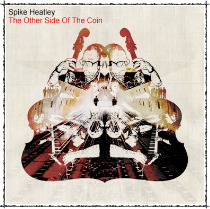
Spike Heatley was born February 17, 1933 in North London, England. Studying the bass as a child by the time he was twenty-five he was playing with the Vic Ash Sextet along with Ian Hamer, Johnny Scott and Alan Bascombe. He went on to join The Jazz Couriers just before they disbanded, then played briefly with the Tubby Hayes Quartet with Terry Shannon and Phil Seaman.
Heatley then joined pianist Eddie Thompson’s house trio for the opening year at the original Ronnie Scott’s on Gerrard Street. During this period he also played with John Dankworth staying with him until 1962, then joining the Tony Coe Quintet, and touring with trumpeter Kenny Baker. In 1963 he was with the Bill Le Sage and Ronnie Ross Quartet, with Allan Ganley.
It was around this time that Spike stretched out and began session work in the same rhythm section as Jimmy page and John McLaughlin. He was an early member of Alexis Korner’s Blues Incorporated and between 1970 and 1974 he was part of successful jazz-rock fusion group CCS, and played on recording sessions for Rod Stewart.
In the 1970s he was in the house band for the children’s TV show Play Away. During the 1980s and early 90s, he was with the American all star group the Great Guitars featuring Herb Ellis, Charlie Byrd and Barney Kessel which also sometimes featured British player, Martin Taylor.
He went on to play in Kessel’s trio with Malcolm Mortimore and then with Canadian pianist Oliver Jones. These days, bassist Spike Heatley spends most of his time in France.
Inspire A Young Mind
More Posts: bass
Daily Dose Of Jazz…
Chris Pyne was born Norman Christopher Pyne on February 14, 1939 in Bridlington, England and played piano as a child before switching to trombone.
Beginning in 1963 he played with Fat John Cox, Alexis Korner’s Blues Incorporated, John Stevens’s Spontaneous Music and the London Jazz Orchestra before settling in with Humphrey Littleton from ’66 until 1970.
During the Sixties he recorded with John Dankworth, Ronnie Scott and Stan Tracey. Staying very busy in the 70s Chris played with Mike Gibbs off and on from 1967-1979, toured with Frank Sinatra’s backing bands from 1970 and 1983, and was also performing with the John Taylor Sextet between 1971 and 1981.
Pyne also performed or recorded with Kenny Wheeler, John Surman, Philly Joe Jones, Maynard Ferguson, Tony Coe, Bobby Lamb, Ray Premru, Ronnie Ross, Barbara Thompson, John Stevens, Norman Winstone and Alan Cohen.
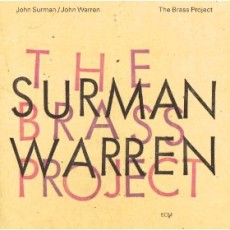
He toured with Gordon Beck in the Eighties, joined Surman’s Brass Project from ’84-’92 and later in his musical life became a member of the Charlie Watts Big Band. Trombonist Chris Pyne passed away on April 12, 1995 in London, England without ever recording as a leader.
Give The Gift Of Knowledge
More Posts: trombone