

Daily Dose Of Jazz…
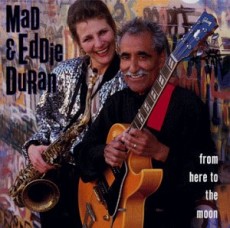
Eddie Duran was born Edward Lozano Duran on September 6, 1925 in San Francisco, California. He started learning to play piano at age seven, and switched to guitar by the time he was 12. After about seven months of lessons he began teaching to himself. Within his household was plenty of jazz growing up as his older brothers Carlo was a jazz pianist and Manuel was a jazz bassist.
Duran recorded as leader in 1956 with Fantasy Records, and around 1957, he was the guitarist in the CBS Radio Orchestra under the direction of Ray Hackett for the Bill Weaver Show. While playing with the CBS Orchestra, he met Ree Brunell and performed on her debut album, Intro To Jazz of the Italian-American. The album was the first LP recorded by the short-lived San Francisco Jazz Records label under the umbrella of the radio station.
Throughout the fifties he performed or recorded with his childhood friend Vince Guaraldi, as well as with Cal Tjader in his Mambo Quintet, and Stan Getz. In addition, Eddie was a featured performer and recording artist with several notable jazz combos that included his brothers. By 1960 he was leading his own trio for the next seven years but joined his brother Carlos on Benny Velarde’s 1962 album, Ay Que Rico. From 1976 to 1981 he was a member of Benny Goodman’s orchestras and octet.
Between 1980 and 1982, Duran recorded with Tania Maria, moved to New York City performing in a quartet that he organized and crossed paths with Getz again in 1983 while recording the Dee Bell studio album, Let There Be Love. The list of jazz artist he has performed with extends to Charlie Parker, George Shearing, Red Norvo and Earl Hines among others.
Eddie and his wife Mad (Madeleine) was initially a classically trained flutist, saxophonist and a music educator, continue to co-lead, perform and collaborate on five albums as well as individual endeavors.

Give The Gift Of Knowledge
More Posts: guitar
Daily Dose Of Jazz…
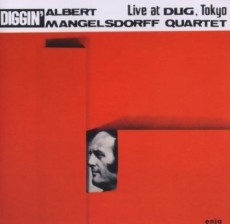
Albert Mangelsdorff was born on September 5, 1928 in Frankfurt, Germany. He was given violin lessons as a child and was self-taught on guitar in addition to knowing trombone. His brother, alto saxophonist Emil introduced him to jazz during the Nazi period at a time when it was forbidden in Germany. After the war he worked as a guitarist and took up trombone in 1948.
In the 1950s Mangelsdorff played with the bands of Joe Klimm, Hans Koller that featured Attila Zoler, Jutta Hipp and the Frankfurt All Stars. Together with Joki Freund he led a hard bop quintet that was the nucleus of the Jazz Ensemble of Hessian Broadcasting, of which he was the musical director. In 1958 he represented Germany in the International Youth Band appearing at the Newport Jazz Festival.
By 1961 Albert was recording with the European All Stars, formed a quintet with the saxophonists Heinz Sauer, Günter Kronberg, bassist Gunter Lenz and drummer Ralf Hubner, which became one of the most celebrated European bands of the 1960s. He has recorded John Lewis, toured Asia on behalf of the Goethe-Institut, recorded a quintet album of Eastern themes titled Now Jazz Ramwong, toured the USA and South America with the quintet and after a period of European free jazz Kronberg left and the quartet remained together.
During the early seventies the quartet was revived, Mangelsdorff explored the new idiom with Global Unity Orchestra and other groups such as the trio of Peter Brotzmann. It was at this juncture that he discovered multiphonics, long solistic playing and experimental sounds. As the decade ensued he made his debut solo recording and played trombone collaborating with Elvin Jones, Jaco Pastorious, Alphone Mouzon, John Surnam, Barre Phillips, Stu Martin and others.
Over the course of his career he co-founded the United Jazz and Rock Ensemble, a thirty-year association, taught jazz improvisation at Dr. Hoch’s Konservatorium, performed with Reto Weber Percussion Ensemble, Chico Freeman, and with Jean-Francois Jenny Clark founded the German-French Jazz Ensemble. He toured and recorded with pianist Eric Watson, bassist John Lindberg and drummer Ed Thigpen during the 90s and with a second quartet of Swiss musicians and Dutch cellist Ernst Reijseger.
In 1995 he replaced George Gruntz as musical director for the JazzFest Berlin, had a prize named after him by the Union of German Jazz Musicians, and on July 25, 2005 in Frankfurt, one of the most accredited and innovative trombonists of modern jazz passed away. Albert Mangelsdorff, who became famous for his distinctive technique of playing multiphonics was 86 years old.
Put A Dose In Your Pocket
More Posts: trombone
Daily Dose Of Jazz…
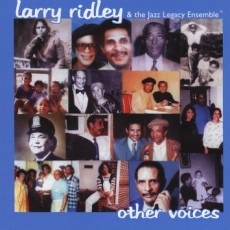
Larry Ridley was born September 3, 1937 in Indianapolis, Indiana and began playing bass professionally while still in high school in the 1950s. He studied at Indiana University School of Music and then would later study at the Lenox School of Jazz. As a college student he would go on to matriculate through be bassist in his mentor’s ensemble, the David Baker Big Band.
Ridley served as chairman of the Jazz Panel of the National Endowment for the Arts (NEA) and was the organization’s National Coordinator of the “Jazz Artists in Schools” Program for five years. He was awarded the Mid Atlanti Arts Foundation’s Living Legacy Jazz Award, the Benny Golson Jazz Award from Howard University, and inducted into the International Association for Jazz Education Hall of Fame,
Over the course of his career Larry has recorded two albums as a leader and performed and/or recorded with Chet Baker, Al Cohn, Dameronia, Red Garland, Dexter Gordon, Stephane Grappelli, Joe Venuti, Roy Haynes, Freddie Hubbard, Jackie McLean, Hank Mobley, James Moody, Lee Morgan and Horace Silver to name a few.
Bassist and music educator Larry Ridley has been involved in jazz education, heading the jazz program at Rutgers University, and Professor of Jazz Bass at the Manhattan School of Music is a Jazz Artist in Residence at Harlem’s New York Public Library/Schomberg Center for Research in Black Culture, and continues to perform with his Jazz Legacy Ensemble.
Give A Gift Of Jazz – Share
More Posts: bass
Daily Dose Of Jazz…
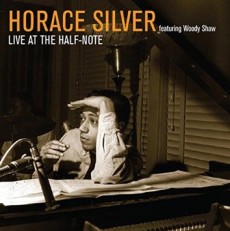
Horace Silver was born Horace Ward Martin Tavares Silva on September 2, 1928 in Norwalk, Connecticut to a mother from Connecticut and a father from Maio, Cape Verde. He began playing the piano as a child, receiving classical music lessons and Cape Verde folk music from his father. When he turned 11 he became interested in becoming a musician, after hearing the Jimmie Lunceford Orchestra.
From ninth grade Silver played tenor saxophone in the Norwalk High School band and orchestra, influenced by Lester Young. He played gigs locally on both instruments while still at school and around 1946 he moved to Hartford, Connecticut, taking a regular job as house pianist in a nightclub. His big break came around 1950, backing saxophonist Stan Getz at a Hartford club. Liking what he heard, Getz took Silver’s band on the road. With Getz he made his recording debut on the Stan Getz Quartet album, along with bassist Joe Calloway and drummer Walter Bolden.
The following year Horace left Getz, moving to New York City and worked at Birdland on Monday nights. During that year, he met the executives of Blue Note Records, eventually signed with them, and remained there until 1980. He also co-founded the Jazz Messengers with Art Blakey.
From 1951 he free-lanced around New York, recorded mostly his own compositions with his trio, featuring Blakey on drums and Gene Ramey, Curly Russell or Percy Heath on bass. Throughout his career he would record with Clifford Brown, Lou Donaldson, Kenny Dorham, Hank Mobley, Junior Cook, Blue Mitchell, Louis Hayes, Carmell Jones, Joe Henderson, Woody Shaw, Tyrone Washington, Michael and Randy Brecker, Lee Morgan, Benny Golson, Donald Byrd and Miles Davis All Stars.
He music reflected the social and cultural upheavals of the 60s and 70s as he briefly played electric piano and including lyrics in his compositions, and his interested in spiritualism also came into his music.
He received a National Endowment for the Arts Jazz Masters Award, recorded his final studio session in 1998 titled Jazz Has A Sense of Humor, was awarded the President’s Merit Award by the National Academy of Recording Arts and Sciences, penned his autobiography Let’s Get to the Nitty Gritty: The Autobiography of Horace Silver and published by University of California Press, and many of his compositions have become jazz standards.
Horace Silver, whose early influences were Bud Powell, Art Tatum, Teddy Wilson, Nat King Cole and Thelonious Monk, and who and influence for Bobby Timmons, Le McCann, Ramsey Lewis and Cecil Taylor, passed away of natural causes in New Rochelle, New York on June 18, 2014. The pianist and composer known for his distinctive playing style and pioneering compositional contributions to hard bop, featured surprising tempo shifts from aggressively percussive to lushly romantic merged with funk long before that word could be used in polite company.
Inspire A Young Mind
More Posts: piano
Daily Dose Of Jazz…
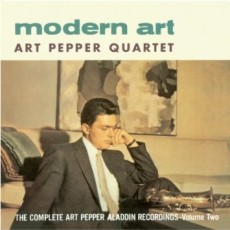
Arthur Edward Pepper, Jr. was born on September 1, 1925 in Gardena, California to a mother who was a fourteen year old runaway and a merchant seaman father, both of whom were violent alcoholics. He was sent to live with his paternal grandmother where he exhibited musical interest and talent while still very young. He began playing the clarinet at nine, switching to the alto saxophone by 13 and immediately started jamming on Carnegie Avenue, the Black nightclub district of Los Angeles.
By the age of 17 he began playing professionally with Benny Carter and then became part of the Stan Kenton Orchestra, touring with that band, until he was drafted in 1943. After the war he returned to Los Angeles and joined the Kenton Innovations Orchestra. In the 1950s Pepper was recognized as one of the leading alto saxophonists in jazz, epitomized by his finishing second only to Charlie Parker as Best Alto Saxophonist in the Down Beat magazine Readers Poll of 1952. Along with Chet Baker, Gerry Mulligan and Shelly Manne, he is often associated with the musical movement known as West Coast jazz, more so for geography than playing style.
Art recorded profusely and some of his most famous albums from the 1950s are Art Pepper Meets The Rhythm Section, Art Pepper + Elven-Modern Jazz Classics, Getting’ Together and Smack Up. During this period he also recorded for Aladdin Records – The Early Show, The Late Show, The Complete Surf Ride, and The Way It Was!, which features a session recorded with Warne Marsh.
His career was repeatedly interrupted by several prison stints stemming from his addiction to heroin from the mid-Fifties to the mid-Sixties and during his last incarcerations at San Quentin played in an ensemble with Frank Morgan. Pepper managed to have several memorable and productive comebacks. Remarkably, his substance abuse and legal travails did not affect the quality of his recordings, which maintained a high level of musicianship throughout his career. During the late 1960s he spent time in Synanon, a drug rehabilitation group and began methadone therapy in the mid-1970s.
His last comeback saw him as a member of Buddy Rich’s Big Band from 1968 to 1969. During the mid-1970s and early 1980s he toured Europe and Japan with his own groups and recorded dozens of albums, mostly for Fantasy Records. He authored an autobiography with his third wife Laurie titled Straight Life that focused on the jazz music world and the drug and criminal subcultures of mid-20th century California. Alto saxophonist and clarinetist Art Pepper recorded sixty-four albums as a leader, three with Ceht Baker and another seventeen as a sideman leaving the world a admirable catalogue of music before his death from a stroke due to a brain hemorrhage in Los Angeles, California on June 15, 1982 at the age of 56.
Dose A Day – Blues Away