

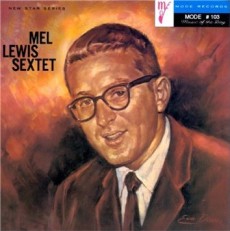
Daily Dose Of Jazz…
Mel Lewis was born Melvin Sokoloff on May 10, 1929 in Buffalo, New York. He started playing professionally as a teen, eventually joining Stan Kenton’s outfit in 1954. H e moved to Los Angeles to further his career in 1957 and then cross-country to New York City in 1963.
By 1966 in New York, he teamed up with Thad Jones to lead the thad Jones/Mel Lewis Orchestra. The group started as an informal jam session with the top studio and jazz musicians of the city, but eventually began performing regularly on Monday nights at the Village Vanguard. Though it was a sideline gig for the musicians, in 1979 the band won a Grammy for their album Live in Munich. When Jones moved to Denmark it became known as Mel Lewis and the Jazz Orchestra.
Mel recorded and performed in small group configurations occasionally but he led the band until shortly before his death. It has now become known as the Vanguard Jazz Orchestra and has released several CDs. Over his career Lewis recorded with Manny Albam, Chet Baker, Bud Shank, Bob Brookmeyer, Kenny Burrell, Eric Dolphy, Dizzy Gillespie, Joe Lovano, Herbie Mann, Jack McDuff, Gary MacFarland, Jimmy McGriff, James Moody, Chico O’Farrill, Shirley Scott, Sonny Stitt, Thad Jones, Pepper Adams and Jimmy Witherspoon to name a few.
In the late 1980s, Lewis was diagnosed with melanoma in his arm, then surfaced in his lungs and ultimately traveled to his brain. The drummer and bandleader played exclusively on a lighter Turkish made Istanbul cymbals that exuded a dark, overtone-rich sound, as well as his wood-shell drums were considered warm and rich in their sound. Mel Lewis passed away on February 2, 1990 in New York City, just days before his band was to celebrate its 24th anniversary at the Village Vanguard.

Dose A Day – Blues Away
More Posts: drums
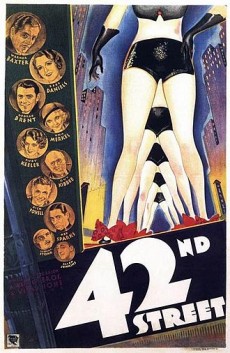
Hollywood On 52nd Street
In 1932 composer Harry Warren scored the music for the 1933 movie musical 42nd Street along with lyricist Al Dubin for Warner Brothers Studio. From the film came the classic jazz standards “Lullaby of Broadway”.
The film was nominated for a Best Picture Oscar, was selected for preservation in the U.S. National Film Registry by the Library of Congress and ranked #13 on the American Film Institute list of Best Musicals in 2006.
The Story: It is 1932, the depth of The Depression and noted Broadway producers Jones played by Robert McWade and Barry portrayed by Neal Sparks are putting on Pretty Lady, a musical starring Dorothy Brock Bebe Daniels. She is involved with wealthy Abner Dillon played by Guy Kibbee, the show’s “angel” of a financial backer, but while she is busy keeping him both hooked and at arm’s length, she is secretly seeing her old vaudeville partner, out-of-work Pat Denning.
Julian Marsh (is hired to direct, even though his doctor warns that he risks his life if he continues in his high-pressure profession; despite a long string of successes he is broke, a result of the 1929 Stock Market Crash. He must make his last show a hit, in order to have enough money to retire.
Sponsored By

www.whatissuitetabu.com
Daily Dose Of Jazz…
Kidd Jordan was born Edward Jordan on May 5, 1935 in Crowley, Louisiana and grew up listening to Zydeco and blues. His first instruments were C-melody and alto saxophones and while in high school he began performing stock arrangements for three or four saxophones with some older musicians. He read transcribed solos in Down Beat magazine, credits Illinois Jacquet with the idea of free improvisation and the free jazz of Ornette Coleman.
Kidd majored in music education and after completing his degree at Southern University in Baton Rouge, he relocated to New Orleans and began playing R&B gigs with Guitar Slim, Ray Charles, Big Maybelle, Big Je Turner, Gladys Knight, Aretha Franklin, Little Esther, Lena Horne and others. He taught at Southern University New Orleans from 1974 to 2006.
Jordan performs on tenor, baritone, soprano, alto, C-melody and sopranino saxophones as well as contrabass and bass clarinets. He has recorded with a wide selection of musicians in styles ranging from R&B to avant-garde jazz, including Stevie Wonder, Archie Shepp, Fred Anderson, Ellis Marsalis, Ornette Coleman, Cannonball Adderley, Ed Blackwell and Cecil Taylor on the short list.
Jordan taught Donald Harrison and Branford Marsalis, and Charles Joseph the co-founder of the Dirty Dozen Brass Band. He was an instructor at the New Orleans Center for Creative Arts, and suffered the loss of his home and possessions during Hurricane Katrina. He recorded his album Palm of Soul shortly afterwards, that has had a track featured on the TV series Treme as well as making a guest appearance. The multi-instrumentalist continues to perform and teach.
Put A Dose In Your Pocket
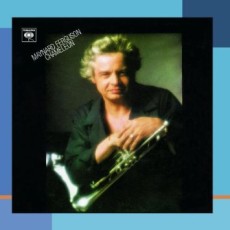
Daily Dose Of Jazz…
Maynard Ferguson was born Walter Maynard Ferguson on May 4, 1928 in Verdun, Quebec, Canada. Encouraged by his musician parents he was playing piano and by the age of four. A child prodigy violinist, at nine he heard a cornet and ask for one. By thirteen, he was heard soloing regularly with the Canadian Broadcasting Corporation Orchestra, featured on “Serenade for Trumpet in Jazz, and won a scholarship to the Conservatoire de Musique du Quebec a Montreal where he studied from 1943 through 1948.
Dropping out of Montreal High School at 15 to pursue his music career ore actively, Ferguson began playing in various dance bands and then took over his saxophonist brother Percy’s band. He played around Montreal and became an opening act for touring bands. This brought him to the attention of many bandleaders in the U.S. and he started getting offers to cross the border.
Maynard eventually relocated to the United States in 1948, intent on joining Stan Kenton’s organization. However, it had just disbanded so he started playing with Boyd Raeburn, Jimmy Dorsey and Charlie Barnet’s bands. When Barnet retired he went to work with Stan Kenton’s newly formed 40-piece Innovations Orchestra in 1950. For three years running, 1950, 1951, and 1952, he won the Down Beat Readers’ Poll as best trumpeter. In 1953, become a session player for Paramount Pictures, soon becoming the first-call player and appeared on 46 soundtracks, and to get around the studio contract that prevented him from playing jazz clubs he would appear under aliases Tiger Brown, Foxy Corby and others.
By 1956, Ferguson became the leader of the Birdland Dream Band, a 14-piece all-star big band formed by Birdland’s owner Morris Levy. He has played with Slide Hampton, Don Ellis, Don Sebesky, John Bunch, Joe Zawinul, Joe Farrell, Jaki Byard, Nino Tempo and others as well as arrangers Bob Brookmeyer, Jimmy Guiffre, Bill Holman and Marty Paich to name a few.
He went on to guest with the New York Philharmonic, then moved to the Hitchcock estate with Timothy Leary, Ram Dass and their Harvard community in 1963 and experimented with LSD, psilocybin and other psychedelic drugs for spiritual awakening. After three years he moved to India, engaged with a guru and established the Sri Sathya Sai Institute of Higher Learning Boys Brass Band and taught for several years.
By 1969, Maynard was in England, signed with CBS Records, formed a big band with British musicians and performed on television then returned to debut his new band in New York. He would recruit young talent from jazz programs from institutions like Berklee College of Music, North Texas State University and the University of Miami and targeting young audiences.
For the next couple of decades he would play the Olympics, work with large ensembles, formed the Big Bop Nouveau, backed vocalists such as Diane Schuur and Michael Feinstein, performed, toured and recorded big band albums. Ferguson has been an influence in the worlds of big band, swing, bebop, cool jazz, Latin, jazz-rock, fusion classical and opera. As an educator he has conducted scores of master classes with amateurs and professional trumpeters over the course of his career. In addition to trumpet he plays the flugelhorn, valve trombone, baritone horn and French horn.
He has been inducted into the Down Beat Jazz Hall of Fame, is a member of Kappa Kappa Psi, honorary member of Phi Mu Alpha’s Xi Chi Chapter, received Phi Mu Alpha Sinfonia Charles E. Lutton man of Music Award, has an honorary doctorate from and The Maynard Ferguson Institute of Jazz Studies at Rowan University, and his extensive memorabilia is housed at the Sherman Jazz Museum in Texas. He passed away on August 23, 2006 at age 78 in Ventura, California.
Take A Dose On The Road
More Posts: flugelhorn,saxophone,trumpet,valve trombone

Daily Dose Of Jazz…
George Rufus Adams was born on April 29, 1940 in Covington, Georgia and his musical style is deeply rooted in the blues and in primarily that of African-American popular music. The tenor’s greatest influences seem to have been Rahsaan Roland Kirk and the adventurous edginess of John Coltrane and Albert Ayler.
George played with tremendous intensity and passion, as well as lyricism and subtlety. At times he bent over backwards when playing, almost ending up on his back. He and Don Pullen shared a musical vision and their quartet straddled the range from R&B to the avant-garde.
One of Adams’ last recordings was America for Blue Note Records consisting of classic American songs like Tennessee Waltz, You Are My Sunshine and Take Me Out To The Ballgame as well as a few original songs that articulate his positive view of his country and the gifts it had given him. It also includes The Star Spangled Banner and America The Beautiful.
Tenor saxophonist, flautist and bass clarinetist George Adams, best known for his work with Charles Mingus, Gil Evans, Roy Haynes, and in the quartet he co-led with pianist Don Pullen, passed away on November 14, 1992 in New York City.
He was also known for his idiosyncratic singing he left for posterity two-dozen albums as a leader and another 25 as a sideman over the course of his sort career.
Take A Dose On The Road