

Daily Dose Of Jazz…
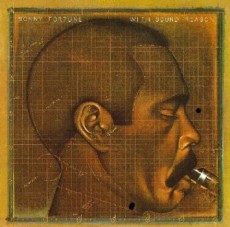
Sonny Fortune was born on May 19, 1939 in Philadelphia, Pennsylvania. After moving to New York City in 1967 he recorded and appeared live with drummer Elvin Jones’s group. In 1968 he was a member of Mongo Santamaria’s band. He subsequently performed with singer Leon Thomas and then with McCoy Tyner from 1971–1973.
In 1974 Sonny replaced Dave Liebman in Miles Davis’s ensemble and remained until spring 1975. He went on to join Nat Adderley after his brief tenure with Davis, and then formed his own group, recording two albums for A&M’s Horizon label. During the 1990s, he recorded several acclaimed albums for Blue Note.
He has performed with Roy Brooks, Buddy Rich, George Benson, Rabih Abou Khalil, Roy Ayers, Oliver Nelson, Gary Bartz, Rashied Ali and Pharoah Sanders, and was a part of the live album The Atlantic Family Live at Montreux.
Alto saxophonist and flautist Sonny Fortune, who also played the soprano, tenor and baritone saxophone and clarinet, continued to perform, record and tour until he died of a stroke at the age of 79 on October 25, 2018.

Inspire A Young Mind
Daily Dose Of Jazz…
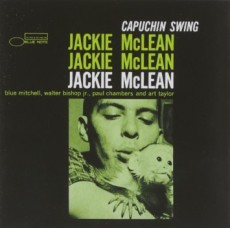
Jackie McLean was born John Lenwood McLean on May 17, 1931 in New York City. His father played the guitar in Tiny Bradshaw’s orchestra and started the young man’s musical education until he was eight when the senior John passed away. His godfather, his stepfather who owned a record store and several noted teachers continued his education. He received informal training by neighbors Thelonious Monk, Bud Powell and Charlie Parker.
In high school Jackie played in a band with Kenny Drew, Sonny Rollins and Andy Kirk Jr. By the time he was twenty he was playing alongside Rollins on Miles Davis’ Dig album and went on to record with Gene Ammons, Charles Mingus, George Wallington and to become one of Art Blakey’s Messengers, joining the group after reportedly being punched by Mingus and pulling a knife on the bassist. Fortunately for the jazz world no one was stabbed.
Throughout his early career he was addicted to heroin, which resulted in the loss of his New York City cabaret card. To make a living he undertook a large number of session dates that produced an extensive body of recorded work in the 1950s and 1960s. He recorded for Prestige, then Blue Note both as a leader and sideman. His early recordings as leader were in the hard bop school but later McLean became an exponent of modal jazz without abandoning his foundation in hard bop. His adaptation of modal jazz and free jazz innovations to his vision of hard bop made his recordings from 1962 on distinctive.
He worked with the greats of the time not limited to Donald Byrd, Sonny Clark, Lee Morgan, Ornette Coleman, Dexter Gordon, Freddie Redd, Billy Higgins, Freddie Hubbard, Grachan Moncur III, Bobby Hutcherson, Mal Waldron, Chalres Tolliver, Tony Williams, Michael Carvin, Carl Allen, Bill Hardman, Larry Wilis and Tina Brooks.
By 1967 he abandoned recording for touring and the following year started his teaching career at The Harrt School at the University of Hartford. He would establish the university’s African American Music Department that evolved into the Jackie McLean Institute of Jazz) and its Bachelor of Music degree in Jazz Studies program.
Along with his wife Dollie, they founded the Artists Collective, Inc. of Hartford, and his bands were drawn from his students including Steve Davis, his adopted son Rene and pianist Mark Berman. He received an American Jazz Masters fellowship from the National Endowment for the Arts, inducted into the DownBeat Hall of Fame, and a biography titled Sugar Free Saxophone, as well as numerous other national and international awards. McLean is the only American jazz musician to found a department of studies at a University and a community-based organization almost simultaneously and they each have existed for over three decades.
After a long illness, alto saxophonist, composer, educator and bandleader Jackie McLean passed away on March 31, 2006 in Hartford, Connecticut.
Take A Dose On The Road
Hollywood On 52nd Street
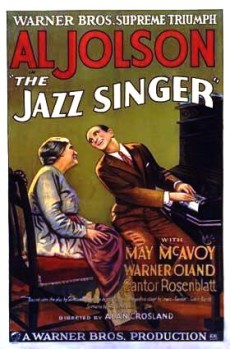
Irving Berlin composed Blue Skies in 1926 as a last-minute addition to the Rodgers and Hart musical Betsy. After only 39 performances the song was an instant success, though the show closed. However, in 1927, it became one of the first songs to be featured in a talkie, when Al Jolson performed it in The Jazz Singer.
The Story: The son of a Jewish Cantor must defy the traditions of his religious father in order to pursue his dream of becoming a jazz singer. Cantor Rabinowitz is concerned and upset because his son Jakie shows so little interest in carrying on the family’s traditions and heritage. For five generations, men in the family have been cantors in the synagogue, but Jakie is more interested in jazz and ragtime music. One day, they have such a bitter argument that Jakie leaves home for good. After a few years on his own, now calling himself Jack Robin, he gets an important opportunity through the help of well-known stage performer Mary Dale. But Jakie finds that in order to balance his career, his relationship with Mary, and his memories of his family, he will be forced to make some difficult choices.
Sponsored By

www.whatissuitetabu.com
Daily Dose Of Jazz…
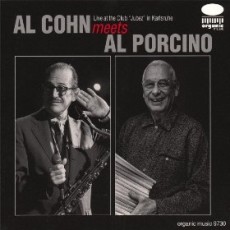
Al Porcino was born on May 14, 1925 in New York City. He began playing trumpet professionally in 1943 in many of the big bands over the next two decades including those of George Auld, Louis Prima, Jerry Wald, Tommy Dorsey, Gene Krupa and Chubby Jackson.
Porcino played with Woody Herman in 1946, 1949-1950, and again in 1954. He also did two stints with Stan Kenton in 1947-48 and 1954-55. By the 1950s, he was playing with Pete Rugolo, Dizzy Gillespie, Count Basie, Elliot Lawrence and Charlie Barnet.
In 1957 he moved to Los Angeles and started working in the studios. Al played in the Terry Gibbs Dream Band for three years starting in 1959. Throughout the Sixties he often played in orchestras backing vocalists, performed on two soundtracks The Cincinnati Kid and Music from Mission Impossible with Lalo Schifrin, played with Buddy Rich, Gil Fuller, Thad Jones, Mel Lewis and again with Woody Herman in 1972.
Al formed his own big band and recorded behind Mel Torme in addition to their own work. During the Seventies he moved to Germany playing on Al Cohn’s final recordings in 1987 and led big bands there until his death in Munich on December 31, 2013.
Dose A Day – Blues Away
More Posts: trumpet
Daily Dose Of Jazz…
Creed Taylor was born May 13, 1929 in Bedford, Virginia and played trumpet in the high school marching band and symphony orchestra. He grew up surrounded by country music and bluegrass but gravitated more toward the sounds of jazz after listening to Dizzy Gillespie in high school. He spent countless evening listening to Symphony Sid broadcast live from Birdland in New York City. He went on to attend Duke University, perform with the Duke Ambassadors and The Five Dukes.
After graduation, a couple of years in the Marines, and a year of graduate school, he made his way to New York City to pursue becoming a record producer. Convincing the Duke alum running Bethlehem Records to allow him to record vocalist Chris Connor with the Ellis Larkins Trio and the album becoming a success, led Taylor to become head of A&R. He was at Bethlehem during its two most significant years, recording Oscar Pettiford, Ruby Braff, Carmen McRae, Charles Mingus, Herbie Mann, Charlie Shavers and the J.J. Johnson/Kai Winding Quintet.
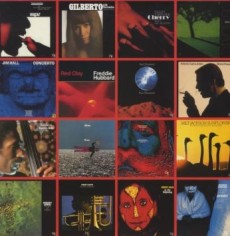
Creed went on to join ABC-Paramount, founded the subsidiary Impulse label four years later dubbing it “The New Wave In Jazz”. He recruited John Coltrane and released gatefold albums by Ray Charles, Gil Evans, Kai Winding, J.J. Johnson and Oliver Nelson. His use of photographers for cover art that blurred the lines of jazz and popular music would set him apart and come in handy in later years.
By 1961 Taylor left and went to Verve Records introducing bossa nova to the US through recordings such as “The Girl From Ipanema” with Antonio Carlos Jobim and Stan Getz. The music was picked up by Dizzy Gillespie, and caught the ear of jazz guitarist Charlie Byrd and the sound exploded through the jazz community. Never leaving jazz, he also produced albums by Wes Montgomery, Jimmy Smith, Bill Evans and many others.
From Verve Creed went to A&M Records in 1967 and formed his own label, CTI (Creed Taylor Inc.), the following year. A&M distributed CTI releases until 1969, when he left to establish CTI as an independent record company. CTI became one of the most popular and successful jazz record companies of the 1970s, achieving fame for his unrivalled ability to balance the artistic with the commercial. He recorded Freddie Hubbard, Stanley Turrentine, George Benson, Chet Baker, Gerry Mulligan, Nina Simone, Paul Desmond, Art Farmer, Herbie Hancock and Ron Carter as well as forming the Kudu label and recording the likes of Hank Crawford, Grover Washington, Jr. and Esther Phillips.
Facing financial problems in 1974 Taylor caused by setting up his own network to distribute CTI labels and made a new distribution deal with Motown. This, however, was the beginning of the end with litigation, losing artists and bankruptcy. Finally Columbia agreed to distribute but he gave up his rights to the masters.
Record producer Creed Taylor has won numerous Grammy Awards for his decades of production work including sessions by Stan Getz’s Focus 1961, Desafinado by Stan Getz/Charlie Byrd, 1962, Bill Evans’ Conversations With Myself 1963, The Girl from Ipanema by Stan Getz and Joao Gilberto 1964, Willow Weep For Me by Wes Montgomery in 1969 and First Light by Freddie Hubbard in 1972. His CTI label changed the way music was produced for the decade of the 70s and forever left an indelible stamp on the genre of jazz.
Get A Dose On The Road
More Posts: record producer,trumpet