

Daily Dose Of Jazz…
Kenneth John Moule was born on June 26, 1925 in Barking, Essex, England and was the only child of Frederick and Ethal Moule. Surviving an early childhood illness, left him with a cadaverous look which went well with his ridiculous sense of humor.
In the Forties Moule played piano with the Johnny Dankworth Quartet before leaving to join Oscar Rabin in 1945. He would go on to perform with Remo Cavalotti for a summer season and Joe Daniels before working on the Queen Mary in Bobby Kevin’s Band, with Ronnie Scott and Johnny Dankworth. He closed out the decade working with several bands including Jiver Hutchinson, Bert Ambrose, Frank Weir and Ken Mackintosh.
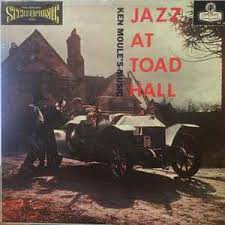
During the early 1950s Ken worked with Raymonde’s Orchestra, again with Ambrose and then with Frank Weir on several occasions. 1954 saw him form under his own name a septet, which was comprised of two-tenor, baritone, trumpet and three rhythm group. He resigned from the septet in 1955 and from 1956–1959 he arranged for Ted Heath’s orchestra. During this time he composed the suite Jazz at Toad Hall, and was released on Decca Records in 1958. He worked in Sweden and toured Europe with Kurt Weill’s Band until 1960.
The 1960s saw his return to England and worked freelance as an arranger, especially with Lionel Bart. He was the musical director for the shows Fings Ain’t Wot They Used T’Be and Twang!!. From 1962 he broadcast regularly with his 15 piece orchestra, and later broadcasted and recorded with a larger band called The Full Score. His Adam’s Rib Suite was recorded by the London Jazz Chamber Group in 1970 with Kenny Wheeler on the recording issued on Ember Records.
He scored Cole Porter songs for the musical Cole! performed at the Mermaid Theatre in 1974, and worked with Dankworth again around that time with his London Symphony Orchestra collaborations. He worked out of Germany for part of the 1970s before ill health caused him to move to the warmer climate of Spain.
Pianist, composer and arranger Ken Moule transitioned in Marbella in January 27, 1986, aged 60.

More Posts: arranger,bandleader,composer,history,instrumental,jazz,music,piano
Daily Dose Of Jazz…
Hank Shaw was born Henry Shalofsky was born June 23, 1926 in London, England. At the age of 15 he played with Teddy Foster’s band during World War II. In the latter half of the decade he played around his hometown with Oscar Rabin, Frank Weir, and Tommy Sampson, then switched permanently from swing to playing bebop music in 1946 after hearing Dizzy Gillespie.
Visiting the United States in 1947 he came with close friend and fellow pioneer bebopper altoist Freddy Syer. However, unable to secure work permits they moved to Canada where they played with Oscar Peterson and Maynard Ferguson. Returning to England in 1948, Hank was one of the early Club Eleven players, along with Ronnie Scott, John Dankworth, Lennie Bush, and others. He also played with many of these musicians on the recordings of Alan Dean’s Beboppers.
After Club Eleven shuttered, Shaw played with Vic Lewis and toured Europe with Cab Kaye, then joined Jack Parnell’s ensemble in 1953 and Ronnie Scott’s nonet in 1954. He joined Jamaican alto saxophonist Joe Harriott in his celebrated quintet in 1958 but left with pianist Harry South when Harriott sought to introduce his “free-form” concept. Shaw played regularly both live and as a session musician for many British jazz musicians over the course of the next twenty or so years, working with Joe Harriott, Tony Crombie, Don Rendell, Tony Kinsey, Stan Tracey, Bill Le Sage, and others.
He led a quartet at the 100 Club in the Sixties, and played in the Bebop Preservation Society and the John Burch Quartet for over two decades each. He retired due to ill health in the late 1990s. Bebop trumpeter Hank Shaw transitioned four months past his 80th birthday on October 26, 2006 in Kent, England.
More Posts: bandleader,history,instrumental,jazz,music,trumpet

Daily Dose Of Jazz…
Guy Eugène Hilarion Pedersen was born on June 10, 1930 in Grand-Fort-Philippe, France. Coming from a family of popular musicians, their story begins in 1855 with all members of his maternal family being fiddlers from father to son. His uncles and his grandfather played all the balls of the region and his great-grandfather composed Tiger Rag, a jazz standard.
He began studying music theory around 1943 at the age of 13, taking free lessons at the Roubaix conservatory until 1952. Already passionate about jazz, he listened to Hugues Panassié ‘s radio broadcasts and bought his first American records by Charlie Parker, Thelonious Monk, and Lee Konitz. In 1950 he won the prize for best double bass player at the Brussels, Belgium competition, then Jazz Hot in Paris, France and decided to become a musician.
Beginning in Paris with singer Fats Edward, he went on to play with pianist Henri Renaud and drummer Jean-Louis Viale at Tabou, and at Ringside founded by Sugar Ray Robinson. Guy followed this working with Jacques Hélian and Claude Bolling to learn the trade of a large orchestra. From 1955 to 1966, he was a member with drummer Daniel Humair of one of Martial Solal trios, recording the historic Jazz à Gaveau in 1962.
Pedersen and Humair then joined the Swingle Singers to record the group’s second album. They traveled around the world with them, even passing through the White House in 1966. By 1973 he was touring with Baden Powell, recording over a dozen records with him. Between 1973 and 1980, he recorded seven albums and toured frequently with Jean-Christian Michel .
Leading an active career as a studio musician during this period he also appeared on television variety shows accompanying the group Les Troubadours. The late Sixties saw him composing, writing a lot of music for short films. Some of his recordings on Tele Music and Montparnasse 2000 are now cult, especially among disc jockeys.
A serious heart attack in 1977 sidelined the bassist from music and retiring permanently, he became a professional antique dealer. Double bassist, composer and antique dealer Guy Pedersen transitioned on January 4, 2005 in Rueil-Malmaison, Hauts-de-Seine, France at the age of 74 years old.
More Posts: bandleader,bass,composer,history,instrumental,jazz,music
Daily Dose Of Jazz…
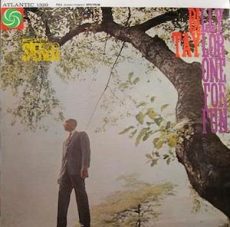
Kenny Dennis was born May 27, 1930 in Philadelphia, Pennsylvania and began his musical career in the United States Army Band, playing drums in three bands from 1948-1952. After being discharged, he connected with junior high school mate, pianist Ray Bryant and became part of The Ray Bryant Trio along with Jimmy Rowser on bass. They became the house trio at the North Philadelphia Jazz Club, Blue Note where they played with Kai Winding, Chris Connor and Sonny Stitt among others.
Moving to New York City he worked with Miles Davis, Phineas Newborn, Jr., Billy Taylor, Erroll Garner, Charles Mingus, Johnny Griffin, Slide Hampton and Sonny Rollins. In 1957, Dennis performed in Sonny Rollins’s Trio with bassist Wendell Marshall at Carnegie Hall, a historic performance that was commemorated in 2007 with a 50th anniversary concert.
Dennis migrated to California, when Miles Davis recommended him to Lena Horne. There he recorded with Davis, Michel Legrand, Charlie Mingus, Gerald Wilson, poet Langston Hughes and Nancy Wilson, the latter he married and they had a son. He would also record with Oscar Brown Jr., Langston Hughes, Dodo Greene, Roy Ayers, Mal Waldron and Burt Bacharach.
Since 1997 drummer Kenny Dennis, who never recorded as a leader, has been an assistant director of the Lab Band at the award winning Los Angeles County High School for the Arts.

More Posts: drums,history,instrumental,jazz,music
Daily Dose Of Jazz…
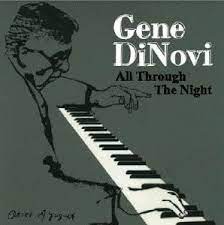
Gene DiNovi was born Eugene Salvatore DiNovi on May 26, 1928 in New York City. While in his teens he worked with Joe Marsala and Chuck Wayne and by the late Forties was very active live and on record. During this period he worked with Buddy DeFranco, Benny Goodman, Chubby Jackson, Brew Moore, Boyd Raeburn, Buddy Rich, Artie Shaw, Lester Young.
At the end of the decade and into the 1950s Gene worked extensively as an accompanist for vocalists, starting with Peggy Lee, Tony Bennett and Anita O’Day. He recorded with Lena Horne multiple times in the late 1950s and early 1960s and accompanied her on European tours. He also led his own small combos with sidemen including Danny Bank, Johnny Carisi, Bill Crow, Tony Fruscella, and Dave Schildkraut.
He began working more as a studio musician and film score composer in the 1960s. Toward the end of the decade he played with Carmen McRae, then moved to Canada to take a position as a house pianist with the CBC in Toronto. In the 1980s he worked with Ruby Braff and toured and recorded in Japan, and continued to be active as a performer into the 1990s, working with James Campbell, Don Thompson, Memo Acevedo, Dave Young, and Terry Clarke.
Pianist and composer Gene DiNovi, now 95, lives a quiet life.
More Posts: bandleader,composer,history,instrumental,jazz,music,piano