

Three Wishes
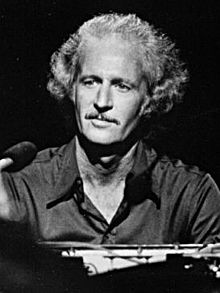
When Nica broached the subject of three wishes with Mose Allison he had but one reply:
- “If that ever happened to me, the first would be that every individual would contain his own destructiveness. And if this wish was granted, I wouldn’t need the others.”
*Excerpt from Three Wishes: An Intimate Look at Jazz Greats ~ Compiled and Photographed by Pannonica de Koenigswarter

More Posts: baroness,history,instrumental,jazz,music,pannonica,piano,songwriter,three,vocal,wishes
Daily Dose Of Jazz…
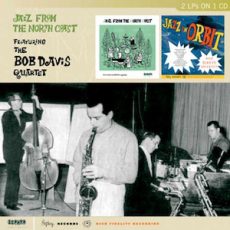
Bob Davis was born on July 26, 1927 in Cosmos, Minnesota and was directly inspired by the efforts of his mother, a pianist who frequently hit the road with touring bands. He began his music career as a drummer and by age 13 had been absorbed into a family band. Leaving home meant not only no longer backing up his mother, but a chance to play piano himself. By the age of 18, his piano styles were ahead of his time and he was playing improvisational jazz with some of the greats.
Davis spent a couple of years gigging with Herbie Fields prior to starting his own group, which was active through the ’50s and recorded for several small labels, The group featuring fellow Minneapolis drummer Bill Blakkestad gigged frequently around the Midwest, including Chicago, Illinois. Though influenced by Oscar Peterson and Bud Powell, he saw advantages in Nashville and established a relationship with guitarist and producer Chet Atkins on the 1953 Jazz from the Hills project that led to other session work.
He recorded three great albums, in addition to recording with Sarah Vaughn, Al Hirt, Dizzy Gillespie. He also was musical director for Playboy Clubs, taught as a music college & high school professor, and was a promoter and agent for music giants such as the Jacksons and Tina Turner. He continued playing jazz and ballads in concerts and clubs into his older years while living most of his life in Miami, Florida. After retiring at the age of 69, Bob continued to play incomparable jazz feats.
In his last days, pianist, educator, promoter and agent Bob Davis retired from music, suffering from bone cancer which robbed him of the joy of playing music.

More Posts: bandleader,history,instrumental,jazz,music,piano
Daily Dose Of Jazz…
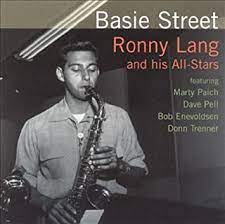
Ronnie Lang was born July 24, 1929 in Chicago, Illinois. Sometimes spelled Ronny, his professional début was with Hoagy Carmichael’s Teenagers. He went on to play for a year with Earle Spencer in 1946, then with Ike Carpenter, and Skinnay Ennis the following year.
Gained attention during his two tenures with Les Brown’s Orchestra between 1949–50 and 1953 to 1956, he recorded with the Dave Pell Octet in the mid-1950s. During this time he moved to California and attended Los Angeles State College of Applied Arts and Sciences studying music and woodwinds.
By 1958 he had become a prolific and busy studio musician in Los Angeles, often employed by Henry Mancini. Ronnie played the iconic sax melodic line in Bernard Herrmann’s score for the 1976 movie Taxi Driver. He also recorded with Pete Rugolo, Bob Thiele, and Peggy Lee.
Alto saxophonist Ronnie Lang, who also played flute and clarinet in the bop, progressive, big band, swing idioms, is now retired at 92.
More Posts: bandleader,clarinet,flute,history,instrumental,jazz,music,saxophone
Daily Dose Of Jazz…
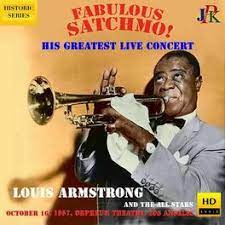
Danny Barcelona was born on July 23, 1929 in Waipahu, a community of Honolulu, Hawaii. A self taught percussionist, by the age of 18 in his final year in high school, he was already playing music with trombonist, singer, and bandleader Trummy Young, joining his Hawaii All-Stars in the early Fifties. When Young left to join Louis Armstrong’s combo in 1952, he assumed leadership of the band, a sextet known as the Hawaiian Dixieland All-Stars. They would tour the Hawaiian Islands, Japan and the rest of the Far East.
Danny was introduced to Louis Armstrong by Young in 1956 and upon his recommendation, in 1958 at the age of 27 became Armstrong’s drummer for 15 years. As a Filipino-American, Armstrong would frequently introduce him to audiences as The Little Filipino Boy, then follow up by calling himself the Little Arabian Boy.
He appears on more than 130 of Armstrong’s recordings including Hello, Dolly! and What a Wonderful World. He toured with Armstrong and Young around the world until illness took Armstrong and he returned to Hawaii. There he became a longtime performer at the Hilton Hawaiian Village Hotel, and worked for many years at Harry’s Music Store and the Easy Music Center.
In 1979, he returned to the mainland and settled with his family in Monterey Park, California. Drummer Danny Barcelona transitioned in Monterey Park on April 1, 2007, due to complications from cancer at the age of 77.
More Posts: drums,history,instrumental,jazz,music
Daily Dose Of Jazz…
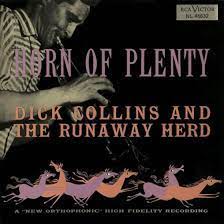
Dick Collins was born Richard Harrison Collins on July 19, 1924 in Seattle, Washington into a musical family where several of his parents and grandparents were professional musicians. He attended Mills College in 1946–47, where he studied music formally under Darius Milhaud, and moved with Milhaud to Paris, France for the next academic year. As a student at Mills, he first met Dave Brubeck, and while in Paris he played with Hubert Fol and Kenny Clarke.
Returning to the States he landed in San Francisco, California where he began playing with Brubeck in his Bay Area-based octet, then completed his bachelor’s degree in music at San Francisco State College. In the 1950s he performed and recorded with Charlie Barnet, Charlie Mariano, Nat Pierce, Paul Desmond, Cal Tjader, and Woody Herman. By 1957 Dick was working with Les Brown, an association that continued for nearly a decade that included worldwide tours.
In 1965, Collins took a position as a music librarian, which he held through 1967, and took a second position from 1971 to 1986, mostly receding from active performance. In later years, he still occasionally performed live or recorded, including with Nat Pierce, Mary Ann McCall, and Woody Herman.
Trumpeter Dick Collins transitioned on April 19, 2016 in Hesperia, California, at the age of 91.
More Posts: bandleader,history,instrumental,jazz,music,trumpet