

Daily Dose Of Jazz…
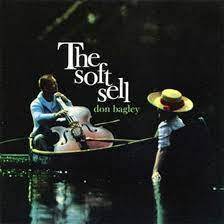
Donald Neff Bagley was born on July 18, 1927 in Salt Lake City, Utah and received formal training on the double bass. He went on to study in Los Angeles, California and played in 1945 with Shorty Sherock and Wingy Manone, and in 1948 with Dick Pierce.
During the early Fifties from 1950 to 1953, and sporadically thereafter, Bagley played with Stan Kenton. HIs time with Kenton, A Study for Bass by Bill Russo and Bags by Bill Holman were written to feature Bagley’s playing. By 1954 he was fronting his own ensembles. His session work between 1950 and 1952, Don worked extensively with Nat King Cole, Maynard Ferguson, and Dexter Gordon. He played in Europe with Zoot Sims, Lars Gullin, Frank Rosolino, and Åke Persson. He would go on to work with Les Brown, Jimmie Rowles, Shelly Manne, Pete Fountain and Phil Woods. In 1957 and 1958, he recorded three albums under his own name.
The Sixties saw him playing with Ben Webster and Julie London. Into the 1970s and 1980s he worked with Burt Bacharach while composing and arranging for film and television, including the scores to Mama’s Dirty Girls, The Manhandlers, The Swinging Barmaids, The Student Body, Young Lady Chatterley and Sacred Ground.
Double bassist, composer and arranger Don Bagley transitioned of natural causes on July 26, 2012 at the age of 85.

More Posts: arranger,bandleader,bass,composer,history,instrumental,jazz,music
Daily Dose Of Jazz…
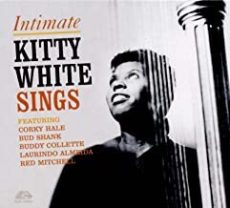
Kitty White was born Kitty Jean Bilbrew on July 7, 1923 in Los Angeles, California. Raised in a musical family, her parents were singers, and her uncle was a well-known vaudevillian and disc jockey. Her twin sister, Maudie Jeanette, also sang and briefly worked with Duke Ellington’s revue, Jump for Joy, but never pursued an active career. Their mother, known as A.C. Bilbrew, organized an all-black chorus that performed in the 1929 film Hearts of Dixie.
She started her career at the age of sixteen as a singer and a pianist, appearing in local nightclubs around Los Angeles. Branching out she opened at the Black Orchid in Chicago, Illinois and was introduced to the executives of Mercury Records, where she became a recording artist.
Kitty picked up her catchy jazz name legitimately by marrying songwriter Eddie White in the 1940s. She moved to Palm Springs, California in 1967 and sang at the Spa Hotel for sixteen years.
Recording mostly on the West Coast, she worked with Buddy Collette, Gerald Wiggins, Chico Hamilton, Bud Shank and Red Callender. She sang many demo recordings for her friend, Los Angeles blues composer Jessie Mae Robinson, including I Went To Your Wedding, a No. 1 hit for Patti Page in 1953. She was also the sole female voice on Elvis Presley’s song Crawfish from the King Creole film soundtrack.
Vocalist Kitty White, who recorded eight albums as a leader and had two compilations released, transitioned in Palm Springs, at the age of 86 on August 11, 2009 after suffering a stroke.
More Posts: bandleader,history,instrumental,jazz,music,vocal
Daily Dose Of Jazz…
Frank Rehak was born July 6, 1926 in New York City and began on piano and cello before switching to trombone. He worked with Gil Evans and Miles Davis. He also appeared with Davis on the broadcast The Sounds of Miles Davis.
A heroin addiction combined with other financial problems led to his withdrawal from music and his lapsing into relative obscurity. It was probably partially contributed to his failed marriage to nightclub dancer Jerri Gray. In an effort to deal with these issues he spent time at Synanon, which led to his mention in Art Pepper’s autobiography.
Trombonist Frank Rehak transitioned in Badger, California on June 22, 1987 of throat cancer at the age of 60.
More Posts: history,instrumental,jazz,music,trombone
Daily Dose Of Jazz…
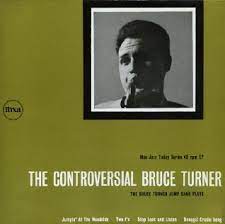
Malcom Bruce Turner was born July 5, 1922 in Saltburn-by-the-Sea, North Yorkshire, England. He received his education at Dulwich College, learning to play the clarinet as a schoolboy. He began playing alto saxophone while serving in the Royal Air Force in 1943 during World War II.
From 1948-53 he played with Freddy Randall and worked on the Queen Mary in a dance band and in a quartet with Dill Jones and Peter Ind. He briefly studied under Lee Konitz in New York City in 1950. His first period with Humphrey Lyttelton ran from 1953 to 1957 but leaving Lytteltonin he led his Jump Band from until 1965, which was featured in the 1961 film, Living Jazz.
Turner arranged and recorded the music for this film and the album Jumpin’ at the NFT (National Film Theatre) was issued to coincide with the film’s release. He then took part in the biggest trad jazz event to be staged in Britain at Alexandra Palace. Returning to Randall’s group from 1964 to 1966, he played with Don Byas and Acker Bilk. He continued to work with Lyttelton and Ind into the 1980s, played with the Jump Band intermittently, and led small ensembles in the 1990s.
Turner’s autobiography Hot Air, Cool Music, was published by Quartet Books, appeared in 1984. He wrote a column on jazz for the Daily Worker. Saxophonist, clarinetist and bandleader Bruce Turner transitioned on November 28, 1993.
More Posts: bandleader,history,instrumental,jazz,music,saxophone

Daily Dose Of Jazz…
Eddie Blair was born into a musical family in Johnstone, Renfrewshire, Scotland on June 25, 1927. His father played cornet and violin and as the ten year old took after his father picking up the cornet. Playing with the Johnstone Silver Band gave him the musical grounding that facilitated dance band work before he joined the Royal Signals in 1945.
After demobilization in 1948 Blair attended Glasgow College of Technology, playing with jazz and dance bands in the evenings. He got his first brief taste of London, England with the Ken Mackintosh Band before returning to college. By 1951 his work with Mackintosh and Glasgow pianist George Scott Henderson, whose quintet won the runner-up 1949 Melody Maker ‘All Britain’ contest, had come to the notice of Johnny Dankworth, who invited Blair to replace the Germany-bound Deuchar.
After four years with Dankworth’s Seven and Orchestra, Eddie joined Ted Heath for 11 years, recording regularly and touring the US in 1956 but also recording with Johnny Keating, the Swinging Scots big band, Vic Lewis, Tubby Hayes, Stan Tracey and Ronnie Scott.
Along with Jimmy Deuchar and Aberdonian Bobby Pratt they formed the all-Scottish trumpet section on Hayes’ Jazz for Moderns and his absolute dependability made him a natural for session work. TV programs including The Avengers, Jimmy Rushing, Sacha Distel, blues band Savoy Brown and Mike Oldfield’s sister, Sally all figured in his performing and subsequent session recordings.
At sixty-five in 1992, he retired to concentrate on skiing and golf. Trumpeter Eddie Blair, who in the late 1940s and 1950s became absorbed into the London jazz scene and whose style influenced Deuchar and Kenny Wheeler, transitioned on Boxer Day, December 26, 2020 at age 93 in Rustington, West Sussex, England.

More Posts: history,instrumental,jazz,music,trumpet