

Daily Dose Of Jazz…
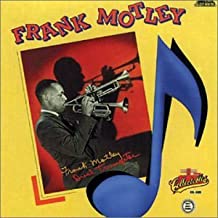
Frank Motley, Jr. was born December 30, 1923 in Cheraw, South Carolina and took trumpet lessons when he was young from Dizzy Gillespie, who was from the same town. He developed a technique of playing two trumpets at the same time, becoming known as “Dual Trumpet” and “Two Horn” Motley. Getting a degree in mechanical engineering at South Carolina State College, before joining the military, he performed in the Navy Band entertaining troops in the Pacific. After the end of the war he played in nightclubs in New York City before settling in Washington, D.C. and forming his own band in 1949.
He recorded extensively for Lillian Claiborne’s DC Records from 1951, and many of his recordings were licensed to other labels including RCA Victor and Specialty. His band, the Motley Crew, included singer and keyboardist Curley Bridges, drummer Thomas E. “TNT” Tribble, and vocalist Elsie “Angel Face” Kenley.
From 1952, he played mainly in Canada, marrying and moving to Toronto in 1955. However, he continued to perform and record in the United States. His biggest commercial success came in 1963, when his version of William Bell’s song Any Other Way, recorded with vocalist Jackie Shane for a small Boston label.
Disbanded the Motley Crew in 1966 he formed a new band in Toronto, the Hitch-Hikers, at first with Shane and then with singer Earle The Mighty Pope Heedram. The band broke up in 1970 but he continued to perform with another new band, the Bridge Crossings, until the mid 1980s. With his health declining he retired to Durham, North Carolina, where he continued to play in local dance bands. Trumpeter Frank Motley, who also sang, passed awayin Durham in 1998, aged 74.
More Posts: bandleader,history,instrumental,jazz,music,trumpet
Daily Dose Of Jazz…
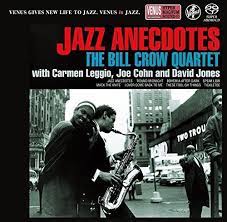
William Orval Crow was born December 27, 1927 in Othello, Washington but spent his childhood growing up in Kirkland, Washington, taking up the trumpet in fourth grade. When he joined the Army in 1946, he started to play brass instruments, remaining in the army until 1949. After leaving the Army, he played drums and trombone while a student at the University of Washington.
In 1950, Bill moved to New York City and within two years as a double bassist, he played with Teddy Charles and was with Stan Getz from October 1952 to the following April. He was part of Gerry Mulligan’s groups during the mid to late 1950s.
Crow joined the house band at Eddie Condon’s club in 1965 and then played with Walter Norris’s small group, which was one of the house bands at the Playboy Club in New York City in the mid~Sixties to early Seventies. From 1975 into the late 1990s he worked in theater orchestras on Broadway, where he sometimes played the tuba.
He authored a book called Jazz Anecdotes that was published by Oxford University Press in 1991. His autobiography, From Birdland to Broadway, was released by the same publisher two years later. Both were also the titles of his two albums as a leader.
As a sideman, he recorded 70 albums with Gerry Mulligan, Stan Getz, Zoot Sims, Bob Brookmeyer, Al Cohn, Clark Terry, Marian McPartland, J. J. Johnson, Al Haig, Jimmy Cleveland, Milt Jackson, Benny Goodman, Mose Allison, Jimmy Raney, Sal Salvador, Don Elliott, Teddy Charles, Manny Albam, Joe Morello, Bob Wilber, Eddie Bert, Jay McShann, Bob Dorough, Barbara Lea, Dick Sudhalter, Phil Woods, Dick Sudhalter, Ronnell Bright, Art Simmons, Rich Pearle, Spike Robinson, Claude Williamson, and Michelle Leblanc. Bassist Bill Crow continues to perform at the age of 92.
Three Wishes
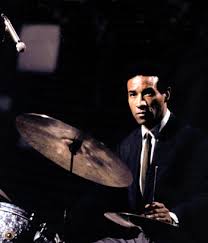
When Panninica asked Max Roach what his three wishes would be, he simply said:
- “Wishes would be a superfluous luxury for me, because I have everything I desire. That’s the most important thing in the world.”
*Excerpt from Three Wishes: An Intimate Look at Jazz Greats ~ Compiled and Photographed by Pannonica de Koenigswarter

More Posts: baroness,drums,history,instrumental,jazz,music,pannonica,three,wishes
Daily Dose Of Jazz…
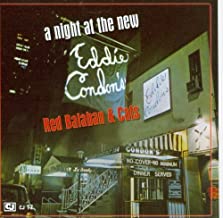
Red Balaban was born Leonard Balaban on December 22, 1929 in Chicago, Illinois. Moving the family to New York, he completed his early education at the Ethical Culture School. After graduating from Milford Academy in Connecticut, he graduated from Brown University.
Moving south to the panhandle, he raised breeding cattle on a farm in Bonifay, Florida and as a musician, he was a sideman, bandleader, and club owner. He played in regional ensembles from the 1950s, Red went on to hold a regular gig from 1966 at the Dixieland jazz club Your Father’s Mustache in New York City.
Balaban worked extensively as a sideman, for musicians such as Wild Bill Davison, Eddie Condon, Gene Krupa, Dick Wellstood, and Kenny Davern. He co-led Eddie Condon’s house band with Ed Polcer from 1975, and noted musicians in this outfit included Vic Dickenson, Warren Vache, and Connie Kay, before the club closed in the mid-1980s.
Tubist and sousaphonist Red Balaban, who also played banjo, stand-up bass, slide trombone, ukulele, and rhythm guitar, passed away after a brief illness seven days past his 84th birthday on December 29, 2013 in Milford, Connecticut.
More Posts: banjo,bass,guitar,history,instrumental,jazz,music,slide trombone,sousaphone,tuba,ukulele
Daily Dose Of Jazz…
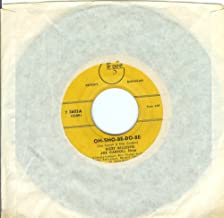
Albert Francis Jones was born on December 18, 1930 in Philadelphia, Pennsylvania and started to play the drums at the tender age of three. In 1949 he played with Lionel Hampton and with Dizzy Gillespie in 1951~1953 that included four tours of Europe.
In the early Fifties he also worked with Joe Carroll, Miles Davis, Milt Jackson, and Wade Legge. Later that decade he played with Arnett Cobb and accompanied Billie Holiday, Sarah Vaughan, and Dinah Washington.
After touring Europe with alto saxophonist Jackie McLean and the Living Theater of New York in 1962, he permanently moved to Belgium. There he led a group with Jean Fanis and Roger van Haverbeke, that became the house band in a Belgian club. This ensemble played with visiting musicians such as Dexter Gordon, Milt Jackson, Art Farmer, Clark Terry. and Dany Doriz.
Drummer Al Jones passed away in April 1976.
More Posts: drums,history,instrumental,jazz,music